
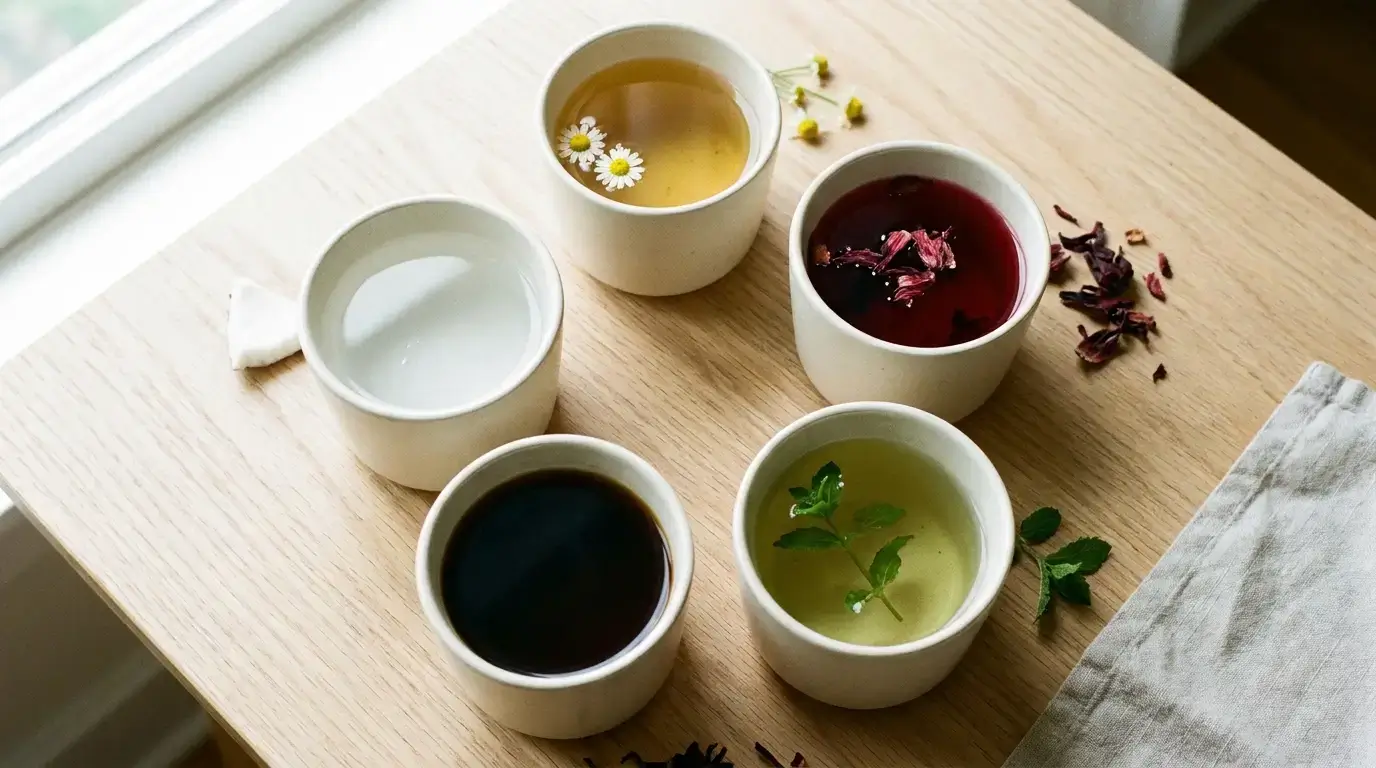
utting back on caffeine doesn’t mean you have to drink plain water all day.
There are plenty of caffeine-free drinks for different situations—from herbal teas and coffee substitutes to hydration drinks and simple evening beverages.
The important part is knowing what “caffeine-free” actually means. Some drinks are naturally free of caffeine, while others are processed to remove most of it. And products marketed as wellness drinks or coffee alternatives may still contain caffeine depending on their ingredients.
Here are 12 caffeine-free options, along with practical guidance for choosing the right one.
What Does Caffeine-Free Mean?
A naturally caffeine-free drink is made from ingredients that do not naturally contain caffeine.
Many herbal infusions fall into this category because they are not made from Camellia sinensis, the plant used to produce black, green, white, and oolong tea.
However, always check packaged products.
A herbal blend can contain added tea, guarana, yerba mate, coffee extract, or another caffeine-containing ingredient.
“Decaffeinated” is also different from naturally caffeine-free. Decaf coffee and decaffeinated tea can still contain small amounts of caffeine.
1. Rooibos Tea
Rooibos is a naturally caffeine-free herbal infusion from South Africa.
It has a mild, slightly sweet and earthy flavor and can be served hot or iced.
Because it does not naturally contain caffeine, rooibos can be useful for people who enjoy a tea-like drink but want to avoid the caffeine found in black or green tea.
Learn more in our rooibos tea benefits guide.
2. Chamomile Tea
Chamomile is another naturally caffeine-free herbal drink.
It is commonly consumed in the evening because it has traditionally been associated with relaxation.
Research has investigated chamomile preparations for sleep and anxiety, but an ordinary cup of chamomile tea should not be treated as a guaranteed sleep aid.
Its biggest practical advantage is simple: it provides a warm evening beverage without caffeine.
See our chamomile tea benefits guide or our comparison of drinks for better sleep.
3. Hibiscus Tea
Hibiscus tea is naturally caffeine-free when it contains only hibiscus.
It has a tart flavor and can be served hot or cold.
Hibiscus has been studied for several potential health effects, particularly cardiovascular markers such as blood pressure, but individual results vary and it should not replace medical treatment.
If you’re interested in the research, see our hibiscus tea benefits guide.
People who experience reflux may also want to read our guide to hibiscus tea and acid reflux.
4. Peppermint Tea
Pure peppermint tea does not naturally contain caffeine.
Its refreshing flavor makes it useful both hot and iced.
Peppermint is frequently associated with digestion, although much of the clinical research on digestive symptoms has investigated peppermint oil rather than ordinary peppermint tea.
That distinction matters.
Read more in our peppermint tea benefits guide.
5. Ginger Tea
A simple infusion made from ginger and water is caffeine-free.
Ginger has been studied particularly for certain forms of nausea, although research often uses preparations other than ordinary tea.
It can be prepared by steeping fresh sliced ginger in hot water.
Some people experience heartburn or digestive discomfort from ginger, so individual tolerance matters.
Our ginger tea benefits guide covers the subject in more detail.
6. Roasted Chicory Drink
Roasted chicory root can produce a dark, roasted beverage that may appeal to people who miss the flavor and ritual of coffee.
Pure chicory root is naturally caffeine-free.
However, check the package carefully because some commercial chicory beverages are blended with actual coffee.
Chicory also contains inulin, a fermentable carbohydrate that can cause gas or bloating in some people.
7. Roasted Dandelion Root Tea
Roasted dandelion root is another caffeine-free option with a darker, roasted flavor.
It won’t taste exactly like coffee, but it can provide a similar warm-drink ritual without caffeine when the product contains only caffeine-free ingredients.
For more information, see our dandelion tea benefits guide.
8. Coconut Water
Pure coconut water is naturally caffeine-free.
Unlike herbal teas, it also contains carbohydrates and minerals such as potassium.
That doesn’t mean everyone needs coconut water for hydration. Plain water remains adequate for many everyday situations.
But it can be a useful caffeine-free beverage for people who enjoy its flavor.
See our detailed guide to coconut water and electrolytes.
9. Homemade Electrolyte Drinks
An electrolyte drink does not need caffeine.
Depending on the recipe or product, electrolyte beverages may contain sodium, potassium, carbohydrates, sweeteners, or other ingredients.
They’re particularly relevant when electrolyte replacement is actually needed rather than simply as a replacement for coffee.
Our beginner’s guide to electrolyte drinks explains when they may be useful.
You can also see our homemade electrolyte drink without sugar.
10. Prebiotic Drinks
Some prebiotic beverages are caffeine-free, but don’t assume they all are.
Check the ingredient list.
Prebiotic drinks commonly contain fermentable ingredients such as inulin or other fibers. These ingredients can cause gas or bloating in some people.
They also shouldn’t be confused with probiotic drinks.
Our prebiotic drinks guide explains the difference.
11. Caffeine-Free Functional Mocktails
A functional mocktail can provide a more interesting alternative when you want something beyond tea or water.
For example, a mocktail might combine:
- Caffeine-free herbal tea
- Citrus
- Ginger
- Mint
- Sparkling water
- Fruit
The word “functional” does not guarantee a particular health benefit, however.
What matters is what is actually in the drink.
Try our functional mocktail recipes for alcohol-free ideas.
12. Plain or Infused Water
Water may not sound exciting, but it remains one of the simplest caffeine-free drinks.
For additional flavor, you can add ingredients such as:
- Cucumber
- Mint
- Berries
- Citrus, if tolerated
Infused water doesn’t need detox claims or functional ingredients to be useful.
Its primary role is hydration.
Best Caffeine-Free Alternatives to Coffee
If you’re replacing coffee specifically, think first about what you actually miss.

If You Miss the Roasted Flavor
Try:
- Roasted chicory
- Roasted dandelion root
- A caffeine-free roasted grain or root beverage
Always check labels because some “coffee alternative” products contain actual coffee or caffeinated tea.
If You Miss the Morning Ritual
A warm beverage may be enough.
Rooibos, ginger tea, chicory, or another caffeine-free infusion can preserve the habit of sitting down with a warm cup without caffeine.
If You Still Want Caffeine, Just Less of It
That’s a different goal.
Matcha, green tea, black tea, and many mushroom-coffee products are not caffeine-free, although some may contain less caffeine than a typical serving of coffee.
Our matcha vs coffee guide compares two caffeinated options.
Caffeine-Free Drinks for the Evening
For evening use, prioritize drinks that are genuinely caffeine-free and comfortable for you to digest.

Options include:
- Chamomile tea
- Rooibos
- Warm milk or a suitable plant-based alternative
- Simple caffeine-free herbal infusions
- Water
Avoid assuming that a beverage needs special sleep ingredients.
If sleep is your primary concern, see our best drinks for better sleep guide.
Caffeine-Free Drinks for Hydration
If your main goal is hydration rather than replacing coffee, keep it simple.
For ordinary daily hydration, water is usually the most straightforward option.
Other caffeine-free choices include:
- Coconut water
- Unsweetened herbal tea
- Infused water
- Appropriate electrolyte beverages when electrolyte replacement is useful
A caffeine-free label doesn’t automatically make a beverage healthier. Sugar, sodium, sweeteners, and other ingredients still matter.
Are Herbal Teas Always Caffeine-Free?
Not necessarily.
Pure herbal ingredients such as chamomile, rooibos, peppermint, ginger, or hibiscus don’t naturally contain caffeine.
But a commercial “herbal tea” blend can contain ingredients such as:
- Green tea
- Black tea
- Yerba mate
- Guarana
- Other caffeine-containing ingredients
Always check the ingredient list if avoiding caffeine is important to you.
What About Mushroom Coffee?
This is an important source of confusion.
Mushroom coffee is not automatically caffeine-free.
Many mushroom-coffee products combine mushroom ingredients with ordinary coffee and therefore still contain caffeine.
Other products use roasted roots, grains, or mushroom ingredients without coffee.
Check the label rather than relying on the words “mushroom coffee.”
You can learn more in our mushroom coffee benefits guide.
How to Choose a Caffeine-Free Drink
Start with your actual goal.
| Your Goal | Options to Consider |
|---|---|
| Replace the coffee ritual | Chicory, roasted dandelion, rooibos |
| Evening drink | Chamomile, rooibos, caffeine-free herbal tea |
| Everyday hydration | Water, infused water, unsweetened herbal tea |
| Electrolyte replacement | Appropriate electrolyte drink, coconut water |
| Alcohol-free social drink | Functional mocktail |
| Digestive-friendly option | Depends on the symptom and individual tolerance |
Then check the label.
Look for:
Caffeine: Don’t assume a wellness beverage is caffeine-free.
Added sugar: Caffeine-free and sugar-free mean different things.
Botanical ingredients: Herbal ingredients can have side effects and interactions.
Serving size: A beverage’s nutrition information depends on how much you actually consume.
Your tolerance: A drink that works well for one person may cause reflux, bloating, or another symptom in someone else.
Frequently Asked Questions
What are good caffeine-free drinks?
Options include water, rooibos, chamomile tea, hibiscus tea, peppermint tea, ginger tea, roasted chicory, roasted dandelion root, coconut water, and many caffeine-free mocktails.
Always check packaged products because blends may contain caffeinated ingredients.
What is the healthiest caffeine-free drink?
There is no single healthiest option for everyone.
For everyday hydration, water is difficult to beat. Other drinks can provide flavor, nutrients, or simply variety depending on your diet and needs.
What can I drink instead of coffee with no caffeine?
Roasted chicory and roasted dandelion root are two options if you want a darker, roasted beverage. Rooibos and other caffeine-free herbal infusions can also replace the warm-cup ritual.
Is mushroom coffee caffeine-free?
Not necessarily. Many mushroom-coffee products contain ordinary coffee and therefore caffeine. Check the ingredient list and caffeine information on the package.
Are herbal teas caffeine-free?
Pure herbal infusions generally do not naturally contain caffeine, but packaged blends can contain tea, yerba mate, guarana, or other caffeinated ingredients.
What is a good caffeine-free drink at night?
Chamomile, rooibos, warm milk, water, or another caffeine-free drink you tolerate can work well. No beverage is guaranteed to improve sleep.
Are caffeine-free drinks better than coffee?
Not automatically.
Coffee can fit into a healthy diet for many adults. Choosing caffeine-free beverages may make sense if caffeine affects your sleep, causes unpleasant symptoms, or if you simply prefer to consume less of it.
Key Takeaways
Caffeine-free options extend far beyond plain water.
You can choose herbal infusions, roasted coffee substitutes, hydration beverages, mocktails, and other drinks depending on your preferences.
The most important points are:
- “Caffeine-free” and “decaffeinated” are not identical.
- Herbal blends can contain caffeinated ingredients.
- Mushroom coffee may contain caffeine.
- Caffeine-free does not automatically mean sugar-free or healthier.
- You don’t need a functional beverage to replace coffee.
- Choose drinks based on your needs and individual tolerance.
Final Thoughts
The best caffeine-free drink is the one that fits what you’re actually looking for.
If you miss coffee’s roasted flavor, try chicory or roasted dandelion. If you want an evening beverage, a caffeine-free herbal tea may make more sense. For hydration, water may be all you need.
Rather than searching for one “healthiest” caffeine-free beverage, build a few options around different moments of your day.
3 thoughts on “Best Caffeine-Free Drinks: 12 Healthy Options”