

Making a homemade electrolyte drink without sugar can be as simple as combining water with a measured amount of salt and a little citrus for flavor.
This type of drink may be useful after substantial sweating, exercise or time spent in hot conditions. It also gives you control over the ingredients when you want to avoid added sugar or sweeteners.
However, a homemade electrolyte drink is not the same as a medical oral rehydration solution, and most people do not need electrolyte drinks for ordinary hydration every day.
Below you’ll find a simple recipe, ingredient explanations, variations, and guidance on when an electrolyte drink may — or may not — be useful.
For packaged alternatives, see our guide to electrolyte drinks without sugar.
Simple Homemade Electrolyte Drink Without Sugar
This recipe is designed as a simple beverage for situations such as exercise and sweating. It is not intended to treat dehydration caused by illness.
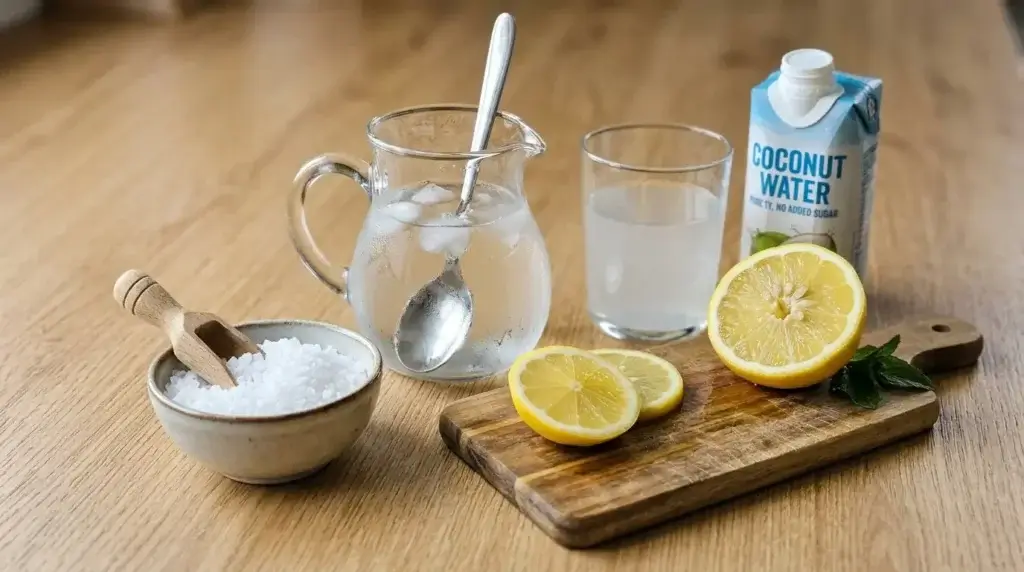
Ingredients
- 2 cups (about 475–500 ml) water
- 1/8 teaspoon table salt or sea salt
- 1 tablespoon fresh lemon or lime juice
- Ice, optional
Instructions
- Pour the water into a glass, bottle or jar.
- Add the salt.
- Stir or shake until the salt has completely dissolved.
- Add the lemon or lime juice.
- Taste and dilute with additional water if desired.
- Serve chilled or over ice.
The salt supplies sodium, while the citrus primarily adds flavor and a small amount of naturally occurring nutrients.
This recipe contains no added sugar. Keep in mind that lemon or lime juice still contains small amounts of naturally occurring carbohydrate.
What Makes This an Electrolyte Drink?
Electrolytes are minerals that carry an electrical charge in the body.
They include:
- Sodium
- Potassium
- Chloride
- Magnesium
- Calcium
These minerals participate in functions including fluid balance, nerve signaling and muscle function.
The main electrolyte provided by this homemade recipe is sodium, supplied by the salt.
It should therefore not be viewed as a complete replacement for every electrolyte lost in every situation.
Why Add Salt to Water?
Sodium is one of the electrolytes lost through sweat.
When someone has been exercising for a prolonged period, sweating heavily or spending substantial time in hot conditions, replacing both fluid and sodium can sometimes be useful.
For normal everyday hydration without significant sweat losses, however, plain water and food are often sufficient.
Adding salt to every glass of water is unnecessary and may provide more sodium than some people need.
Does Lemon Provide Electrolytes?
Lemon juice contributes flavor and small amounts of minerals, including potassium, but one tablespoon should not be considered a major electrolyte source.
Its main role in this recipe is making lightly salted water more pleasant to drink.
You can substitute lime juice if you prefer the flavor.
Can You Make It Without Lemon?
Yes.
The simplest version can be made with:
- 2 cups water
- 1/8 teaspoon salt
The lemon is not required for the sodium component of the drink.
For flavor without added sugar, you can also try:
- Fresh mint
- Cucumber slices
- Fresh ginger
- Lime instead of lemon
These ingredients primarily change the flavor rather than dramatically increasing the electrolyte content.
Can You Add Coconut Water?
You can add a small amount of unsweetened coconut water if you enjoy the flavor.
Coconut water naturally contains potassium along with some carbohydrate and naturally occurring sugars, so a recipe containing coconut water is not literally sugar-free even when no sugar has been added.
This distinction is important if your goal is specifically zero sugar rather than simply no added sugar.
Learn more about coconut water and electrolytes.
When Might a Homemade Electrolyte Drink Be Useful?
A simple electrolyte beverage may be useful in situations where you have lost meaningful amounts of fluid and sodium.

After Prolonged Exercise
Longer workouts and substantial sweating increase fluid and sodium losses.
The amount lost varies considerably between people, exercise intensity, duration and environmental conditions.
Heavy Sweating
People who sweat heavily during physical activity or work may lose more sodium than someone completing light activity.
Hot Weather
Hot conditions can increase sweating and fluid requirements, particularly during prolonged outdoor activity.
In these circumstances, hydration needs should be based on actual fluid losses rather than assuming everyone needs the same amount of electrolytes.
When Is Plain Water Enough?
You do not need to turn every glass of water into an electrolyte drink.
For many people performing ordinary daily activities and eating a balanced diet, water and food provide adequate fluid and minerals.
Electrolyte beverages become more relevant when losses are greater.
If you’re trying to understand your overall fluid needs, see our guide to how much water you should drink daily.
Homemade Electrolyte Drink vs. Sports Drinks
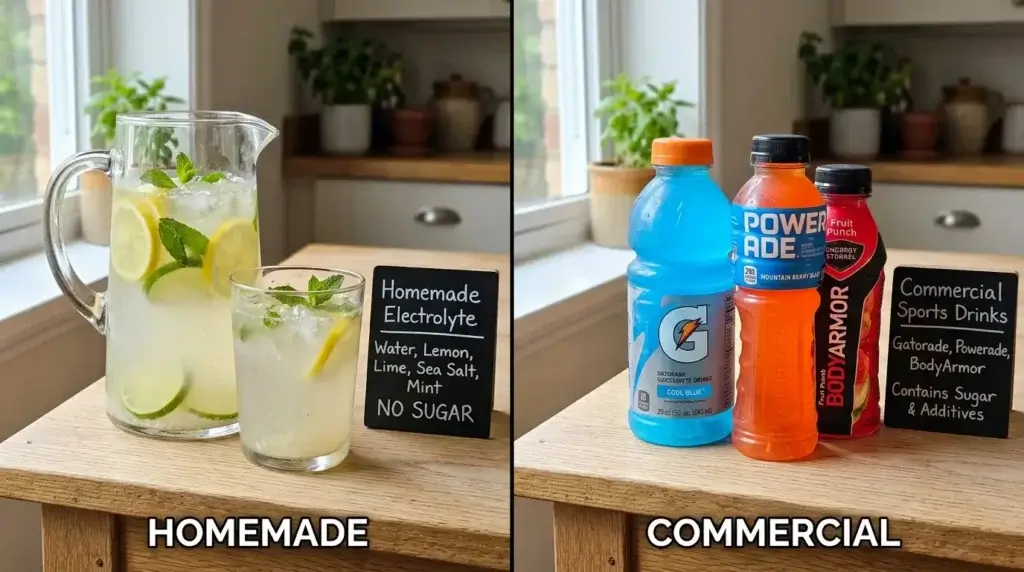
The biggest advantage of making a drink at home is control over the ingredients.
With the basic recipe, you know exactly how much water and salt you added, and there is no added sugar or sweetener.
Commercial electrolyte and sports drinks vary considerably.
Some contain added sugar. Others are sugar-free and use sweeteners. Some contain substantially more sodium or additional electrolytes such as potassium and magnesium.
That means homemade is not automatically “healthier,” and commercial is not automatically “unhealthy.”
The appropriate option depends on the formulation and why you need it.
For help comparing packaged products, see electrolyte drinks without sugar.
Homemade Electrolyte Drink Without Artificial Sweeteners
One advantage of this basic recipe is that it doesn’t require a sweetener.
If you dislike the taste of plain salted water, use lemon, lime, mint, cucumber or ginger for flavor rather than assuming a sweetener is necessary.
This makes it different from some zero-sugar commercial beverages, which may use non-sugar sweeteners.
Always check the ingredient label of packaged products because formulations vary.
Is This Recipe Suitable for Diabetes?
The basic recipe contains water, salt and a small amount of lemon or lime juice, with no added sugar.
However, that alone does not mean it is appropriate for every person with diabetes.
Hydration needs can change during illness, and diabetes can involve additional considerations related to blood glucose, medications and kidney function.
For a broader discussion, see our guide to sugar-free electrolyte drinks for diabetics.
If dehydration is associated with illness, significant changes in blood glucose or persistent symptoms, seek appropriate medical guidance rather than relying on a homemade drink.
Who Should Be Careful With Homemade Electrolyte Drinks?
People who have been instructed to limit sodium, potassium or fluids should follow their individualized medical guidance.
This can be particularly relevant for some people with:
- Kidney disease
- Heart conditions
- High blood pressure
- Certain medications that affect electrolyte balance
A homemade drink should not be used as a reason to ignore a medically prescribed sodium or fluid restriction.
Important: This Is Not an Oral Rehydration Solution
A homemade exercise-oriented electrolyte drink should not be confused with an oral rehydration solution (ORS).
Medical oral rehydration solutions use carefully formulated proportions of water, glucose and electrolytes to improve fluid absorption during illnesses such as diarrhea.
That is a different purpose from this simple no-added-sugar drink.
For dehydration caused by significant vomiting or diarrhea — particularly in infants, children, older adults or vulnerable people — use an appropriate commercial ORS or seek guidance from a healthcare professional rather than improvising an electrolyte recipe.
How to Store the Drink
Because this recipe contains fresh citrus juice, prepare only a small amount at a time.
Store any unused drink covered in the refrigerator and make a fresh batch regularly rather than keeping it for long periods.
Shake or stir before drinking if ingredients have settled.
Frequently Asked Questions
What is the best homemade electrolyte drink without sugar?
For a simple exercise or sweating-related beverage, water with a measured amount of salt and optional lemon or lime is an easy homemade option. It provides water and sodium without added sugar.
How do you make electrolyte water at home without sugar?
Mix 2 cups of water with 1/8 teaspoon of salt. Add approximately 1 tablespoon of lemon or lime juice for flavor if desired and stir until the salt dissolves.
Do electrolytes need sugar to work?
Electrolytes themselves are minerals and do not require sugar simply to exist or perform their physiological functions.
However, glucose has an important role in medical oral rehydration solutions because sodium and glucose are absorbed together in the intestine. That’s one reason a homemade sugar-free exercise drink should not be treated as a replacement for ORS during illness.
Can I drink homemade electrolyte water every day?
Most people do not automatically need an electrolyte beverage every day. The need depends on diet, activity, sweating, climate and health.
For routine hydration without significant electrolyte loss, plain water may be sufficient.
Is pink salt better than regular salt for electrolyte drinks?
Pink salt is not necessary. The important component for this recipe is sodium.
Regular table salt or sea salt can provide sodium as well. Trace minerals in specialty salts should not be assumed to provide meaningful additional hydration benefits.
Can I use this drink for diarrhea or vomiting?
Do not use this simple recipe as a substitute for a properly formulated oral rehydration solution when treating dehydration from diarrhea or vomiting.
Commercial ORS products are designed with specific proportions of glucose and electrolytes for that purpose.
Can children drink this homemade electrolyte drink?
For routine hydration, children generally do not need homemade electrolyte mixtures unless there is a specific reason.
If a child is dehydrated because of vomiting, diarrhea or illness, use an appropriate pediatric oral rehydration product and seek professional guidance rather than relying on this recipe.
Final Thoughts
A homemade electrolyte drink without added sugar can be very simple: water, a measured amount of salt and optional citrus for flavor.
Its main advantage is ingredient control, not that it is automatically healthier or more effective than every commercial electrolyte beverage.
For ordinary daily hydration, water may be all you need. When prolonged exercise, heavy sweating or hot conditions cause meaningful fluid and sodium losses, an electrolyte beverage can sometimes be useful.
Most importantly, keep an everyday homemade electrolyte drink separate from medical oral rehydration therapy. They serve different purposes.