
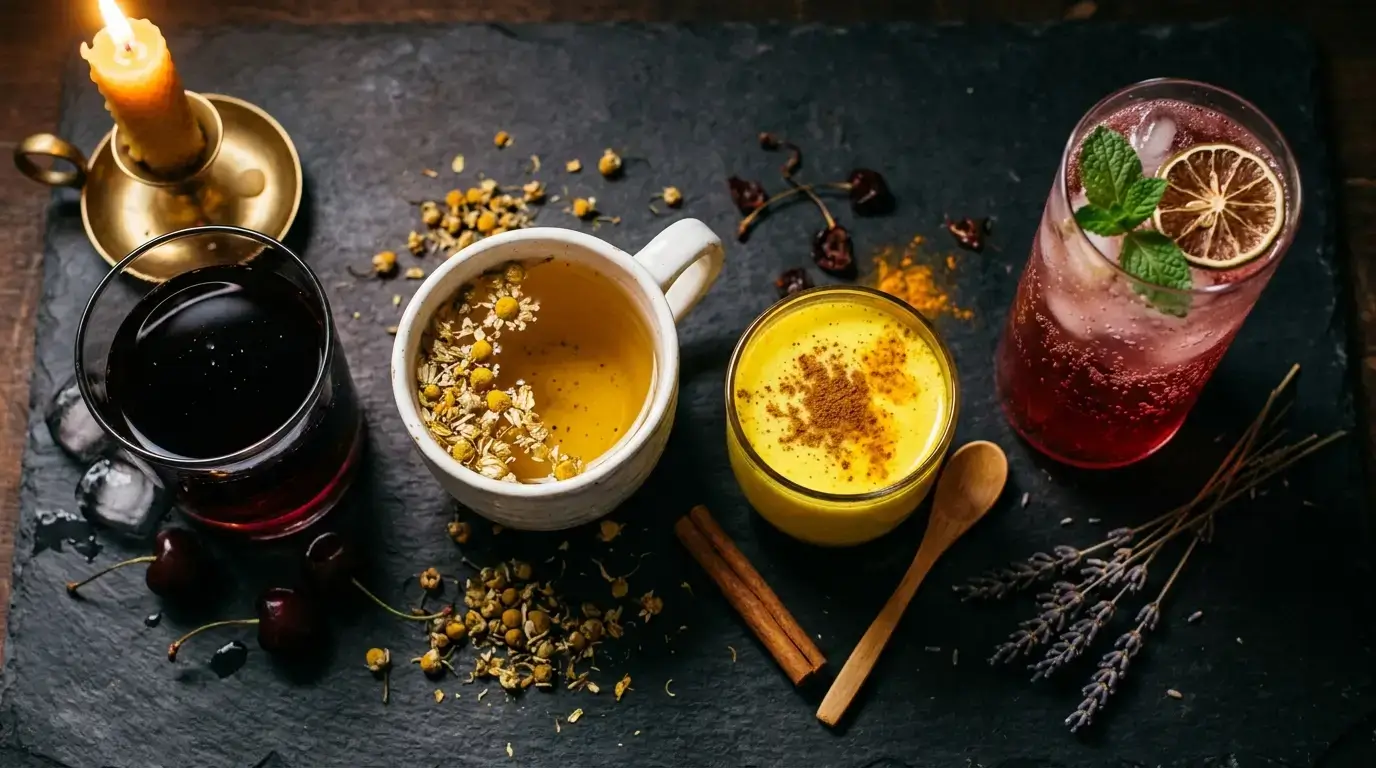
If you’re looking for a drink to help you sleep, you’ll find plenty of recommendations online—from tart cherry juice and chamomile tea to magnesium drinks and viral “sleep cocktails.”
The evidence is more nuanced.
No beverage can guarantee deep sleep or cure insomnia. However, some drinks contain ingredients that have been studied in relation to sleep, while others simply make practical bedtime choices because they are caffeine-free and can be incorporated into a relaxing evening routine.
Here are seven popular bedtime drinks, what research suggests about them, and what to consider before making them part of your routine.
Can a Drink Really Help You Sleep?
Sleep is influenced by many factors, including your sleep schedule, light exposure, caffeine and alcohol intake, stress, physical activity, medications, health conditions, and sleep environment.
A bedtime beverage is only one small part of that picture.
Some ingredients found in drinks have been studied for potential effects on sleep or relaxation. But evidence from a supplement, extract, or concentrated preparation should not automatically be assumed to apply to an ordinary cup of tea.
It is also important to distinguish between helping someone relax before bed and actually treating a sleep disorder.
1. Tart Cherry Juice
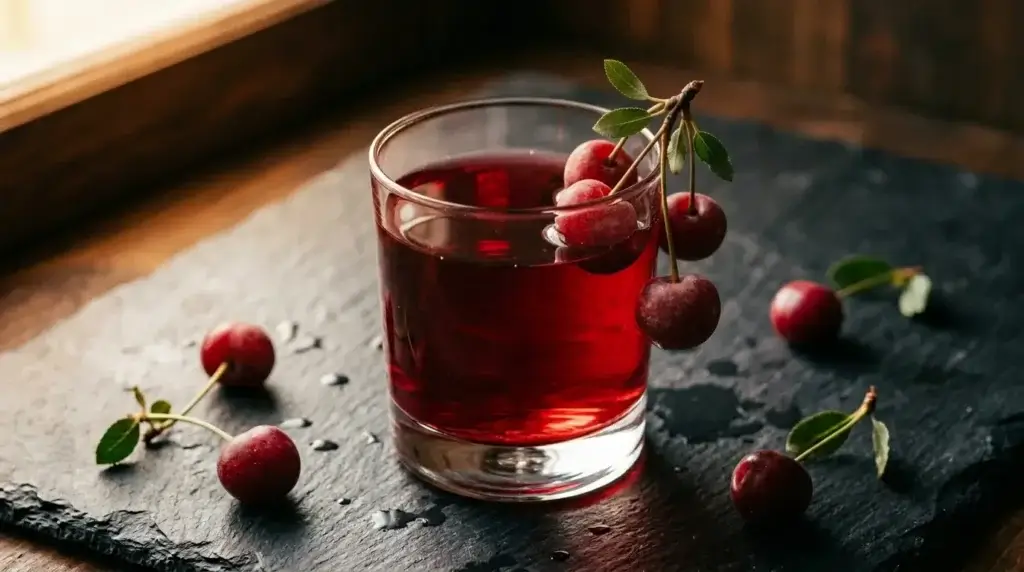
Tart cherry juice is one of the most frequently discussed drinks for sleep.
Tart cherries contain small amounts of melatonin as well as plant compounds such as polyphenols. A limited number of human studies have investigated tart cherry products in relation to sleep duration and sleep quality.
Some trials have reported improvements in certain sleep measures, but the studies have generally been small and have used specific tart cherry products or preparations.
That means tart cherry juice is interesting, but it should not be presented as a guaranteed natural sleeping aid.
Another consideration is sugar. Juice can contain a meaningful amount of naturally occurring sugar, so check the nutrition label and serving size.
2. Chamomile Tea
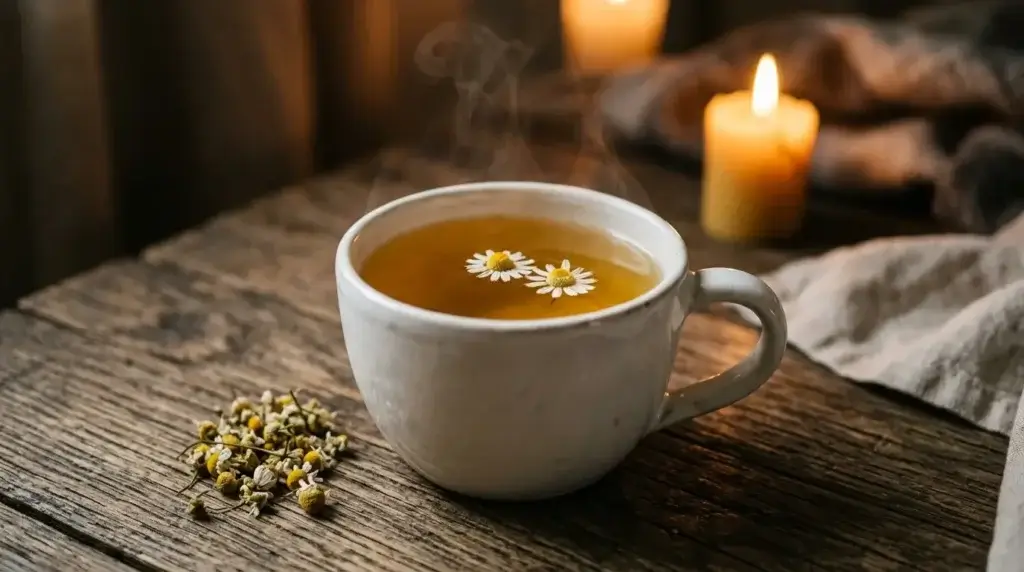
Chamomile tea has a long history of use as an evening beverage.
Chamomile contains plant compounds including apigenin, and researchers have investigated chamomile preparations in relation to anxiety and sleep.
However, the evidence is not strong enough to conclude that an ordinary cup of chamomile tea reliably treats insomnia.
Its practical advantage is simpler: chamomile tea is naturally caffeine-free and can be incorporated into a quiet bedtime routine.
If you enjoy it and tolerate it well, it can be a reasonable alternative to caffeinated evening drinks.
People with allergies to plants in the daisy family, including ragweed, should be aware of the possibility of allergic reactions.
3. Warm Milk
Warm milk is one of the classic bedtime drinks.
Milk contains tryptophan, an amino acid involved in pathways related to serotonin and melatonin. But drinking a glass of milk should not be interpreted as delivering a sedative dose of these compounds.
The ritual may be just as relevant.
A familiar warm drink can become part of a consistent wind-down routine, particularly when it replaces caffeine or alcohol later in the evening.
If you do not tolerate dairy, a non-dairy alternative may be more comfortable, although different plant-based milks have very different nutritional profiles.
4. Caffeine-Free Herbal Tea
Chamomile isn’t the only caffeine-free option.
A simple herbal infusion can work well as an evening beverage when the goal is to avoid stimulants and create a consistent bedtime routine.
Depending on personal preference, people may choose beverages such as:
- Chamomile
- Lemon balm
- Rooibos
- Other caffeine-free herbal infusions
However, “herbal” doesn’t automatically mean proven for sleep or safe for everyone.
Different herbs have different pharmacological properties and potential interactions.
Our herbal teas guide explains these differences in more detail.
5. Passionflower Tea
Passionflower is another herb commonly marketed for relaxation and sleep.
Small studies have investigated passionflower preparations, including tea, for subjective sleep quality and anxiety.
The evidence remains limited, so passionflower should be described as a beverage being studied for potential effects rather than as a proven treatment for insomnia or nighttime anxiety.
People who take medications, are pregnant, or have medical conditions should be cautious about concentrated herbal products and discuss potential interactions with an appropriate healthcare professional.
6. The Sleepy Girl Mocktail
The “Sleepy Girl Mocktail” became popular on social media.
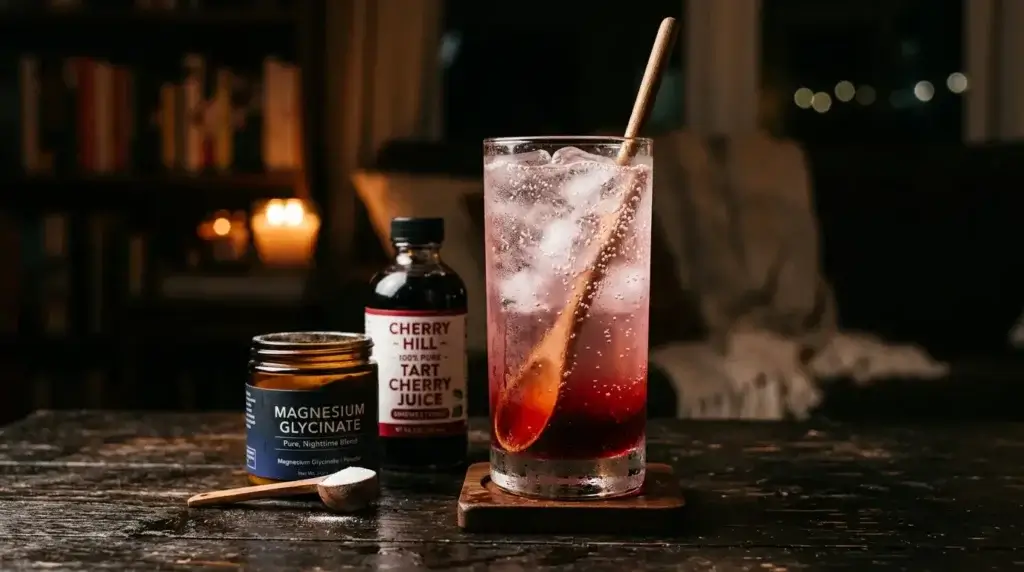
Versions typically combine:
- Tart cherry juice
- Sparkling water
- A magnesium product
The popularity of the drink doesn’t prove that the finished cocktail improves sleep.
Tart cherry products have been studied separately, and magnesium has also been investigated in relation to sleep. But combining two ingredients does not automatically create a clinically proven sleep treatment.
There is another important distinction: adding a magnesium supplement to a drink is different from preparing an ordinary food-based beverage.
Supplement amounts, forms, medications, kidney function, and total magnesium intake can matter.
For that reason, ChefYuma does not recommend a universal magnesium dose for a homemade sleep drink.
If you already use a magnesium product, follow its directions and discuss supplementation with a healthcare professional when appropriate.
7. A Simple Warm Caffeine-Free Drink
The seventh option is intentionally uncomplicated.
Sometimes the most useful bedtime drink is simply a beverage that:
- Contains no caffeine
- Does not cause reflux or digestive discomfort
- Is not alcoholic
- Does not require large amounts of added sugar
- Fits comfortably into your evening routine
That might be warm water, rooibos tea, a mild herbal infusion, or another caffeine-free beverage you already enjoy.
A drink doesn’t need a long list of “functional” ingredients to be appropriate before bed.
What Is the Best Juice for Sleep?
Based on the available research, tart cherry juice is one of the fruit juices most frequently studied in relation to sleep.
But that is different from saying it is the “best” juice for everyone.
Studies have been relatively small, products and serving amounts differ, and individual responses can vary.
Juice also contains naturally occurring sugar.
If you enjoy tart cherry juice, it can be one option to consider. It should not be expected to correct chronic insomnia or another sleep disorder on its own.
What Is the Best Drink to Help You Sleep?
There is no single drink proven to work best for everyone.
A practical choice depends on what you’re currently drinking and what you tolerate.
For example, replacing an evening coffee with caffeine-free tea is a very different intervention from adding a supplement-based sleep cocktail.
For many people, a reasonable evening drink is simply:
caffeine-free + alcohol-free + comfortable to digest + not consumed in excessive volume immediately before bed.
Drinks That May Interfere With Sleep
What you avoid can be at least as important as what you add.
Caffeinated Drinks
Coffee, energy drinks, some teas, cola, and other beverages can contain caffeine.
Caffeine sensitivity and metabolism vary considerably between people, so there isn’t one cutoff time that works for everyone.
If you have difficulty sleeping, consider whether caffeine later in your day may be contributing.
For alternatives, see our best caffeine-free drinks guide.
Alcohol
Alcohol can initially make people feel sleepy, but that doesn’t mean it improves sleep quality.
It can disrupt normal sleep and contribute to nighttime awakenings.
Using alcohol as a sleep aid is therefore not a good substitute for addressing the underlying reason for poor sleep.
Energy Drinks
Energy drinks can contain substantial caffeine and other stimulant ingredients, making them poorly suited to the hours before bedtime.
Large Amounts of Liquid
Even a caffeine-free beverage can disturb sleep if drinking a large volume causes you to wake repeatedly to use the bathroom.
The appropriate amount and timing depend on the individual.
What About Magnesium Drinks?
Magnesium deserves its own explanation because many products are marketed specifically for nighttime use.
Magnesium is an essential mineral involved in many physiological processes.
Research has investigated magnesium supplementation and sleep, but the evidence does not establish that everyone with poor sleep needs magnesium or that one specific form is universally the “best” sleep supplement.
A supplement is also different from obtaining magnesium naturally from food.
People with certain medical conditions, particularly kidney problems, and people taking some medications may need additional caution with magnesium supplements.
For this reason, we would not recommend adding a fixed dose of magnesium powder to every reader’s bedtime drink.
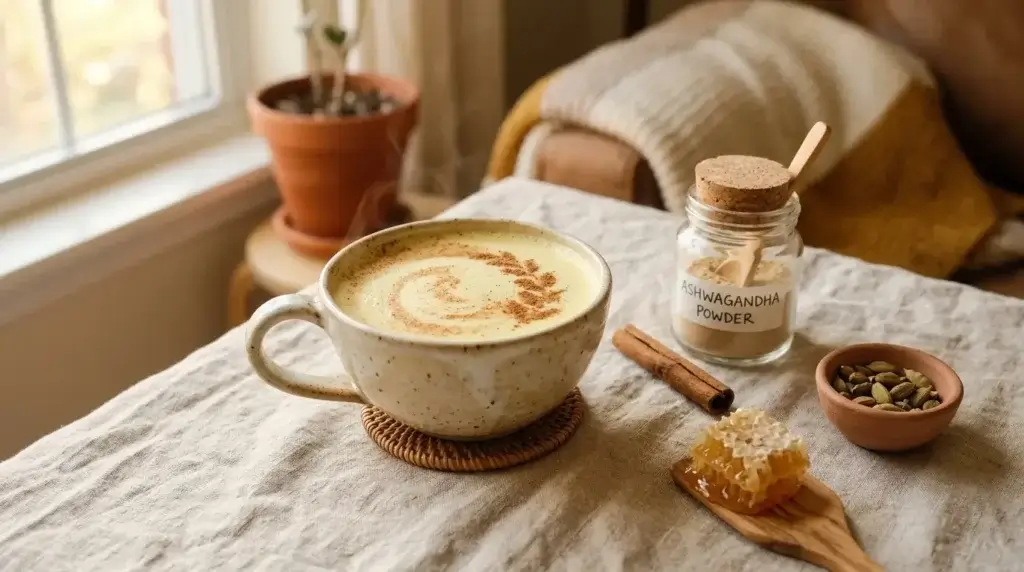
What About Ashwagandha?
Ashwagandha has also been studied for stress and sleep.
Some clinical trials using specific standardized extracts have reported potential benefits, but those findings should not automatically be transferred to a homemade drink containing an arbitrary amount of ashwagandha powder.
Ashwagandha can also have side effects and interact with medications, and it isn’t appropriate for everyone.
You can read more about this distinction in our adaptogenic drinks guide.
What About Golden Milk?
Golden milk typically combines milk or a plant-based alternative with turmeric and other spices.
It can be an enjoyable warm, caffeine-free evening beverage.
However, evidence that golden milk itself improves sleep is limited.
Research on curcumin, turmeric extracts, inflammation, or individual ingredients shouldn’t be presented as proof that an ordinary cup of golden milk produces deeper or longer sleep.
Enjoy it as a beverage if you like it—not as a treatment for insomnia.
How to Build a Better Bedtime Drink Routine
Instead of trying several sleep drinks at once, keep the routine simple.
Choose one caffeine-free beverage that you enjoy and tolerate.
Avoid making it excessively large if nighttime bathroom trips are already a problem.
And pay attention to what the drink is replacing.
Replacing late coffee, energy drinks, or alcohol may be more meaningful than adding another functional ingredient to an already complicated evening routine.
Our warm functional drinks guide includes additional caffeine-free beverage ideas.
When a Sleep Drink Isn’t Enough
Occasional difficulty sleeping is common.
Persistent sleep problems are different.
Consider speaking with a healthcare professional if you regularly struggle to fall asleep or stay asleep, feel excessively sleepy during the day, snore heavily or experience breathing interruptions during sleep, or if sleep problems significantly affect your daily life.
Chronic insomnia and sleep disorders deserve proper evaluation rather than relying exclusively on teas, juices, supplements, or social-media sleep cocktails.
Frequently Asked Questions
What is the best drink for sleep?
There is no universal best drink. Tart cherry juice has been studied in small sleep trials, while caffeine-free teas can provide a practical evening alternative to caffeinated beverages. Individual response varies.
What is the best juice for sleep?
Tart cherry juice is among the juices most frequently studied in relation to sleep. However, the evidence is still limited and doesn’t establish that it will improve sleep for everyone.
What drinks help you sleep?
Some people choose tart cherry juice, chamomile tea, warm milk, or other caffeine-free herbal drinks. These should be considered possible components of a bedtime routine rather than treatments for insomnia.
Does the Sleepy Girl Mocktail work?
The finished mocktail has not been established as a proven sleep treatment simply because some of its individual ingredients have been studied. Versions containing magnesium also introduce a dietary supplement, which requires additional consideration.
Is chamomile tea good before bed?
Chamomile is caffeine-free and has traditionally been used as an evening beverage. Research into chamomile and sleep exists, but an ordinary cup of tea shouldn’t be presented as a guaranteed insomnia treatment.
Is warm milk good for sleep?
Warm milk can be a comforting caffeine-free bedtime beverage. Although milk contains tryptophan, evidence does not establish that a normal serving reliably causes sleep.
What should I drink for deep sleep?
No beverage has been proven to guarantee “deep sleep.” Sleep quality depends on many factors beyond a single drink.
Key Takeaways
When choosing a bedtime drink:
- Prioritize caffeine-free options.
- Don’t use alcohol as a sleep aid.
- Treat viral sleep cocktails cautiously.
- Don’t assume a supplement is necessary because it is marketed for sleep.
- Remember that evidence for an ingredient does not automatically prove that a homemade beverage containing it will work.
- Avoid expecting any drink to cure chronic insomnia.
- Choose something you enjoy and tolerate without drinking so much that it disrupts your sleep.
Final Thoughts
The best drinks for better sleep are usually less dramatic than social media makes them sound.
Tart cherry juice has some interesting preliminary research. Chamomile, passionflower, and other caffeine-free teas can fit into a relaxing evening routine. Warm milk and simple herbal beverages are also reasonable choices for people who enjoy them.
But none of these beverages replaces healthy sleep habits or treatment for an underlying sleep disorder.
Think of your bedtime drink as one small part of an evening routine—not the solution to sleep itself.
1 thought on “Best Drinks for Better Sleep: 7 Bedtime Options”