
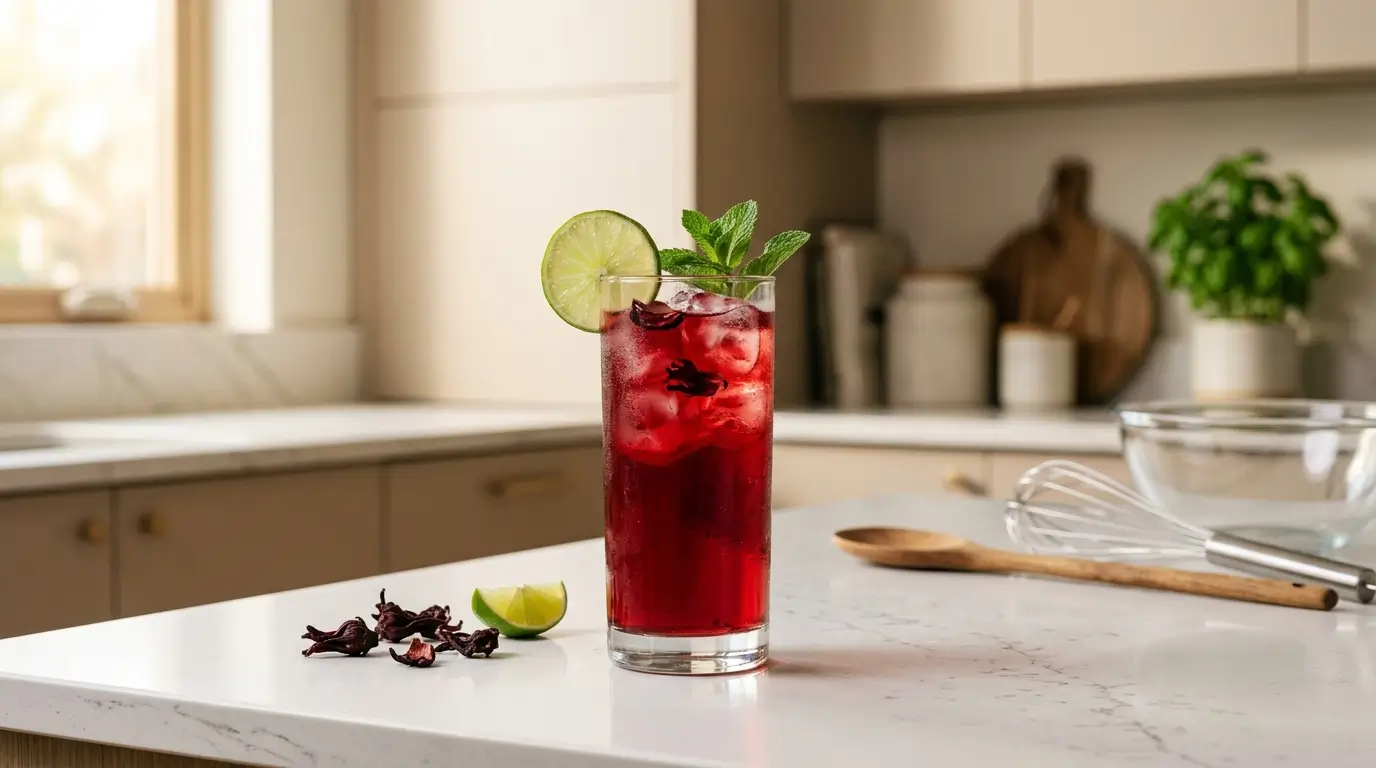
Hibiscus tea is often promoted as a natural drink for weight loss, but the evidence is more nuanced than many online claims suggest. Drinking hibiscus tea does not directly burn body fat, and there is no strong evidence that a specific number of cups will produce predictable weight loss.
However, unsweetened hibiscus tea can still fit well into a weight-management routine, particularly when it replaces higher-calorie sweetened drinks. Researchers have also studied hibiscus extracts and their potential effects on body weight and metabolic markers, although these findings should not automatically be assumed to apply to ordinary hibiscus tea.
In this guide, we’ll look at what research actually suggests, what remains uncertain, and practical ways to include hibiscus tea in a balanced diet.
Does Hibiscus Tea Help With Weight Loss?
Possibly, but expectations should remain modest.
Some research on Hibiscus sabdariffa has reported changes in body weight, body composition, or metabolic markers. One frequently cited 12-week human study found improvements in several measurements among participants taking a concentrated hibiscus extract.
That is interesting evidence, but there is an important distinction: the participants consumed a standardized hibiscus extract rather than ordinary brewed hibiscus tea.
Laboratory and animal research has also explored hibiscus compounds such as polyphenols and anthocyanins. These studies can help researchers understand possible biological mechanisms, but they do not prove that drinking hibiscus tea causes meaningful weight loss in humans.
For someone trying to manage weight, the most straightforward benefit may actually be much simpler: plain hibiscus tea is an unsweetened beverage that can replace drinks containing added sugar and more calories.
So, rather than thinking of hibiscus tea as a fat-burning drink, it is more accurate to consider it a low-calorie beverage that may fit into an overall weight-management strategy.
What Does Research Say About Hibiscus and Weight Management?
Researchers have investigated several ways compounds found in Hibiscus sabdariffa might influence metabolic processes. Most of this research, however, involves hibiscus extracts, laboratory experiments, or animal studies rather than ordinary cups of hibiscus tea.

1. Carbohydrate-Digesting Enzymes
Laboratory research has investigated whether compounds in hibiscus can influence enzymes involved in carbohydrate digestion, including alpha-amylase.
These findings are scientifically interesting, but they do not establish that drinking hibiscus tea before a meal meaningfully reduces carbohydrate or calorie absorption in people.
For that reason, there is not enough evidence to recommend a specific pre-meal timing for hibiscus tea as a weight-loss strategy.
2. Fat Metabolism and Adipogenesis
Hibiscus polyphenols and anthocyanins have also been studied for possible effects on fat metabolism and adipogenesis, the process involved in the development of fat cells.
Some laboratory and animal studies have produced promising findings, but these results should not be interpreted as evidence that hibiscus tea specifically targets belly fat or prevents new fat cells from forming in people.
More human research using ordinary brewed hibiscus tea would be needed to determine whether these mechanisms have a meaningful effect on body weight.
3. Body Weight vs. Water Weight
Hibiscus is sometimes described as a diuretic and promoted as a way to lose water weight.
Changes in fluid balance, however, are not the same as losing body fat. A temporary change on the scale caused by fluid loss should therefore not be presented as evidence of successful fat loss.
For sustainable weight management, overall dietary intake, physical activity, sleep, and other lifestyle factors are much more important than any single beverage.
How Many Calories Does Hibiscus Tea Have?

Plain brewed hibiscus tea is naturally very low in calories when it is prepared without sugar, honey, syrups, or other calorie-containing ingredients.
For weight management, this can make hibiscus tea useful as a replacement for beverages that contain added sugar.
For example, replacing a sweetened soda, juice drink, sweet tea, or flavored coffee with unsweetened hibiscus tea can reduce the number of calories and added sugars consumed from beverages.
The exact difference depends on the drink being replaced and the ingredients used.
What You Add Matters
Hibiscus tea itself may be low in calories, but sweeteners can change that quickly.
Sugar, honey, flavored syrups, fruit juice, and other additions all contribute extra calories. If your goal is to reduce calories from beverages, plain hibiscus tea or a version with little or no added sugar is the simplest option.
This does not mean that unsweetened hibiscus tea causes weight loss by itself. Its practical advantage is that it can help replace a higher-calorie drink while still providing a flavorful beverage.
If you’re looking for other options without added sugar, see our homemade electrolyte drink without sugar. homemade electrolyte drink without sugar guide has additional unsweetened drink strategies.
Best Time to Drink Hibiscus Tea for Weight Loss
There is no well-established time of day when hibiscus tea has been proven to produce greater weight loss.
Instead, the best time to drink it depends mainly on how it fits into your routine and what beverage it replaces.
With or Around Meals
You can drink hibiscus tea with or around meals if you enjoy it. However, there is not enough human evidence to say that drinking hibiscus tea 20–30 minutes before a meal significantly reduces carbohydrate absorption or produces greater weight loss.
As a Replacement for Sweetened Drinks
For weight management, one of the most practical times to drink hibiscus tea is when you would otherwise choose a higher-calorie beverage.
For example, unsweetened hibiscus tea can replace sweetened iced tea, soda, juice drinks, or sugary coffee beverages.
Over time, consistently choosing drinks with little or no added sugar can help reduce calories from beverages.
Morning or Later in the Day?
Hibiscus tea is naturally caffeine-free, so it can generally be enjoyed in the morning or later in the day according to personal preference.
If hibiscus tea causes stomach discomfort or worsens reflux symptoms for you, adjust the timing or amount rather than following a fixed schedule.
For a broader discussion of timing, see the best time to drink hibiscus tea.
How Much Hibiscus Tea Per Day for Weight Loss?
There is no scientifically established number of cups of hibiscus tea per day that has been proven to cause weight loss.
This is important because studies involving concentrated hibiscus extracts cannot be directly converted into an equivalent number of cups of brewed tea.
For most people, hibiscus tea is better viewed as a beverage rather than a weight-loss supplement. If you enjoy it, it can be included as part of your normal beverage routine, particularly when served without added sugar.
Drinking more hibiscus tea should not be expected to produce greater or faster weight loss.
Individual tolerance and health circumstances also matter. Hibiscus may not be appropriate for everyone, particularly for people who take certain medications, have specific medical conditions, or are pregnant.
For a more detailed discussion of daily intake and safety considerations, see how much hibiscus tea per day.
What to Realistically Expect
Hibiscus tea should not be expected to produce significant weight loss on its own.
Research on hibiscus extracts has generated interest in possible effects on body weight and metabolic health, but the evidence does not establish that ordinary brewed hibiscus tea causes predictable fat loss.
What Hibiscus Tea Can Realistically Offer
For someone managing their weight, hibiscus tea can be useful because it:
- Provides a flavorful option without caffeine
- Can be prepared without added sugar
- Can replace higher-calorie sweetened beverages
- May make it easier to add variety to a lower-calorie beverage routine
These practical benefits are different from claiming that hibiscus tea directly burns fat.
What Hibiscus Tea Cannot Do
Hibiscus tea cannot:
- Target belly fat
- Guarantee weight loss
- Compensate for consistently consuming more calories than your body needs
- Replace a balanced diet, regular physical activity, adequate sleep, or appropriate medical care
Body weight is influenced by many factors, and no single tea or drink determines long-term results.
A Practical Way to Include Hibiscus Tea
There is no proven hibiscus tea “weight loss routine” that everyone needs to follow.
A simpler approach is to prepare hibiscus tea without added sugar and drink it when you would normally choose another beverage.
For example, you might enjoy it:
- With a meal
- As an afternoon iced drink instead of a sweetened beverage
- At another time that fits comfortably into your routine
Hot and cold preparations can both be used. There is currently no good evidence that cold-brew hibiscus tea produces greater weight loss than hot hibiscus tea.
For preparation ideas, see our cold brew herbal tea recipes.

Hibiscus Tea and Acid Reflux: A Note for Weight Loss Dieters
Hibiscus tea has a naturally tart, acidic taste, and some people with acid reflux or GERD may find that acidic drinks worsen their symptoms.
Individual tolerance varies. If hibiscus tea seems to trigger heartburn or digestive discomfort, consider reducing the amount, changing when you drink it, or avoiding it.
There is not enough evidence to say that cold-brew hibiscus tea is universally safer for people with acid reflux.
For more information, see our guide to hibiscus tea and acid reflux and our explanation of whether hibiscus tea is acidic or alkaline.
Frequently Asked Questions
Does hibiscus tea help with weight loss?
Hibiscus tea is not a proven weight-loss treatment. Some research involving hibiscus extracts has reported changes in body weight or metabolic markers, but this does not prove that ordinary brewed hibiscus tea causes weight loss. Its clearest practical benefit is that unsweetened hibiscus tea can replace higher-calorie drinks.
How much weight can you lose with hibiscus tea?
There is no reliable amount of weight that someone can expect to lose simply by drinking hibiscus tea. Weight change depends on overall calorie intake, physical activity, health, sleep, and many other individual factors.
When should I drink hibiscus tea for weight loss?
There is no scientifically established best time to drink hibiscus tea for weight loss. You can drink it at a time that fits your routine. Using unsweetened hibiscus tea to replace a sugary drink may be more relevant for weight management than drinking it at a particular hour.
How many calories are in hibiscus tea?
Plain hibiscus tea prepared with water and no added sweeteners is a very low-calorie beverage. The calorie content increases when sugar, honey, syrups, juice, or other calorie-containing ingredients are added.
Is hibiscus tea good for belly fat?
There is not enough human evidence to conclude that drinking hibiscus tea specifically reduces belly fat. Laboratory and animal research has investigated hibiscus compounds and fat metabolism, but these findings should not be interpreted as proof of targeted abdominal fat loss in humans.
Does hibiscus tea boost metabolism?
There is not strong evidence that ordinary hibiscus tea meaningfully increases metabolic rate. Research has explored several metabolic effects of hibiscus compounds, but describing hibiscus tea as a “metabolism booster” would overstate the evidence.
Is cold or hot hibiscus tea better for weight loss?
Neither hot nor cold hibiscus tea has been shown to be superior for weight loss. Choose the preparation you prefer and pay more attention to what is added to the drink. Keeping added sugar low is more relevant than whether the tea is served hot or cold.
Can I drink hibiscus tea every day for weight loss?
Some people include hibiscus tea regularly in their diet, but there is no established daily amount specifically for weight loss. Individual health conditions, medications, pregnancy, and personal tolerance can affect whether hibiscus tea is appropriate.
For more information about daily intake, see how much hibiscus tea per day.
Key Takeaways
- Hibiscus tea is not a proven fat-burning or weight-loss treatment.
- Research on concentrated hibiscus extracts should not automatically be applied to ordinary brewed hibiscus tea.
- Plain, unsweetened hibiscus tea can be useful for weight management when it replaces beverages with more calories or added sugar.
- There is no proven best time to drink hibiscus tea specifically for weight loss.
- There is no scientifically established number of cups per day that guarantees better weight-loss results.
- Hot and cold hibiscus tea can both fit into a balanced diet; neither has been proven superior for weight loss.
- Long-term weight management depends on overall diet, physical activity, sleep, health, and other individual factors rather than any single beverage.