
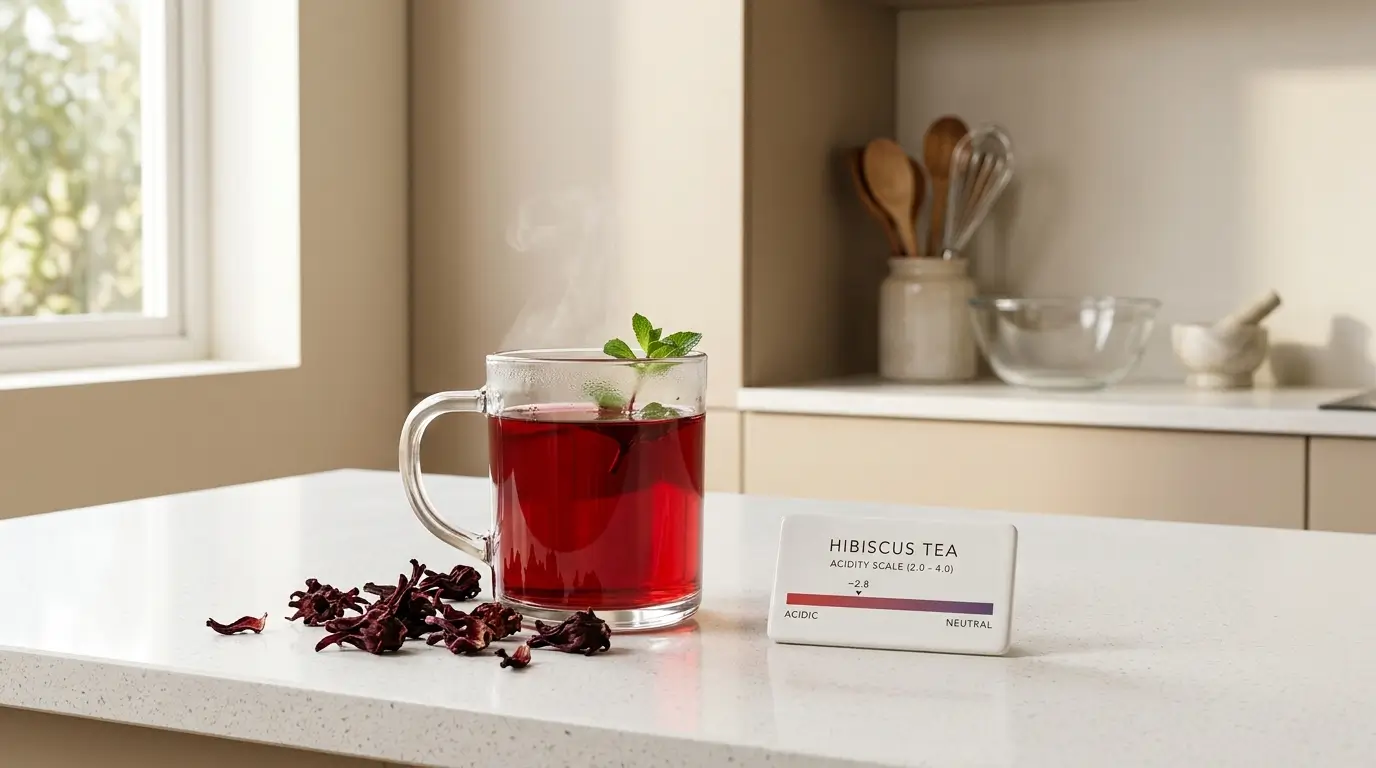
Hibiscus tea is acidic, not alkaline. Its tart flavor comes naturally from organic acids found in Hibiscus sabdariffa, including citric, malic, and hibiscus acids.
Quick answer: The exact pH of hibiscus tea can vary depending on the hibiscus used, the amount of water, concentration, steeping time, and preparation method. For that reason, there isn’t one exact pH value that applies to every cup of hibiscus tea.
What matters is that prepared hibiscus tea generally falls on the acidic side of the pH scale, rather than being neutral or alkaline.
Below, we’ll look at why hibiscus tea is acidic, what affects its pH, whether hot and cold brewing make a difference, and what its acidity may mean for acid reflux and teeth.
Why Is Hibiscus Tea Acidic?
Hibiscus tea is naturally acidic because the dried calyces of Hibiscus sabdariffa contain several organic acids. These compounds contribute to the drink’s characteristic tart, cranberry-like flavor.
The acidity is naturally present in the plant—it is not something added during tea preparation.
The Organic Acids in Hibiscus
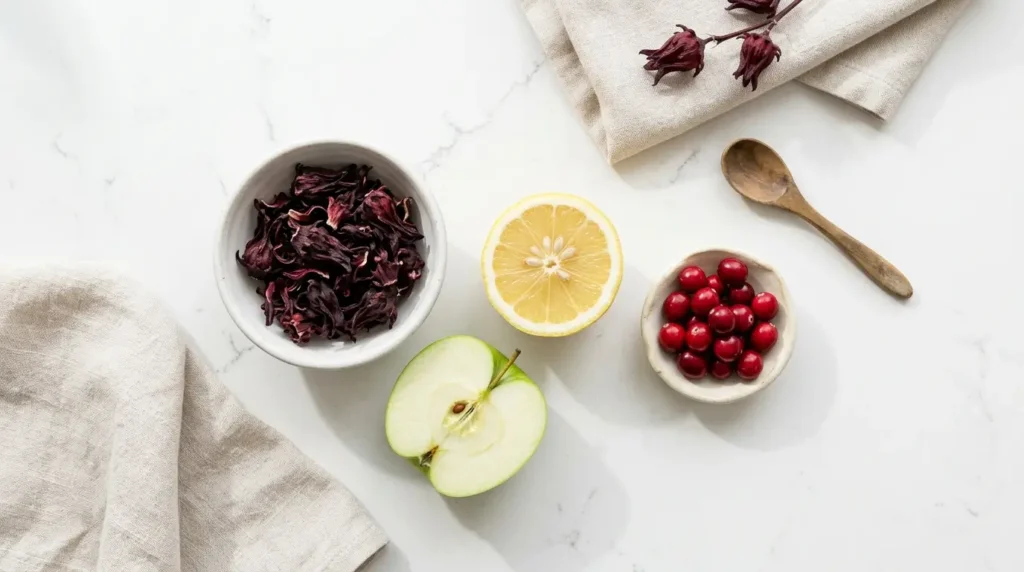
Several naturally occurring organic acids contribute to the tartness of hibiscus, including:
- Citric acid, also found in citrus fruits
- Malic acid, commonly associated with the tart flavor of fruits such as apples
- Hibiscus acid, a characteristic organic acid found in Hibiscus sabdariffa
The amount and combination of these compounds can vary, which is one reason different hibiscus teas may not have exactly the same acidity.
What Affects the pH of Hibiscus Tea?
The pH of a prepared cup of hibiscus tea is not fixed. It can vary depending on factors such as:
- The variety and source of the hibiscus
- How much dried hibiscus is used
- The amount and pH of the water
- Brewing temperature
- Steeping time
- The concentration of the finished drink
- Other ingredients added to the tea
This is why an exact pH value from one hibiscus preparation should not automatically be applied to every hibiscus tea.
What Is the pH of Hibiscus Tea?
Hibiscus tea is acidic, but there is no single pH number that applies to every cup.
Published measurements and individual preparations can differ because pH depends on the hibiscus material, concentration, water, and brewing conditions. The important takeaway is that hibiscus tea generally falls on the acidic side of the pH scale.
Why There Is No Single Exact pH
When you see a specific pH number for hibiscus tea, it describes that particular preparation or measurement, not every hibiscus tea.
For example, using more dried hibiscus in the same amount of water creates a different concentration than a lightly brewed tea. Water chemistry and preparation conditions can also affect the final measurement.
So instead of asking for one universal “exact pH,” it is more accurate to say that hibiscus tea is acidic and its exact pH varies by preparation.
Is Hibiscus Tea More Acidic Than Coffee?
Hibiscus tea can be more acidic than many types of coffee, but the exact comparison depends on how both drinks are prepared.
Rather than relying on a fixed pH number for either beverage, remember that hibiscus gets its pronounced tartness from naturally occurring organic acids.
If acidic drinks tend to trigger digestive symptoms for you, the practical question is how your body responds rather than which beverage has the lower pH number.
Hot vs. Cold Brew Hibiscus Tea: Which Is More Acidic?
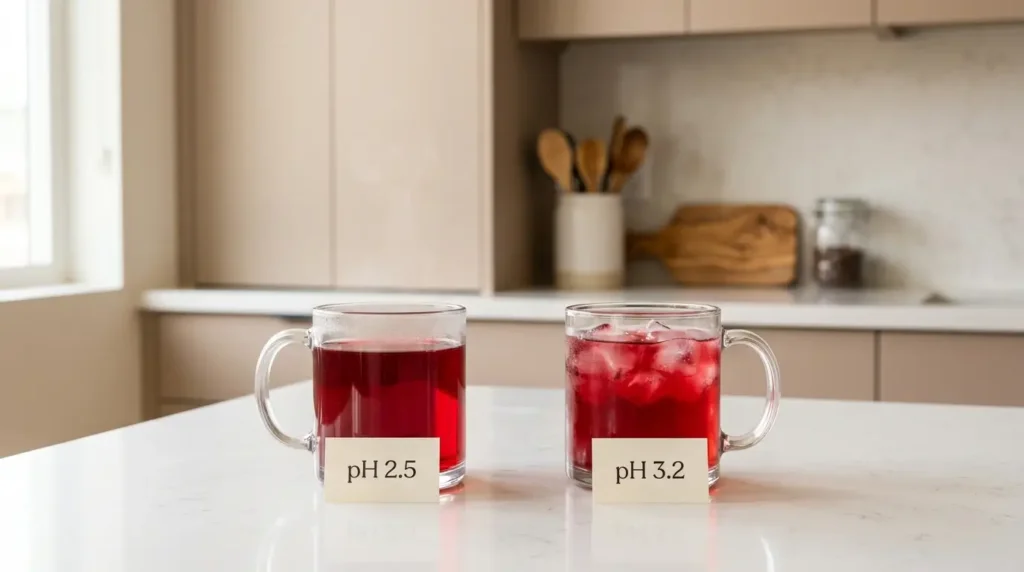
Brewing temperature can influence what is extracted from hibiscus, but it is not accurate to assign one fixed pH range to every hot brew and another fixed range to every cold brew.
Hot water and cold water can extract plant compounds differently. However, the final acidity of hibiscus tea also depends on the amount of hibiscus used, steeping time, water composition, and the concentration of the finished drink.
A cold-brewed hibiscus tea is therefore not automatically non-acidic or reflux-friendly. Both hot and cold hibiscus tea remain acidic beverages.
If you are sensitive to acidity, a lighter or more diluted preparation may be easier to tolerate than a strong, concentrated tea, regardless of whether it is served hot or cold.
For a broader comparison of the two preparation methods, see our guide to hibiscus tea hot or cold.
Does Hibiscus Tea Become Alkaline in Your Body?
Hibiscus tea is acidic when you drink it, and drinking it does not meaningfully change your body’s tightly regulated blood pH.
You may see claims online that certain acidic foods or drinks become “alkaline” after digestion. However, this does not mean that an acidic drink becomes alkaline before it reaches your stomach or that it neutralizes stomach acid.
For practical purposes, especially if you are concerned about acid reflux or heartburn, what matters is that hibiscus tea is acidic when consumed.
If hibiscus tea tends to trigger digestive discomfort, see our complete guide to hibiscus tea and acid reflux.
Why Does Hibiscus Tea Change Color With pH?
Hibiscus contains anthocyanins, natural plant pigments responsible for its deep red color. These pigments are sensitive to pH, which means their color can change depending on how acidic or alkaline their environment is.
In more acidic conditions, hibiscus pigments tend to appear red or deep pink. As the environment becomes less acidic and moves toward neutral or alkaline conditions, the pigments can shift toward purple, blue, or other shades.
This is why hibiscus is sometimes used as a natural pH indicator in simple science experiments.
The exact color depends on several factors, including the concentration of hibiscus pigments and the ingredients mixed with the tea, so color alone should not be used to determine an exact pH value.
Is the Acidity of Hibiscus Tea Bad for You?
For most people, the fact that hibiscus tea is acidic does not automatically make it unhealthy. Many commonly consumed foods and drinks are acidic.
However, acidity may matter more if you are prone to acid reflux or if your teeth are frequently exposed to acidic beverages.
Acid Reflux and GERD
Hibiscus tea is not a proven cause of GERD, but its acidity may trigger or worsen reflux symptoms in some people who are sensitive to acidic drinks.
If hibiscus tea consistently causes heartburn, regurgitation, or throat irritation, it may be one of your personal triggers.
For more detailed guidance, see is hibiscus tea good for acid reflux?.
Tooth Enamel and Frequent Exposure
Frequent exposure to acidic drinks can contribute to dental enamel erosion over time. The risk depends on more than the pH of a single drink, including how often you consume it and how long it remains in contact with your teeth.
Avoid holding or swishing hibiscus tea around your mouth, and consider rinsing your mouth with plain water afterward if you drink it regularly.
Can You Make Hibiscus Tea Less Acidic?
You can change the concentration and perceived tartness of hibiscus tea, but that does not necessarily make the drink neutral or alkaline.
If you find strong hibiscus tea too tart or irritating, a lighter preparation may be easier to tolerate.
Use a More Diluted Brew
Using less dried hibiscus or more water produces a less concentrated drink.
Dilution can reduce the concentration of acids in each serving, although the final pH will depend on the hibiscus, water, and preparation method.
Adjust the Steeping Time
Steeping conditions influence which compounds are extracted from hibiscus.
If you prefer a milder tea, try a shorter steeping time rather than making a very strong infusion. Avoid assuming that a particular steeping time guarantees a specific pH.
Pay Attention to Your Individual Tolerance
If your concern is acid reflux or stomach discomfort, your personal response matters more than achieving a particular pH number.
Start with a small, mild serving and see how you feel. If hibiscus tea repeatedly causes heartburn or discomfort, making it weaker may not solve the problem.
For timing and general intake guidance, see the best time to drink hibiscus tea and how much hibiscus tea per day.
Frequently Asked Questions
Is hibiscus tea acidic or alkaline?
Hibiscus tea is acidic, not alkaline. Its natural tartness comes from organic acids found in Hibiscus sabdariffa, including citric, malic, and hibiscus acids.
What is the pH of hibiscus tea?
There is no single exact pH that applies to every cup of hibiscus tea. The final pH can vary depending on the hibiscus used, concentration, water, steeping time, temperature, and preparation method.
Why is hibiscus tea acidic?
Hibiscus naturally contains several organic acids, including citric acid, malic acid, and hibiscus acid. These compounds contribute to its characteristic tart flavor and acidic nature.
Is hibiscus tea more acidic than coffee?
Hibiscus tea can be more acidic than many types of coffee, but the exact comparison depends on how both beverages are prepared. Their pH values can vary rather than falling at one universal number.
Does hibiscus tea become alkaline in the body?
Hibiscus tea is acidic when consumed. Claims that certain foods become “alkaline” after digestion do not mean that drinking hibiscus tea makes your blood alkaline or neutralizes stomach acid.
Is cold brew hibiscus tea less acidic than hot hibiscus tea?
Brewing temperature can affect the compounds extracted from hibiscus, but cold brew should not automatically be considered non-acidic or reflux-friendly. The final acidity also depends on concentration, steeping time, water, and the amount of hibiscus used.
Is hibiscus tea bad for acid reflux because it is acidic?
Not necessarily for everyone, but hibiscus tea may trigger or worsen reflux symptoms in some people who are sensitive to acidic beverages.
For more information, see our guide on hibiscus tea and acid reflux.
Can hibiscus tea affect tooth enamel?
Frequent exposure to acidic beverages can contribute to enamel erosion over time. How often you drink hibiscus tea and how long it remains in contact with your teeth can matter in addition to its acidity.
Why does hibiscus tea change color with pH?
Hibiscus contains anthocyanins, plant pigments that change color depending on their chemical environment. They tend to appear red in acidic conditions and can shift toward purple or other shades as pH changes.
Conclusion: Is Hibiscus Tea Acidic or Alkaline?
Hibiscus tea is acidic, not alkaline. Its tart flavor comes from naturally occurring organic acids in Hibiscus sabdariffa, including citric, malic, and hibiscus acids.
There is no single exact pH that applies to every cup because the final acidity can vary with concentration, water, steeping time, temperature, and preparation method.
Hot and cold brewing can extract hibiscus compounds differently, but both preparations remain acidic. If you are sensitive to acidic drinks, a lighter or more diluted brew may be easier to tolerate.
For a broader look at the drink beyond acidity, see our guide to hibiscus tea benefits.