
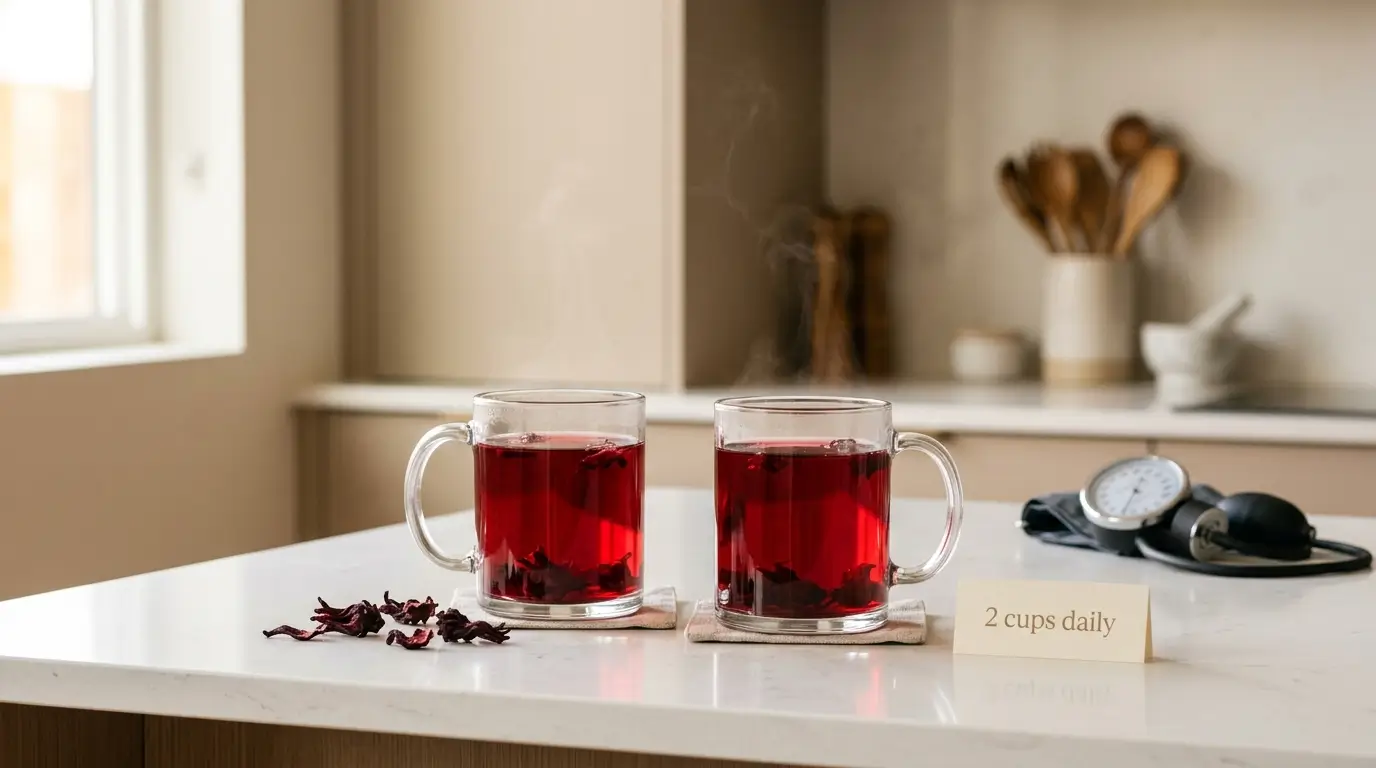
Research suggests that hibiscus tea may modestly lower blood pressure in some adults, but there is no single proven amount that guarantees a specific reduction for everyone. Clinical studies have used different hibiscus preparations, strengths, and daily amounts, which makes it difficult to translate the research into one universal number of cups.
If you’re wondering how much hibiscus tea to drink for blood pressure, the most useful approach is to look at the amounts studied in clinical trials, how preparation strength can vary, and the safety factors that may affect what’s appropriate for you. This guide explains what the research actually used without treating hibiscus tea as a replacement for prescribed blood pressure treatment.
How Many Cups of Hibiscus Tea Per Day for Blood Pressure?
Clinical studies on hibiscus tea and blood pressure have not all used the same preparation or amount. Some trials have tested multiple servings per day, while others have used specific standardized preparations, so the evidence does not establish one universal number of cups that everyone should drink.
This distinction matters because a “cup of hibiscus tea” is not a standardized dose. The amount of dried hibiscus, the volume of water, steeping time, and the product used can all affect the final drink.
Rather than assuming that more hibiscus tea will produce a greater blood pressure effect, it is better to consider the amount used in the specific research being discussed and your individual health circumstances.
For general daily consumption rather than blood-pressure-specific research, see our guide on how much hibiscus tea per day.
How Strong Should Each Cup Be?
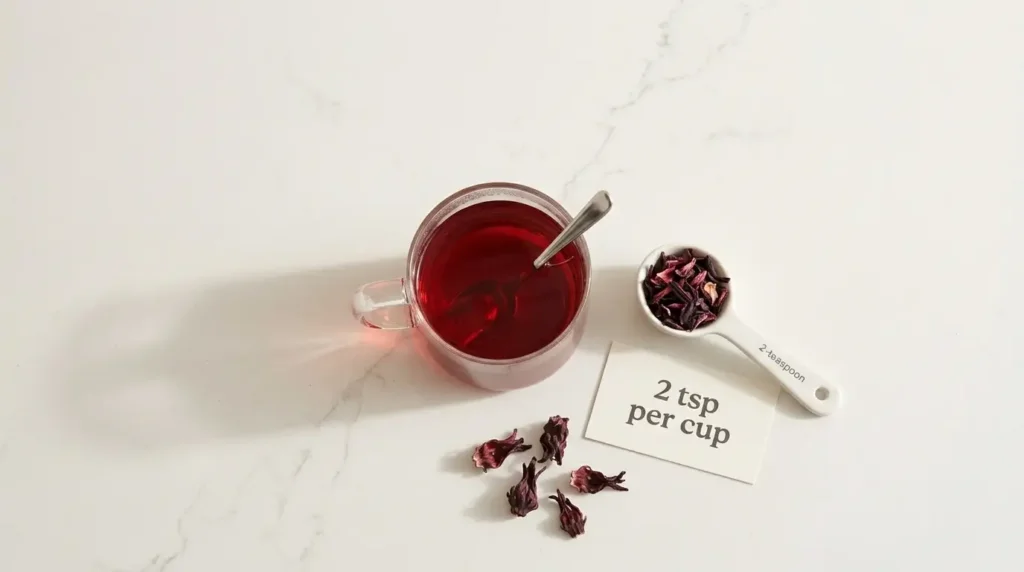
Brew strength is an important detail when interpreting research on hibiscus tea and blood pressure. A cup made with a small amount of hibiscus is not necessarily equivalent to a more concentrated preparation used in a clinical study.
Studies have used different amounts and preparations of Hibiscus sabdariffa, which is one reason there is no universally established home-brewing formula specifically for lowering blood pressure.
When preparing hibiscus tea at home, follow the instructions provided with the product rather than assuming that making the tea stronger will produce a greater effect. More concentrated tea is not automatically more effective and may also be less well tolerated.
If you’re using tea bags or loose dried hibiscus, check the ingredient list. Products containing only Hibiscus sabdariffa are different from herbal blends in which hibiscus is only one of several ingredients.
For preparation methods, see our guide on how to make hibiscus tea.
Does Timing Matter for Blood Pressure?
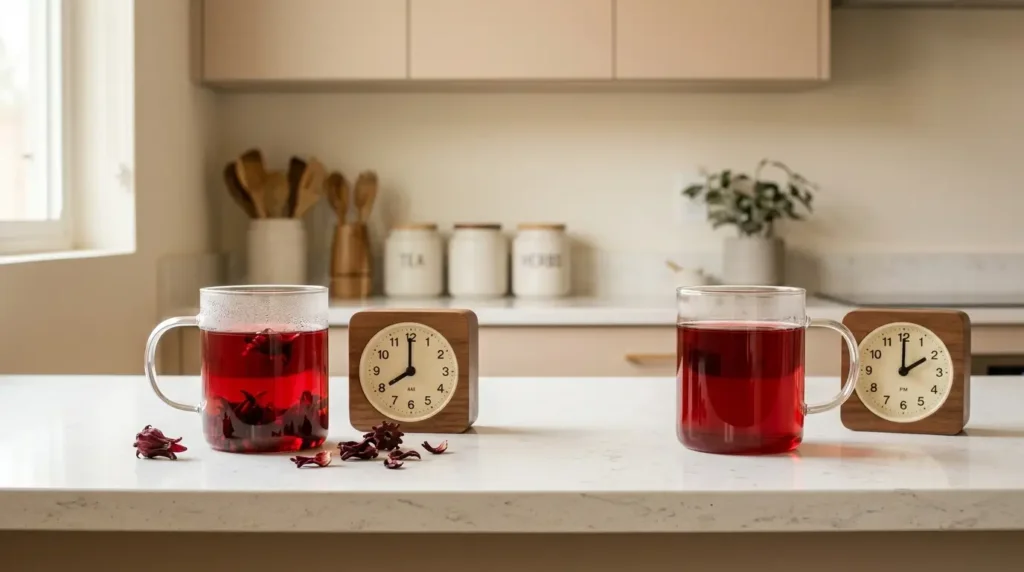
There is no well-established “best time” of day to drink hibiscus tea specifically for lowering blood pressure. Clinical studies generally focus more on regular consumption over time than on a particular morning or afternoon schedule.
If you choose to drink hibiscus tea regularly, timing can instead be based on personal tolerance and convenience. Some people may prefer it with or after food if tart drinks bother their stomach, while others simply choose a time that makes the habit easy to maintain.
The important point is that research on hibiscus and blood pressure should not be interpreted as proving that drinking it at a particular hour produces a stronger blood pressure effect.
For a broader discussion of morning, evening, meals, and other considerations, see our guide to the best time to drink hibiscus tea.
How Long Does Hibiscus Tea Take to Affect Blood Pressure?
Hibiscus tea should not be expected to produce an immediate or predictable change in blood pressure after a single cup. Studies that have reported reductions in blood pressure generally evaluated regular consumption over a period of weeks rather than an immediate effect.
The exact timeframe varies between studies, and individual responses can differ. This means research findings should not be interpreted as a guarantee that blood pressure will fall by a certain amount after a specific number of days or weeks.
If your main question is about how quickly an effect might occur, see our dedicated guide: does hibiscus tea lower blood pressure immediately?
Hot or Cold Hibiscus Tea for Blood Pressure?
Hibiscus tea can be prepared and enjoyed either hot or cold. Current evidence does not establish that one serving temperature is consistently better than the other for lowering blood pressure.
What matters when interpreting research is the hibiscus preparation used in the study, including its concentration and serving amount, rather than simply whether the finished drink was served hot or cold.
Choose the preparation you prefer and tolerate well rather than assuming that hotter or stronger tea will produce a greater blood pressure effect.
For a detailed comparison of preparation methods, see hibiscus tea hot or cold.
Who Should Be Cautious With Hibiscus Tea?
Hibiscus tea is commonly consumed as a beverage, but using it regularly with the specific goal of affecting blood pressure deserves additional caution.
People who take blood pressure medication should discuss regular hibiscus consumption with a healthcare professional. Hibiscus has been studied for potential blood-pressure-lowering effects, so combining it with medication may not be appropriate for everyone.
People who already have low blood pressure, experience dizziness or fainting, are pregnant or breastfeeding, or have a medical condition that affects fluid balance should also seek individualized guidance before using hibiscus tea specifically for blood pressure management.
Kidney conditions require particular consideration because individual dietary and fluid recommendations can vary substantially. See our guide to hibiscus tea and kidneys for more context.
For a broader discussion of precautions and potential interactions, read hibiscus tea side effects.
How Much Can Hibiscus Tea Lower Blood Pressure?
Clinical studies have reported reductions in blood pressure after regular hibiscus consumption, but the size of the effect has varied across studies. Differences in participants, hibiscus preparations, study duration, and baseline blood pressure make it difficult to predict how much an individual person’s blood pressure might change.
This is an important distinction: an average reduction reported in a clinical trial is not a guaranteed result for everyone who drinks hibiscus tea.
Research is therefore better interpreted as evidence that hibiscus may have a modest blood-pressure-lowering effect in some adults rather than as a promise of a specific number of mmHg.
If you have high blood pressure, hibiscus tea should be considered within the broader context of your diet, lifestyle, medications, and medical care. It should not be used as a substitute for prescribed treatment.
What to Take Away From the Research
Research on hibiscus tea and blood pressure is promising, but it does not provide a single standardized home protocol that works for everyone.
Studies have differed in the amount and form of hibiscus used, the strength of the preparation, the number of daily servings, and the length of the intervention. These differences make it difficult to convert the research into one exact recipe or daily schedule.
The most practical conclusions are:
- Hibiscus tea may have a modest blood-pressure-lowering effect in some adults.
- There is no universally established number of cups that guarantees a specific reduction.
- Making the tea stronger or drinking more does not necessarily produce a greater benefit.
- Research generally evaluates regular consumption over time rather than an immediate effect from a single cup.
- Hibiscus tea should not replace prescribed medication or medical care for high blood pressure.
If you monitor your blood pressure at home, focus on your actual readings and follow the treatment plan recommended by your healthcare professional rather than adjusting hibiscus intake based on a target number of cups.
Frequently Asked Questions
How much hibiscus tea should I drink to lower blood pressure?
There is no universally established number of cups that guarantees a reduction in blood pressure. Clinical studies have used different hibiscus preparations and amounts, so their results cannot be translated into one exact daily dose for everyone.
Can one cup of hibiscus tea lower blood pressure?
A single cup should not be expected to produce a predictable or clinically meaningful reduction in blood pressure. Research generally evaluates regular hibiscus consumption over time rather than the effect of one serving.
Is two cups of hibiscus tea a day enough?
There is not enough evidence to say that two cups per day is the ideal amount for everyone. The strength and preparation of hibiscus tea can vary considerably, and studies have not established one universally effective daily amount.
How long does hibiscus tea take to lower blood pressure?
Studies examining hibiscus and blood pressure generally measure changes over a period of time rather than immediately after drinking the tea. Individual responses can also vary. For more detail, see does hibiscus tea lower blood pressure immediately?
Can I drink hibiscus tea while taking blood pressure medication?
If you take medication for high blood pressure, discuss regular hibiscus consumption with your healthcare professional. Hibiscus has been studied for potential blood-pressure-lowering effects, so combining it with medication may require individualized guidance.
Is stronger hibiscus tea better for lowering blood pressure?
Not necessarily. A stronger brew does not automatically mean a greater blood pressure benefit. Research has used different preparations, and there is no established evidence that simply increasing the concentration of homemade hibiscus tea produces better results.
Key Takeaways
- Research suggests that hibiscus tea may modestly lower blood pressure in some adults.
- There is no universally established number of cups per day that guarantees a specific blood pressure reduction.
- Hibiscus preparations used in studies vary in strength, amount, and duration.
- Drinking more or making the tea stronger does not necessarily produce a greater effect.
- Blood pressure effects studied in research generally occur over time rather than immediately after one cup.
- People taking blood pressure medication should discuss regular hibiscus consumption with a healthcare professional.
- Hibiscus tea should not replace prescribed medication or professional treatment for hypertension.
Final Thoughts
So, how much hibiscus tea should you drink to lower blood pressure? Research does not support one exact number of cups that works for everyone.
Hibiscus tea has shown potential for modest blood pressure effects in clinical research, but results vary depending on the preparation, study design, and individual. Instead of treating a specific number of cups as a prescription, consider hibiscus tea as one possible part of a broader heart-healthy lifestyle.
If you have high blood pressure or take medication, your actual blood pressure readings and your healthcare professional’s guidance are more important than following a fixed hibiscus tea schedule.