
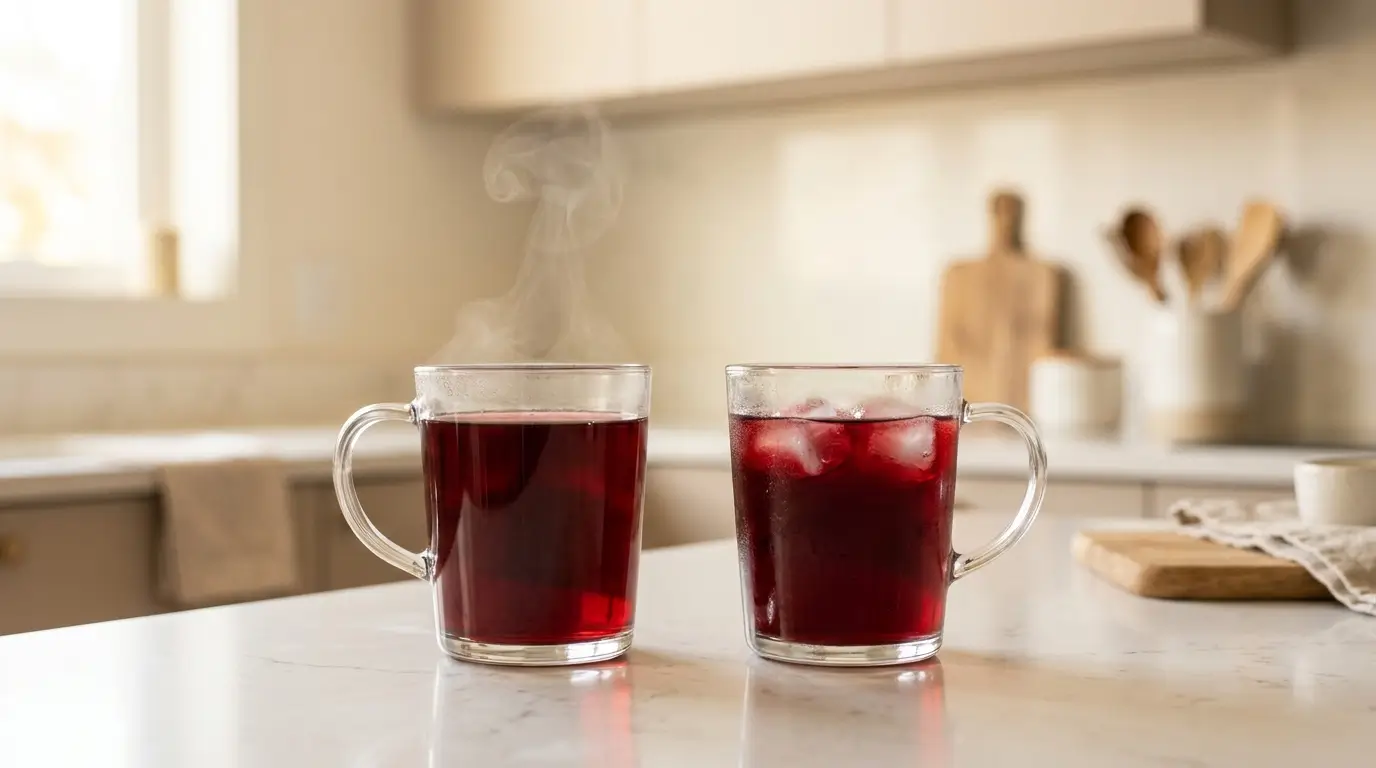
Is hibiscus tea better hot or cold? Neither is automatically better for everyone. Both hot and cold hibiscus tea can be enjoyable, caffeine-free ways to drink hibiscus, but the preparation method changes the flavor, strength, brewing time, and concentration of the final drink.
Quick answer: Choose hot hibiscus tea if you want a bold, tart flavor and a drink that’s ready in minutes. Choose cold-brew hibiscus tea if you prefer a smoother, refreshing drink and don’t mind waiting several hours for it to steep. Neither preparation should automatically be considered healthier simply because it is hot or cold.
If you’re comparing them for blood pressure, brewing temperature alone does not determine whether hibiscus tea will work better. The amount of hibiscus used, concentration, preparation method, and overall intake also matter.
Below, we’ll compare hot vs. cold hibiscus tea, including taste, preparation, acidity, potential benefits, blood pressure, and whether you can drink hibiscus tea cold.
Hot vs. Cold Hibiscus Tea: Quick Comparison
Both hot and cold hibiscus tea are made from the same plant, but the brewing method changes the taste, preparation time, strength, and drinking experience.

| Hot Hibiscus Tea | Cold-Brew Hibiscus Tea | |
|---|---|---|
| Flavor | Bold, tart and intense | Smoother and refreshing |
| Brewing time | About 5–10 minutes | Several hours in the refrigerator |
| Serving temperature | Hot or warm | Cold or over ice |
| Strength | Easy to prepare strong quickly | Depends on amount used and steeping time |
| Acidity | Acidic | Also acidic; exact pH varies |
| Caffeine | Naturally caffeine-free | Naturally caffeine-free |
| Blood pressure | Hibiscus has been studied for blood pressure | Hibiscus has been studied for blood pressure; temperature alone doesn’t determine the effect |
| Best for | Quick preparation, warm drink, bold flavor | Refreshment, smoother flavor, make-ahead preparation |
Bottom line: Neither hot nor cold hibiscus tea is universally better. Choose based on the flavor and preparation method you prefer rather than assuming one temperature provides greater health benefits.
s It Better to Drink Hibiscus Tea Hot or Cold?
Neither hot nor cold hibiscus tea is universally better. Both are made from the same hibiscus plant, and the better choice depends mainly on your taste, preparation preferences, and how you plan to drink it.
Choose hot hibiscus tea when you want a bold, tart drink that can be prepared in minutes. Choose cold hibiscus tea when you prefer a refreshing drink with a smoother flavor or want to prepare a larger batch in advance.
Temperature alone does not make one version automatically healthier than the other.
When Hot Hibiscus Tea May Be Better
Hot hibiscus tea may be the better choice if you:
- Prefer a stronger, more tart flavor
- Want your tea ready in a few minutes
- Enjoy a warm caffeine-free drink
- Don’t want to prepare your tea several hours in advance
Hot brewing is also convenient because you can drink the tea immediately or cool it afterward and serve it over ice.
When Cold Hibiscus Tea May Be Better
Cold hibiscus tea may be the better choice if you:
- Prefer a smoother, refreshing flavor
- Want a chilled drink for warm weather
- Like preparing a pitcher ahead of time
- Find strongly brewed hibiscus tea too intense
Cold brewing requires more time, but very little active preparation. The hibiscus simply steeps in cold water in the refrigerator before being strained.
So, should you drink hibiscus tea hot or cold? Choose the preparation you enjoy and tolerate best. There is no need to switch from one to the other solely because you believe one temperature is healthier.
Hot vs. Cold Hibiscus Tea Benefits
Both hot and cold hibiscus tea contain plant compounds naturally present in Hibiscus sabdariffa, including anthocyanins and other polyphenols.
The brewing method can influence the compounds extracted into the water, but that does not mean one preparation consistently provides more health benefits than the other.
Does Hot Hibiscus Tea Have More Benefits?
Hot water extracts hibiscus compounds quickly, which makes hot brewing a convenient way to prepare a strong infusion in a short time.
However, it is too simplistic to say that hot hibiscus tea is healthier or more beneficial than cold hibiscus tea. The final composition also depends on the amount of hibiscus used, water volume, steeping time, and concentration.
For a complete look at the potential effects of hibiscus itself, see our guide to hibiscus tea benefits.
Cold Hibiscus Tea Benefits
Cold hibiscus tea provides a caffeine-free and refreshing way to drink hibiscus, particularly during warm weather.
Its practical advantages include being easy to prepare in larger batches, serving well over ice, and offering a smoother flavor that some people prefer.
Cold hibiscus tea should not automatically be considered healthier than hot hibiscus tea simply because it is served cold. Both preparations can fit into your routine depending on your preferences.
Hibiscus Tea Hot or Cold for Blood Pressure?
Hibiscus tea has been studied for its potential effects on blood pressure, but there is not enough evidence to conclude that drinking it hot is consistently better than drinking it cold—or vice versa—solely because of temperature.
The more important factors include how the tea is prepared, how concentrated it is, how much is consumed, and individual health factors.
If you drink hibiscus tea for blood pressure, do not assume that making it hotter, colder, or stronger will automatically increase its effect.
For a more detailed discussion, see our guide to hibiscus tea for blood pressure hot or cold.
Does Temperature Change the Blood Pressure Effect?
Brewing temperature can affect the extraction of compounds from hibiscus, but this does not establish that one serving temperature produces a greater blood-pressure effect in people.
Also remember that serving temperature and brewing method are not the same thing. You can brew hibiscus tea with hot water and then chill it, or prepare it by steeping hibiscus directly in cold water.
If you take blood-pressure medication or have low blood pressure, discuss regular hibiscus consumption with a healthcare professional rather than changing the strength or amount of the tea on your own.
Hot vs. Cold Hibiscus Tea: Acidity and Digestion
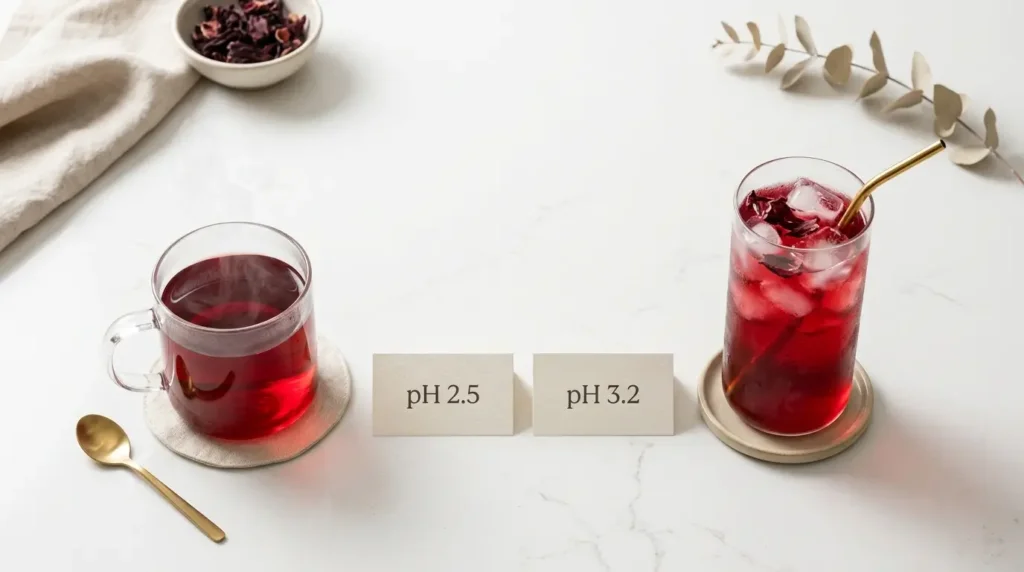
Hibiscus tea is naturally acidic whether you drink it hot or cold. Brewing conditions can influence the compounds extracted from hibiscus, but there is no single pH value that applies to every hot brew or every cold brew.
The final acidity depends on several factors, including the amount of hibiscus used, water volume, steeping time, water composition, and concentration.
For a complete explanation, see our guide to whether hibiscus tea is acidic or alkaline.
Is Cold Hibiscus Tea Less Acidic?
Cold brewing can produce a different extraction profile from hot brewing, but cold hibiscus tea should not automatically be considered low-acid or non-acidic.
A lightly prepared cold brew may taste smoother and less tart than a strong hot infusion, but taste alone does not provide an exact measurement of pH.
If acidity is important to you, the strength and concentration of the tea may matter alongside the brewing temperature.
What If You Have Acid Reflux?
Neither hot nor cold hibiscus tea is guaranteed to be suitable for someone with acid reflux or GERD.
Because hibiscus is naturally acidic, it may trigger or worsen heartburn in some people regardless of serving temperature. Others may tolerate a small or lightly brewed serving without symptoms.
If hibiscus consistently triggers reflux, switching from hot to cold may not solve the problem.
For more detailed guidance, see is hibiscus tea good for acid reflux?.
Can You Drink Hibiscus Tea Cold?
Yes, you can drink hibiscus tea cold. You can either brew hibiscus directly in cold water or prepare it with hot water first and then chill it in the refrigerator.
Both methods produce a refreshing, naturally caffeine-free drink. The main differences are brewing time, flavor, and preparation method, rather than one being automatically healthier than the other.
Cold Brew vs. Hot-Brewed Iced Hibiscus Tea
Cold-brew hibiscus tea is made by steeping dried hibiscus in cold water in the refrigerator for several hours. It generally produces a smooth, refreshing drink and works well when you want to prepare a pitcher in advance.
Hot-brewed iced hibiscus tea is prepared with hot water first, then cooled and served over ice. It is much faster to make and can have a bolder, more tart flavor depending on how strongly you brew it.
So, if you’re wondering whether hibiscus tea has to be served hot, the answer is no. Drink it hot, chilled, or over ice according to your preference.
How to Make Hot Hibiscus Tea
Hot hibiscus tea is quick to prepare and produces a bold, tart infusion.
- Bring 2 cups of water to a boil.
- Remove from the heat and add 2 tablespoons of dried hibiscus flowers.
- Steep for 5–10 minutes, depending on how strong you like it.
- Strain the tea.
- Serve warm, with an optional sweetener if desired.
For a more detailed recipe, see how to make hibiscus tea.
How to Make Cold Brew Hibiscus Tea

Cold-brew hibiscus tea takes longer to prepare but requires very little active work.
- Add 2 tablespoons of dried hibiscus flowers to 2 cups of cold water.
- Cover and refrigerate for 6–12 hours.
- Strain out the hibiscus flowers.
- Taste and dilute with additional cold water if the flavor is too strong.
- Serve chilled or over ice.
You can prepare a larger batch using the same proportions and keep it refrigerated in a covered container.
Frequently Asked Questions
Is hibiscus tea better hot or cold?
Neither is automatically better. Hot hibiscus tea is quicker to prepare and usually has a bold, tart flavor, while cold-brew hibiscus tea takes longer and can taste smoother and more refreshing. Choose the preparation you prefer rather than assuming one temperature is healthier.
Should I drink hibiscus tea hot or cold?
You can drink hibiscus tea either hot or cold. Choose hot tea when you want a warm drink that is ready quickly, and cold hibiscus tea when you prefer a chilled, refreshing drink. Both are naturally caffeine-free.
Can you drink hibiscus tea cold?
Yes. Hibiscus tea can be cold-brewed in the refrigerator or brewed with hot water and chilled afterward. Both methods are suitable for serving cold or over ice.
What should you avoid when drinking hibiscus tea?
When drinking hibiscus tea hot or cold, avoid:
- Excessive intake (more than 2–3 cups daily)
- Drinking it alongside blood pressure or diuretic medications without guidance
- Adding large amounts of sugar or artificial sweeteners
If you’re unsure what amount is appropriate for regular use, see our complete guide on how much hibiscus tea per day for guidance based on brew strength, serving size, and individual tolerance.
If you have a medical condition or take medication, consult a healthcare professional before making hibiscus tea a daily habit.
Is hibiscus tea better hot or cold?
Research has examined hibiscus tea for its potential effects on blood pressure, but there is not enough evidence to say that hot hibiscus tea is consistently better than cold hibiscus tea, or vice versa, solely because of temperature.
Does cold hibiscus tea have the same benefits as hot hibiscus tea?
Both hot and cold preparations contain compounds extracted from hibiscus. However, brewing temperature, steeping time, concentration, and the amount of hibiscus used can affect the final drink. Current evidence does not establish that one method is universally healthier than the other.
Is cold-brew hibiscus tea less acidic?
Not necessarily. Hibiscus is naturally acidic, and the exact acidity of the finished tea varies with concentration, steeping time, water, and preparation method. A cold brew may taste smoother, but that does not automatically mean it has a substantially higher pH.
What is the best temperature for hibiscus tea?
There is no single best serving temperature for everyone. Hibiscus tea can be enjoyed hot, warm, chilled, or over ice. If you’re brewing it hot, steeping time and the amount of hibiscus used influence the strength of the drink.
Conclusion: Should You Drink Hibiscus Tea Hot or Cold?
So, is hibiscus tea better hot or cold? There is no single best choice for everyone.
Choose hot hibiscus tea if you prefer a bold, tart flavor and quick preparation. Choose cold hibiscus tea if you want a smoother, refreshing drink that can be prepared ahead of time.
Both can be part of your routine, and current evidence does not show that one is universally healthier simply because of its temperature. The best choice is the one you enjoy and tolerate well.
For regular consumption, you may also want to read how much hibiscus tea per day.