

Is hibiscus tea good or bad for your kidneys? For people with healthy kidneys, moderate amounts of hibiscus tea are not known to cause kidney damage. However, the answer becomes more complicated if you have kidney stones, chronic kidney disease (CKD), abnormal potassium levels, or a kidney transplant.
One of the most common questions is whether hibiscus tea can cause kidney stones because hibiscus contains oxalates. The risk depends on more than one food or drink, including your overall diet, hydration, stone type, and individual risk factors.
Hibiscus can also sometimes raise questions about pink or red urine, and people with kidney disease or a kidney transplant need additional caution because herbal products may not be appropriate with certain medical conditions or medications.
In this guide, we’ll look at hibiscus tea and kidney stones, oxalate content, kidney disease, urine color, and kidney safety based on what the available evidence can actually support.
Does Hibiscus Tea Cause Kidney Stones?
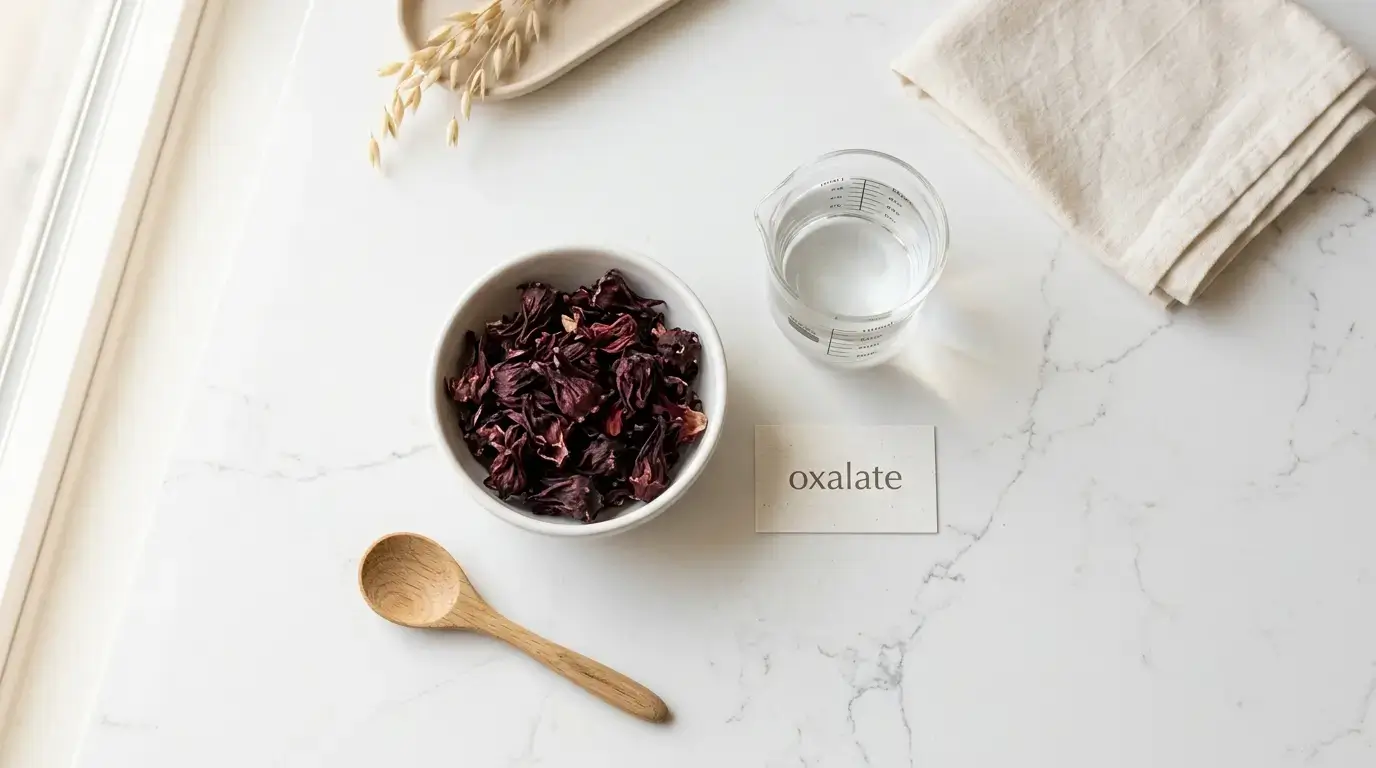
Hibiscus tea is not proven to directly cause kidney stones in everyone who drinks it. However, hibiscus contains oxalic acid and oxalates, which makes the question relevant for people who are prone to calcium oxalate kidney stones.
Kidney stone formation depends on several factors, including your overall diet, fluid intake, urine composition, medical history, and the type of kidney stones you form. One cup of hibiscus tea should therefore not be considered the sole cause of a kidney stone.
If you have a history of kidney stones, especially calcium oxalate stones, discuss regular hibiscus tea consumption with your healthcare professional or renal dietitian.
Hibiscus Tea and Oxalates
Oxalate is a naturally occurring compound found in many plant foods. In susceptible people, urinary oxalate can combine with calcium and contribute to the formation of calcium oxalate stones.
Hibiscus contains oxalates, but the amount that ends up in a cup of tea can vary depending on the hibiscus product, the amount used, brewing method, steeping time, and serving size.
For this reason, it is better to consider hibiscus tea as part of your total dietary oxalate intake rather than assigning every cup a single fixed oxalate value.
For a detailed discussion of oxalate content, see does hibiscus tea have oxalates?
Is Hibiscus Tea High in Oxalates?
There is no single oxalate value that applies to every hibiscus tea. Different preparations and measurements can produce different results, so describing all hibiscus tea as either “high” or “low” in oxalates can be misleading.
If you have been advised to follow a low-oxalate diet because of recurrent calcium oxalate stones, ask your clinician or renal dietitian whether hibiscus tea fits your individual diet.
Who May Be More at Risk of Kidney Stones?
Extra caution may be appropriate if you:
- Have previously had calcium oxalate kidney stones
- Have been advised to follow a low-oxalate diet
- Have medical conditions that increase your risk of kidney stones
- Regularly drink very concentrated hibiscus preparations
- Have been given specific fluid or dietary restrictions because of kidney disease
Adequate hydration is an important part of kidney stone prevention for many people, but individual fluid recommendations can differ, particularly for people with kidney or heart disease.
Is Hibiscus Tea Good or Bad for Your Kidneys?

For most people with healthy kidneys, moderate hibiscus tea consumption is not known to damage the kidneys. However, there is also not enough evidence to describe hibiscus tea as a proven treatment or protective therapy for kidney disease.
Whether hibiscus tea is appropriate for you depends on your kidney function, history of kidney stones, medications, potassium levels, and other health factors.
The situation is different for people with chronic kidney disease or a kidney transplant, who should be more cautious with herbal products and discuss regular use with their healthcare team.
What Does Hibiscus Tea Do to the Kidneys?
After you drink hibiscus tea, compounds from the beverage are absorbed and eventually eliminated or metabolized through normal body processes, some involving the kidneys.
Research has investigated hibiscus and its plant compounds for antioxidant, blood-pressure and other potential health effects. However, these findings should not be interpreted as proof that hibiscus tea cleanses, detoxifies, repairs or protects the kidneys.
Hibiscus tea should therefore be considered a beverage, not a treatment for kidney disease.
Can Hibiscus Tea Damage Healthy Kidneys?
There is not strong evidence that normal consumption of hibiscus tea causes kidney damage in otherwise healthy people.
The more important concerns arise in people who already have kidney problems, recurrent kidney stones, specific dietary restrictions, or medications that may interact with herbal products.
If you have known kidney disease, do not use hibiscus tea or concentrated hibiscus supplements as a way to improve kidney function without discussing it with your healthcare professional.
Does Hibiscus Tea Turn Urine Pink or Red?
Hibiscus tea has a deep red color, so it is understandable to wonder whether drinking it can make your urine pink or red. However, you should not automatically assume that red or pink urine is caused by hibiscus tea.
Urine color can change for many reasons, including hydration, foods, medications, and medical conditions. Visible blood in the urine, known as hematuria, can also make urine appear pink, red, or brown.
If you notice an unusual urine color after drinking hibiscus tea, pay attention to whether the change persists and whether you have other symptoms.
When Red or Pink Urine Needs Medical Attention
Seek medical advice if your urine is visibly pink or red, especially if:
- The color persists or happens repeatedly
- You see blood or blood clots
- You have pain in your side, back, or abdomen
- Urination is painful or difficult
- You have fever or other new symptoms
- You have a history of kidney stones or urinary tract problems
Even if the color change happens after drinking hibiscus tea, it is safer not to assume hibiscus is the cause of visibly bloody urine.
Hibiscus Tea and Chronic Kidney Disease (CKD)
People with chronic kidney disease (CKD) should be more cautious with hibiscus tea than people with normal kidney function.
CKD can affect the body’s ability to manage fluids, electrolytes, medications, and certain dietary components. Because these needs vary considerably from one person to another, there is no single amount of hibiscus tea that is appropriate for every person with CKD.
If you have CKD, especially if you have been given potassium or fluid restrictions, ask your nephrologist or renal dietitian before making hibiscus tea a regular part of your diet.
Why CKD Requires Extra Caution
As kidney function declines, dietary recommendations may change. What is appropriate depends on factors such as:
- Your CKD stage and kidney function
- Blood potassium levels
- Fluid restrictions
- Blood pressure
- History of kidney stones
- Medications
- Other medical conditions
For this reason, CKD stage alone should not be used to decide how many cups of hibiscus tea someone can safely drink.
Hibiscus Tea, Potassium and Kidney Disease
Potassium is an important consideration for some people with kidney disease because impaired kidneys may have difficulty maintaining normal blood potassium levels.
However, you should not assume that every person with CKD needs the same potassium restriction or that every cup of hibiscus tea contains an identical amount. The amount can vary with the product and preparation.
If your healthcare team has told you to limit potassium, check with them before regularly drinking hibiscus tea rather than relying on a general online serving recommendation.
Can Kidney Transplant Patients Drink Hibiscus Tea?
People who have had a kidney transplant should check with their transplant team before drinking hibiscus tea regularly or using concentrated hibiscus products.
After a transplant, medications—especially immunosuppressive drugs—need to be carefully managed. Herbal teas and supplements can sometimes affect medications or may not be appropriate for an individual’s kidney function, potassium levels, or other dietary restrictions.
Because transplant medications and medical circumstances vary from person to person, there is no universal amount of hibiscus tea that can be considered safe for every kidney transplant patient.
If you have received a kidney transplant, do not stop or change any prescribed medication because of information about hibiscus tea. Ask your transplant pharmacist, nephrologist, or transplant team whether hibiscus is appropriate with your specific medications.
Hibiscus Tea and Kidney Medications
If you take medication for kidney disease, high blood pressure, fluid balance, or after a kidney transplant, check with your healthcare professional before drinking hibiscus tea regularly or using hibiscus supplements.
Hibiscus has been studied for potential effects on blood pressure and other biological processes. This makes medication interactions an important consideration, particularly for people whose treatment requires careful monitoring.
Extra caution may be appropriate if you take:
- Blood pressure medications
- Diuretics (water pills)
- Immunosuppressive medications after a transplant
- Medications that require close monitoring because of reduced kidney function
The significance of a possible interaction depends on the specific drug, dose, amount of hibiscus consumed, and your health condition.
Do not stop, reduce, or change a prescribed medication in order to drink hibiscus tea. If you are unsure, ask your doctor or pharmacist to check hibiscus against your specific medication list.
How Much Hibiscus Tea Is Safe for Your Kidneys?
There is no single amount of hibiscus tea that is safe for everyone’s kidneys. The appropriate amount depends on your kidney function, history of kidney stones, medications, potassium levels, fluid needs, and overall diet.
For people with healthy kidneys and no history of kidney stones, moderate hibiscus tea consumption can generally fit into a varied diet. However, drinking larger amounts or very concentrated preparations should not be assumed to provide additional kidney benefits.
If you have chronic kidney disease, recurrent kidney stones, abnormal potassium levels, or a kidney transplant, ask your healthcare professional or renal dietitian before making hibiscus tea a daily habit.
For general information about hibiscus intake, see how much hibiscus tea per day.
Hydration also matters for kidney stone prevention, but people with kidney or heart disease may have individualized fluid restrictions. Follow your healthcare team’s fluid recommendations rather than simply increasing water intake on your own.
Frequently Asked Questions
Is hibiscus tea good or bad for your kidneys?
For most people with healthy kidneys, moderate hibiscus tea consumption is not known to cause kidney damage. However, hibiscus tea should not be considered a treatment for kidney disease. People with chronic kidney disease, recurrent kidney stones, abnormal potassium levels, or a kidney transplant should discuss regular use with their healthcare professional.
Does hibiscus tea cause kidney stones?
Hibiscus tea is not proven to directly cause kidney stones in everyone. However, hibiscus contains oxalates, which can be relevant for people who are prone to calcium oxalate kidney stones. Overall diet, hydration, urine composition, medical history, and stone type also influence risk.
Is hibiscus tea high in oxalates?
Hibiscus contains oxalates, but there is no single oxalate value that applies to every cup of hibiscus tea. The amount can vary with the product, quantity used, steeping time, concentration, and preparation method.
Can hibiscus tea damage your kidneys?
There is not strong evidence that normal hibiscus tea consumption damages healthy kidneys. More caution is appropriate for people with existing kidney disease, kidney stones, dietary restrictions, or medications that may interact with herbal products.
Does hibiscus tea turn urine pink or red?
Do not automatically assume that pink or red urine is caused by hibiscus tea. Urine color can change for different reasons, and visible blood in the urine can also appear pink or red. If the change persists, recurs, or is accompanied by pain or other symptoms, seek medical advice.
Can people with chronic kidney disease drink hibiscus tea?
There is no universal answer for everyone with CKD. Kidney function, potassium levels, fluid restrictions, medications, and other medical factors can affect whether hibiscus tea is appropriate. Ask your nephrologist or renal dietitian before making it a regular drink.
Can kidney transplant patients drink hibiscus tea?
Kidney transplant patients should check with their transplant team before regularly consuming hibiscus tea or concentrated hibiscus products. This is particularly important because transplant medications require careful management and potential herb–drug interactions need to be considered.
Is hibiscus tea safe with a low GFR?
A low eGFR indicates reduced kidney function, but eGFR alone cannot determine whether hibiscus tea is appropriate for an individual. Potassium levels, medications, fluid restrictions, kidney disease stage, and other factors also matter. Discuss regular hibiscus consumption with your kidney care team.
Does hibiscus tea affect creatinine or kidney function tests?
There is not enough evidence to assume that drinking hibiscus tea will reliably lower or raise creatinine or improve eGFR. Hibiscus tea should not be used to treat abnormal kidney-function test results.
Conclusion: Hibiscus Tea and Kidney Health
So, is hibiscus tea good or bad for your kidneys? For most people with healthy kidneys, moderate hibiscus tea consumption is not known to cause kidney damage. However, hibiscus contains oxalates, which may be relevant for people prone to calcium oxalate kidney stones.
People with chronic kidney disease, abnormal potassium levels, recurrent kidney stones, or a kidney transplant should be more cautious and discuss regular hibiscus consumption with their healthcare professional.
The key point is that hibiscus tea should be treated as a beverage—not as a treatment, cleanse, or remedy for kidney disease.