
Does hibiscus tea have oxalates? Yes, hibiscus contains oxalates, naturally occurring compounds found in many plant foods. However, the amount in a cup of hibiscus tea can vary depending on the product, quantity used, concentration, steeping time, and preparation method.
This matters particularly for people who have a history of calcium oxalate kidney stones or have been advised to follow a low-oxalate diet. But the presence of oxalates does not mean that hibiscus tea automatically causes kidney stones.
Below, we’ll look at hibiscus tea oxalate content, whether hibiscus tea should be considered high in oxalates, how it relates to kidney stones, and who may need to be more cautious.
Does Hibiscus Tea Have Oxalates?
Yes. Hibiscus naturally contains oxalic acid and oxalates, compounds that occur in many plant-based foods and beverages.
When dried hibiscus calyces are steeped in water, some of their water-soluble compounds can move into the tea. The exact composition of the finished drink depends on how it is prepared.
This is why it is difficult to assign one universal oxalate value to every cup of hibiscus tea. A lightly brewed cup and a highly concentrated infusion are not necessarily equivalent.
For most people, the fact that a food or beverage contains oxalates does not automatically make it harmful. Oxalates become particularly relevant when someone has a history of certain types of kidney stones or has specifically been advised to reduce dietary oxalate.
Where Do the Oxalates in Hibiscus Come From?
Oxalates are naturally occurring plant compounds. Hibiscus, like many other plants, contains oxalic acid and related compounds as part of its natural chemical composition.
Oxalates are not unique to hibiscus. They are also found in varying amounts in foods such as spinach, nuts, beets, chocolate, and some teas.
The important question is therefore not simply whether hibiscus contains oxalates, but how much oxalate a particular preparation contributes to a person’s overall diet and whether that individual is susceptible to calcium oxalate kidney stones.
How Much Oxalate Is in Hibiscus Tea?
There is no single number that accurately describes the oxalate content of every cup of hibiscus tea.
The amount present in the finished beverage can vary according to the hibiscus product and how the tea is prepared.
This is important when comparing oxalate values online. A measurement from one preparation should not automatically be applied to every commercial tea bag, homemade infusion, cold brew, or concentrated hibiscus drink.
Why Oxalate Content Can Vary
Several factors can influence the composition of hibiscus tea, including:
- The amount of dried hibiscus used
- The volume of water
- The specific hibiscus product
- Steeping time
- Brewing temperature
- How concentrated the final drink is
- Serving size
For example, a concentrated infusion prepared with a large quantity of dried hibiscus is different from a lightly brewed cup made with much less plant material.
Because of these variables, it is more useful to consider hibiscus tea within your overall dietary oxalate intake rather than assuming every cup contains exactly the same amount.
Is Hibiscus Tea High in Oxalates?
It is difficult to classify every hibiscus tea as simply high, moderate, or low in oxalates because preparation methods and products differ.
If you have healthy kidneys and have never been advised to restrict oxalates, the presence of oxalates alone is not a reason to assume that you must avoid hibiscus tea.
However, if you have recurrent calcium oxalate stones or have been prescribed a low-oxalate diet, your individual situation is different. A healthcare professional or renal dietitian can help determine whether hibiscus tea fits into your overall dietary plan.
Can Hibiscus Tea Cause Kidney Stones?
Hibiscus tea is not proven to directly cause kidney stones in everyone who drinks it.
The concern comes from the fact that hibiscus contains oxalates. In susceptible individuals, oxalate in the urine can combine with calcium and contribute to the formation of calcium oxalate kidney stones.
However, kidney stone formation is more complicated than consuming one particular food or beverage.
Factors can include hydration, total dietary intake, urine composition, medical conditions, medications, genetics, and a person’s previous history of stones.
If kidney stones or kidney disease are your main concern, read our complete guide to hibiscus tea and kidneys.
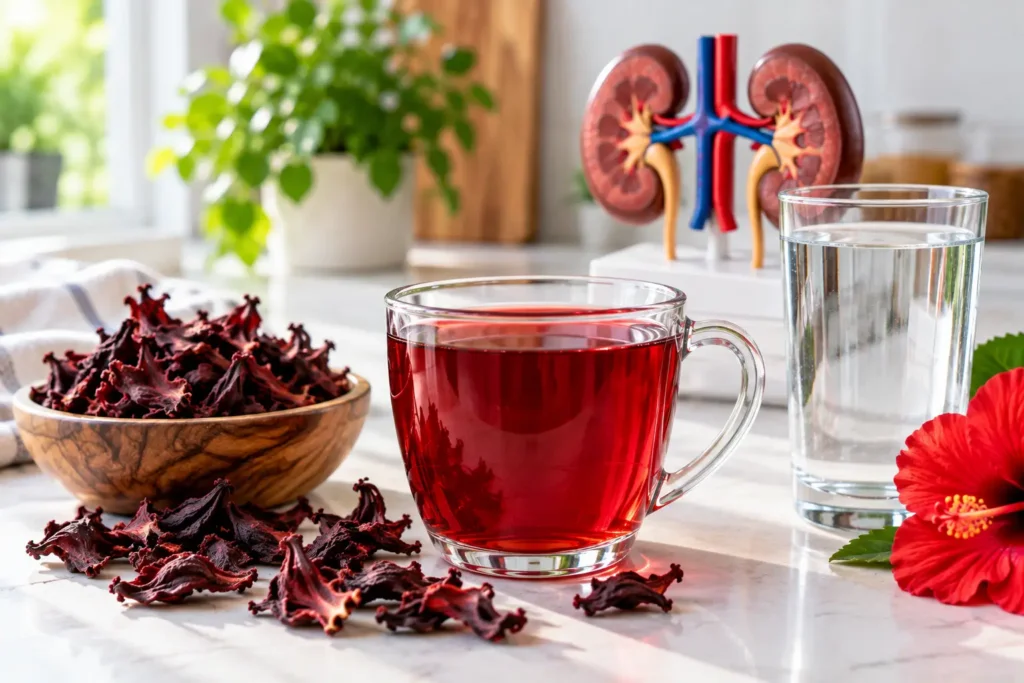
Calcium Oxalate Kidney Stones and Hibiscus
Calcium oxalate stones are a common type of kidney stone. They can form when conditions in the urine allow calcium and oxalate to crystallize.
This does not mean that every oxalate-containing food or drink causes stones.
For someone who repeatedly develops calcium oxalate stones, however, healthcare professionals may evaluate dietary oxalate alongside other factors such as calcium intake, sodium intake, fluid intake, and urine chemistry.
That is why someone with a history of kidney stones should not rely on a general list of “good” or “bad” foods. The type of stone and the person’s individual risk factors matter.
Should You Avoid Hibiscus Tea on a Low-Oxalate Diet?
If a doctor or renal dietitian has specifically advised you to follow a low-oxalate diet, hibiscus tea should be considered as part of your overall dietary oxalate intake.
That does not necessarily mean everyone following such a diet must completely avoid hibiscus. Dietary recommendations depend on the reason for the restriction, your history of stones, urine test results, and the rest of your diet.
It is also important not to remove large numbers of nutritious foods simply because they contain some oxalate without professional guidance.
If you have recurrent calcium oxalate stones, ask your healthcare professional whether hibiscus tea is appropriate for you and how it should fit into your individual dietary plan.
Does Brewing Method Change Hibiscus Oxalate Content?
Brewing method can affect which compounds are extracted from plant material into water. However, that does not mean there is a simple rule such as “cold brew hibiscus is low in oxalates” or “hot hibiscus is always higher in oxalates.”
The amount of hibiscus used, steeping time, water volume, temperature, and final concentration all matter.
Hot-Brewed Hibiscus Tea
Hot water can extract plant compounds relatively quickly, which is why traditional hot hibiscus tea can be prepared within minutes.
But the oxalate content of the finished tea cannot be predicted from temperature alone. A weak hot infusion and a very concentrated hot infusion, for example, may have different compositions.
Cold-Brew Hibiscus Tea
Cold-brew hibiscus tea is usually prepared by allowing dried hibiscus to steep in cold water for several hours.
Cold brewing produces a different extraction process, but cold-brew hibiscus should not automatically be considered oxalate-free or kidney-stone-safe.
If you’re deciding between preparation methods for reasons other than oxalates, see is hibiscus tea better hot or cold?.
How to Drink Hibiscus Tea If You’re Concerned About Oxalates
If you are concerned about dietary oxalates, the first step is to understand why you need to limit them.
Someone with recurrent calcium oxalate kidney stones may receive different dietary advice from someone with healthy kidneys and no history of stones.
Rather than relying on an arbitrary number of cups, consider:
- Avoiding unusually concentrated hibiscus preparations
- Considering hibiscus as part of your total diet rather than in isolation
- Following any fluid recommendations provided by your healthcare team
- Asking about your specific stone type if you have had kidney stones
- Discussing regular hibiscus consumption with a renal dietitian if you have been prescribed an oxalate restriction
For general serving information, see how much hibiscus tea per day.
Hydration is commonly important in kidney stone prevention, but people with certain kidney or heart conditions may have individualized fluid restrictions. Follow your healthcare team’s recommendations rather than simply increasing fluid intake without guidance.
Who Should Be More Cautious With Hibiscus Tea?
Most discussions about hibiscus and oxalates are particularly relevant to people who already have risk factors.
People With a History of Calcium Oxalate Stones
If you have previously had calcium oxalate kidney stones, your healthcare team may assess your total dietary oxalate intake and other factors that influence stone formation.
Regular consumption of concentrated hibiscus tea is therefore worth discussing with your doctor or renal dietitian.
People With Chronic Kidney Disease
Having chronic kidney disease does not automatically mean that oxalates are your only concern.
Depending on your kidney function, factors such as potassium, fluid intake, medications, and overall dietary restrictions may also need consideration.
Our hibiscus tea and kidneys guide discusses CKD and other kidney-related concerns in more detail.
People Following a Prescribed Low-Oxalate Diet
If you have specifically been told to reduce oxalates, follow the dietary plan provided by your healthcare professional rather than using a generic online limit.
Your total dietary pattern matters more than simply labeling individual foods or beverages as universally “safe” or “unsafe.”
Frequently Asked Questions
Does hibiscus tea have oxalates?
Yes. Hibiscus naturally contains oxalates. However, the amount present in a finished cup of tea can vary according to the product, amount of hibiscus used, water volume, steeping time, brewing method, and concentration.
Is hibiscus tea high in oxalates?
There is no single oxalate value that applies to every hibiscus tea preparation, so labeling all hibiscus tea as universally high or low in oxalates can be misleading. People following a medically prescribed low-oxalate diet should ask their healthcare professional whether hibiscus tea fits their individual plan.
Can hibiscus tea cause kidney stones?
Hibiscus tea is not proven to directly cause kidney stones in everyone. However, it contains oxalates, which are relevant to calcium oxalate stone formation in susceptible people. Hydration, overall diet, urine chemistry, medical history, and other factors also affect kidney stone risk.
Is hibiscus tea safe for calcium oxalate kidney stones?
There is no universal answer. If you have a history of calcium oxalate kidney stones, your healthcare professional may recommend monitoring dietary oxalate along with other dietary and medical factors. Ask whether regular hibiscus tea consumption is appropriate for your specific situation.
Is cold-brew hibiscus tea lower in oxalates?
Cold brewing changes the extraction process, but cold-brew hibiscus should not automatically be considered low in oxalates. The final composition depends on several factors, including the amount of hibiscus, water volume, concentration, and steeping time.
Can I drink hibiscus tea on a low-oxalate diet?
Possibly, but this depends on why you are following a low-oxalate diet and how hibiscus fits into your overall dietary intake. If the diet was prescribed because of recurrent calcium oxalate stones, ask your doctor or renal dietitian about hibiscus tea specifically.
Conclusion: Does Hibiscus Tea Have Oxalates?
Yes, hibiscus contains oxalates, but that does not mean hibiscus tea automatically causes kidney stones.
The amount in the finished drink can vary depending on the hibiscus product, quantity used, brewing method, steeping time, and concentration.
For people with healthy kidneys and no history of kidney stones, the presence of oxalates alone does not mean hibiscus tea must be avoided. People with recurrent calcium oxalate stones, chronic kidney disease, or a prescribed low-oxalate diet should consider their individual medical and dietary needs.
For a broader look at kidney stones, CKD, medications, and kidney safety, continue with our guide to hibiscus tea and kidneys.
1 thought on “Does Hibiscus Tea Have Oxalates? Kidney Stone Guide”