

This hibiscus tea recipe makes a tart, ruby-red herbal drink with dried food-grade hibiscus and water. Steep 4 grams of dried hibiscus calyces in 500 milliliters of freshly boiled water for five minutes, strain, and taste. Serve it warm, or cool the same infusion and pour it over ice. A little sugar is optional.
The starting batch makes two small servings. Its flavor is bright and cranberry-like rather than floral or creamy. If you are new to hibiscus, start with the measured amount and adjust the finished drink with water before adding extra sweetener. That gives you control over both strength and sweetness.
Easy hibiscus tea recipe
Print
Hibiscus Tea Recipe (Hot or Iced)
A tart ruby-red hibiscus infusion made with dried food-grade roselle and water. Serve hot, or cool and refrigerate before serving over ice.
- Total Time: 7 minutes
- Yield: 2 servings (approximately 500 ml) 1x
Ingredients
4 g dried food-grade Hibiscus sabdariffa calyces
500 ml (about 2 cups) freshly boiled drinking water
Up to 2 teaspoons granulated sugar, optional, for the full batch
Ice made from drinking water, optional, for serving the chilled tea
Instructions
Place the measured dried hibiscus calyces in a heatproof teapot or jug on a stable surface.
Pour over 500 ml freshly boiled drinking water. Cover and steep for 5 minutes, or follow product directions if different.
Strain through a fine strainer into a second heatproof vessel, removing the calyces.
Let cool enough to taste safely. Dilute with a little drinking water if too intense, then stir in the optional sugar gradually while warm. Divide into two servings and enjoy at a comfortable temperature.
For iced servings, cool the strained tea promptly using a suitable container and an ice-water bath if needed. Refrigerate covered until chilled, then pour over clean ice. Chilling time is additional to the hot recipe time.
Notes
Use commercially sold food-grade dried roselle, not unidentified garden flowers. The 7-minute total covers the hot infusion only; boiling water and cooling to a safe sipping temperature may add time. Allow additional time to chill for iced tea. Serve approximately 250 ml per person before optional ice or dilution. Optional sugar is for the whole batch. Refrigerate prepared tea promptly in a clean covered container; make a small batch for same-day serving. This is a beverage recipe, not a daily treatment schedule.
- Prep Time: 2 minutes
- Steeping: 5 minutes
- Cook Time: 0 minutes
- Category: Tea & Herbal Infusions
- Method: Steeping
- Cuisine: International
Nutrition
- Serving Size: Approximately 250 ml, before ice or dilution
Keywords: hibiscus tea recipe, hot hibiscus tea, iced hibiscus tea, roselle tea
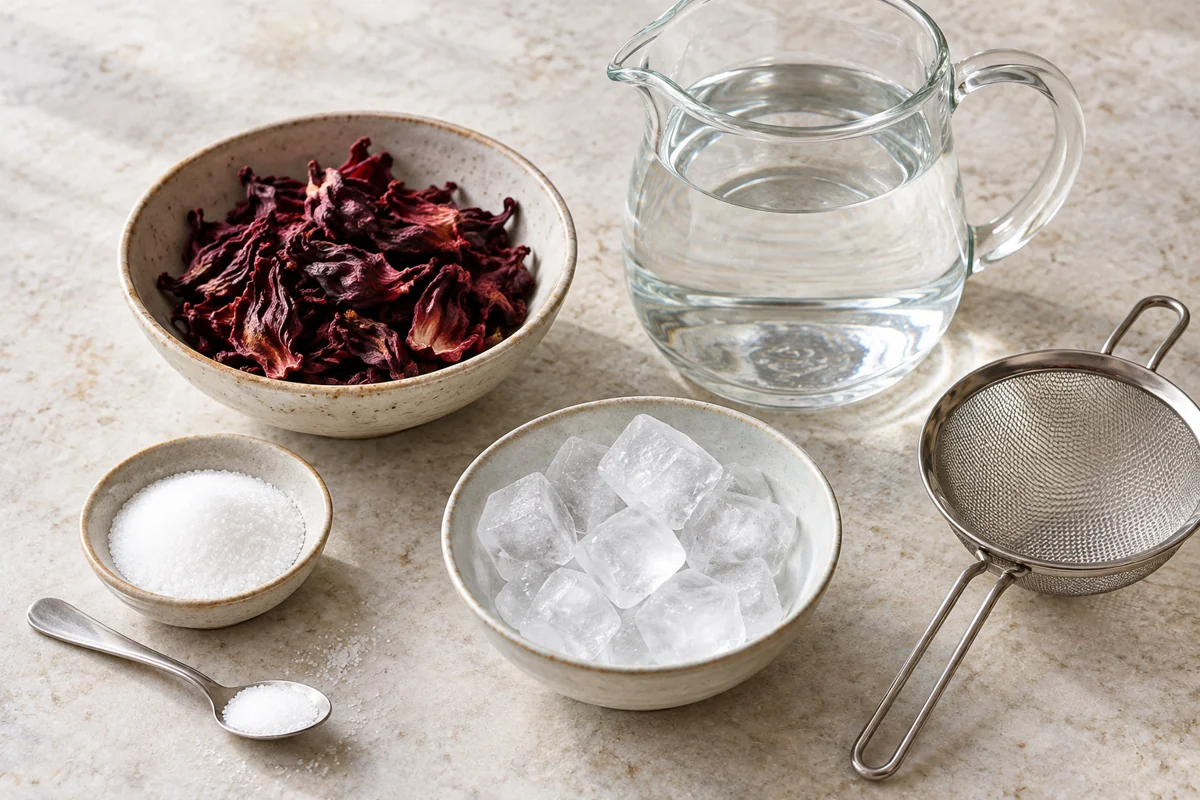
Use commercially sold dried Hibiscus sabdariffa intended for food or tea. The recipe card gives the measured ingredients and the hot brewing method, plus an optional iced finish. Chilling adds time to the cold serving; the short base preparation time describes the hot infusion only.
What is hibiscus tea?
Hibiscus tea is an herbal infusion commonly made from the dried red calyces of roselle, Hibiscus sabdariffa. Calyces are the fleshy structures around the developing seed capsule, rather than the showy petals of an ornamental hibiscus blossom. Packets may still use familiar phrases such as hibiscus flowers or flor de jamaica.
For this recipe, the useful shopping description is dried, food-grade roselle for brewing. A photograph of a red garden flower does not establish that a plant is the right ingredient or has been grown and handled for food. Choose a labeled culinary product instead of using decorative flowers from a florist or an unidentified garden plant.
Hibiscus appears in many regional drinks, with different names and additions. This recipe is a simple unsweetened base with an optional small amount of sugar. It is not presented as the definitive recipe for every version of agua de Jamaica, bissap, or sorrel. Those drinks have their own preparations and traditions.
Ingredients and equipment
Dried hibiscus calyces
Measure 4 grams of dried hibiscus for a 500-milliliter batch. A kitchen scale is useful because whole, broken, and finely cut pieces occupy different volumes. Two spoonfuls from different packets may not contain the same quantity. Measuring by weight gives you a repeatable starting point before you decide whether you prefer a lighter or stronger cup.
Store the unused dried ingredient according to its package instructions, with the container closed and protected from moisture. Use a clean, dry utensil to take out what you need. If a product smells musty, shows mold, or has been exposed to moisture, do not assume boiling will restore it to a suitable tea ingredient.
Water
Use 500 milliliters of drinking water, measured before brewing. This produces approximately two 250-milliliter servings before small losses in the strainer. Large mugs and tall glasses hold different amounts, so the recipe yield is a volume guide, not a promise that it fills any two containers to the top.
Freshly boiled water is the starting point for this hot infusion. Pour it into a heatproof vessel and handle the kettle carefully. Choose a jug or teapot intended for hot liquids rather than an ordinary drinking glass that may not tolerate the temperature change.
Optional sugar and ice
The base drink needs no sweetener. If you prefer a softer finish, the card includes up to two teaspoons of sugar for the full batch, added gradually after straining. Taste first rather than adding the entire optional amount automatically. This is a flavor preference, not an ingredient required for the brewing process.
Ice is for serving the cooled tea. It melts and adds water, so do not expect a glass packed with ice to taste identical to the warm infusion. Chill the tea first if you want less melting. Clean ice made from drinking water is part of the drink, just as much as the brewing water is.
A heatproof vessel and fine strainer
A heatproof teapot or jug, a cover, a fine strainer, and a measuring jug are enough for this small batch. A fine strainer catches broken hibiscus pieces more effectively than a colander. Set it over another heatproof container before you pour, and leave space for safe handling rather than balancing a full hot vessel over a narrow cup.
Understanding the five-minute steep
Five minutes is a culinary starting point for the measured loose hibiscus in this recipe. It is not a universal medical dose or an instruction for every brand. Different cuts and blends can brew differently. If your product supplies directions that differ, use those directions and note the result before adjusting the next batch.
The infusion quickly takes on its familiar red color. Color alone does not tell you whether the strength is right for your taste, so use the timer for consistency and then taste after the tea has cooled enough to sip comfortably. Remove the dried pieces instead of leaving them in the pitcher indefinitely.
If the cup is too intense, add a little water to the strained infusion and taste again. You do not need to start over. For your next batch, change only one thing, such as the quantity of hibiscus or the steeping time, so you can identify the adjustment that suits you.
Serving hibiscus tea hot
For a hot serving, strain the finished infusion into heatproof cups and let it cool to a comfortable drinking temperature. The ruby color looks particularly striking in clear heatproof glass, but a ceramic mug works just as well. The vessel is a presentation choice, not a requirement for the flavor to develop.
Taste the tea plain before deciding whether to sweeten it. A strong hibiscus brew can be both tart and intense, and sweetness does not reduce its concentration. If the drink feels overwhelming, a splash of water may be a better first adjustment than several spoonfuls of sugar.
Serve modest portions first when sharing with someone who has never tried hibiscus. People accustomed to sweet fruit drinks may expect a different flavor. Offering the optional sugar separately makes it easier for each person to decide how they like the cup without sweetening the entire batch heavily.
How to make iced hibiscus tea
Use the same hot-brewed base, remove the dried calyces, and cool the strained infusion before adding ice. Sweeten while it is still warm if you are using granulated sugar, since it dissolves more easily then. The optional sugar quantity belongs to the full batch, not to each individual glass.
For prompt cooling, transfer the strained tea to a suitable clean container and use an ice-water bath around it if needed. Then refrigerate it covered. Avoid putting hot tea directly into a fragile glass container or leaving it on the counter for hours while waiting for it to become completely cold.
Once chilled, divide the tea between two glasses and add ice to taste. The final amount in each glass depends on how much ice you use. If you want a consistent comparison with the warm version, taste the chilled tea before adding ice, then again once the ice has begun to melt.
This iced variation is brewed hot first. It does not require leaving dried herbs in cold water on a sunny windowsill or on the kitchen counter overnight. A separate cold-brew method would need its own preparation and handling instructions; simply skipping the hot-water step is not the method used here.
Hot versus iced: which should you choose?
Choose the hot version when you want a warm, tart cup with a meal or during a break. Choose the iced version when you want a cold drink that you can prepare ahead. They share the same base ingredients, so you can decide how to serve the batch after brewing rather than making two unrelated recipes.
Temperature and dilution change the drinking experience. An iced glass may taste less intense after the ice melts, while the warm version may seem more aromatic. These impressions do not establish that one temperature produces greater health benefits. Use flavor and convenience as your reasons to choose between them.
If you prefer a warmer, spicy profile on another occasion, our lemon ginger tea is a different drink to try. It does not substitute for hibiscus in this recipe, but it offers another clearly described hot beverage when that is what you want.
What does hibiscus tea taste like?
Expect a tart, fruity character often compared with cranberry. The red color can suggest sweetness, but the plain infusion is not automatically sweet. This is why an unsweetened glass may surprise someone expecting berry juice or a bottled fruit drink.
Hibiscus is also different from a green tea or a roasted root infusion. It does not have the same grassy character as green tea or the toasted flavor of our dandelion herbal tea. Choosing by flavor is more useful than treating all herbal drinks as interchangeable.
If the taste is too sharp for you, try dilution before adding more ingredients. If you still do not enjoy it, another beverage may simply suit you better. There is no need to make an extremely sweet pitcher or force a drink because of claims about its benefits.
Adjusting the recipe without losing track
For a lighter drink
Add drinking water gradually to the strained tea. Keep track of the added amount if you want to repeat the result. Diluting a finished batch is a forgiving way to find your preferred strength because you can stop as soon as the cup tastes right.
For a sweeter drink
Add the optional sugar in small portions and stir until dissolved. Taste after each addition. Honey or syrup would bring their own flavor and different amounts of sugar, so they are substitutions rather than invisible equivalents. The plain recipe does not need any of them.
For a larger batch
Scale the hibiscus and water together. Doubling the starting recipe means 8 grams of hibiscus and 1 liter of water. Use a vessel large enough for safe pouring and straining, and keep the same initial five-minute steep rather than automatically doubling the time. You can adjust after tasting.
For a tea-bag version
Use the package's bag-to-water ratio and steeping instructions. A tea bag may contain a blend rather than pure hibiscus, so its strength and flavor can differ from loose roselle. For example, Traditional Medicinals' hibiscus tea gives product-specific hot brewing directions and an iced finish; that does not make every bag equivalent to four grams of plain dried hibiscus.
Does hibiscus tea have caffeine?
An infusion containing only hibiscus and water has no caffeine ingredient. A mixed product can include black tea, green tea, or another caffeine source. Read the complete ingredient list instead of deciding from the red color or a large hibiscus picture on the front of the package.
If you are deliberately choosing between caffeinated and caffeine-free drinks, our green tea with ginger illustrates why the full blend matters. Green tea remains part of that drink even when another ingredient appears prominently in its name.
Caffeine-free also does not mean suitable for every person in unlimited amounts. Treat the serving yield as a recipe quantity rather than a daily recommendation. Your preferences, health situation, and the actual product still matter.
Storing the brewed tea
Use a clean covered container and refrigerate the prepared tea promptly. For a small homemade batch, making what you plan to serve the same day keeps the routine simple.
The FDA's safe food handling guidance recommends a refrigerator at 40°F or below, approximately 4°C, and prompt refrigeration of foods that require chilling. Keep the iced tea cold during storage, use clean serving utensils, and avoid repeatedly leaving the pitcher out on a warm table.
Store dried hibiscus separately from the finished drink. Keep the original label available so you can check the ingredient list and product instructions later. Red color, tartness, or a pleasant smell alone should not be treated as proof that a neglected homemade pitcher is safe.
A brief note on health claims
This is a recipe for a beverage, not a blood-pressure treatment or weight-loss plan. NCCIH's information on hypertension notes that research suggests roselle may help reduce blood pressure in people with hypertension, but this does not establish a treatment schedule for this homemade tea or justify replacing prescribed care.
If you take medication, particularly for blood pressure, or have a health condition, ask a clinician or pharmacist about making hibiscus a regular habit. Seek individual advice during pregnancy or breastfeeding rather than following a general online tea schedule. LactMed's hibiscus entry notes the lack of information on its safety and efficacy in nursing mothers or infants.
The practical goal here is a balanced cup: identify the right culinary ingredient, measure the water, strain the brew, and choose a serving temperature you enjoy. Hot or iced, there is no need to attach a detox claim to a simple red drink.
FAQS
How do you make hibiscus tea from dried hibiscus?
For this recipe, steep 4 grams of food-grade dried hibiscus calyces in 500 milliliters of freshly boiled water for five minutes, then strain. Follow your product instructions if they specify a different method.
Can hibiscus tea be served hot or cold?
Yes. Serve the strained infusion warm, or cool and refrigerate it before pouring over ice. The iced version uses the same hot-brewed base, with extra time for chilling.
Is hibiscus tea naturally sweet?
No. Plain hibiscus tea tastes tart and fruity. Sugar is optional in this recipe. Taste the drink first and dilute it if it is too concentrated before deciding how much sweetness you want.
Does hibiscus tea contain caffeine?
A pure hibiscus infusion has no caffeine ingredient. Blends containing green tea, black tea, or another caffeine source can be different, so check the full product label.
Can I use any hibiscus flower for tea?
Use a commercially labeled food-grade Hibiscus sabdariffa product intended for brewing. Do not substitute unidentified garden flowers or decorative florist blooms for the culinary dried ingredient.
Do I need a different recipe for iced hibiscus tea?
No. Brew and strain the base recipe, add optional sugar while warm, cool promptly, and refrigerate. Pour the chilled tea over clean ice when serving, remembering that melting ice dilutes it.