
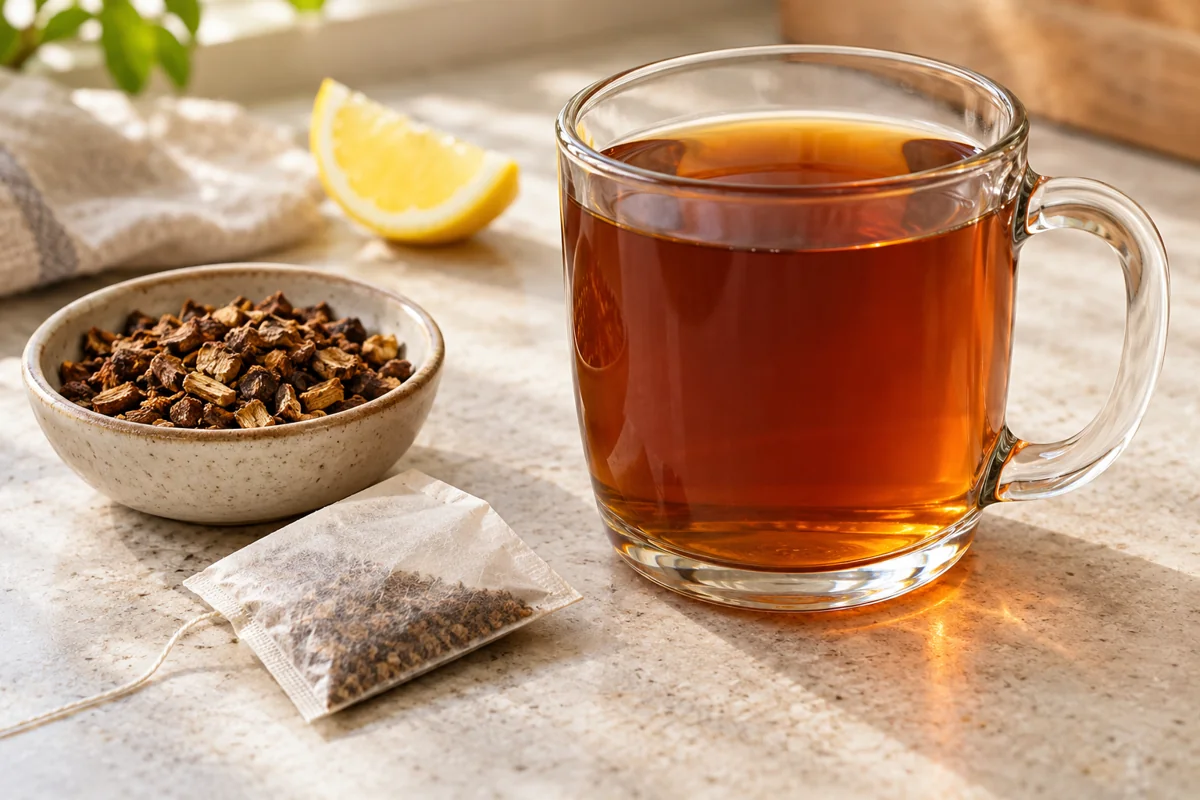
Dandelion herbal tea is an earthy, naturally caffeine-free infusion made from dandelion root, leaf, or a combination of the two. For a warming everyday-style cup with a toasted flavor, roasted dandelion root is a useful place to start. Brew a commercially prepared tea bag in hot water, give it the steeping time on its package, and taste it before adding lemon or a little honey.
This guide focuses on making a pleasant drink: choosing the right product, brewing a balanced cup, understanding the flavor, and serving it hot or over ice. The recipe uses one roasted root tea bag and one cup of water. It is a beverage recipe, not a weight-loss treatment or a supplement schedule.
Dandelion Root Tea Recipe
Print
Dandelion Herbal Tea
An earthy roasted dandelion root infusion for one cup, with optional lemon and honey. Use the brewing directions on your tea package.
- Total Time: 12 minutes
- Yield: 1 cup (1 serving) 1x
Ingredients
1 tea bag single-ingredient roasted dandelion root tea
240 ml (1 cup / 8 fl oz) freshly boiled drinking water
1 teaspoon lemon juice, optional
1 teaspoon honey, optional
Instructions
Place the roasted dandelion root tea bag in a heatproof mug on a stable surface.
Pour over 240 ml freshly boiled water and cover the mug with a suitable lid or small plate.
Steep for 10 minutes, or follow your product directions if they specify a different time or water quantity. Remove the hot cover and tea bag carefully.
Let cool to a comfortable sipping temperature. Taste, then add the optional lemon juice or honey if desired.
Notes
This recipe uses a commercially prepared food-grade tea bag, not a supplement or extract. The reference product recommends a covered 10 to 15 minute steep. Follow your own label. For iced tea, brew hot first, remove the bag, cool and serve over ice. This is a beverage recipe, not a medical dosing schedule.
- Prep Time: 2 minutes
- Steeping: 10 minutes
- Cook Time: 0 minutes
- Category: Tea & Herbal Infusions
- Method: Steeping
- Cuisine: International
Nutrition
- Serving Size: 1 cup
Keywords: dandelion herbal tea, dandelion root tea, caffeine-free tea

The recipe card above uses a single-ingredient roasted dandelion root tea bag. Allow about two minutes to prepare the cup, followed by a ten-minute steep. If your brand specifies a different water quantity or a longer steep, follow those directions instead. Optional lemon and honey let you adjust the finished drink without changing its basic character.
What is dandelion herbal tea?
Dandelion is the common name for Taraxacum officinale. Products sold as dandelion tea can contain different parts of the plant, so the name alone does not tell you exactly what is in the box. Read the ingredient list before buying, particularly if you want a plain infusion rather than a blend with spices, other herbs, or caffeinated tea.
The word tea is used here in its familiar culinary sense. A pure dandelion infusion does not contain the tea plant used to make black or green tea. That distinction helps explain its different taste and its lack of caffeine. The plant part and any roasting matter much more to the flavor than whether the package calls it tea or an herbal infusion.
A packaged product also makes this recipe easier to reproduce. You know which ingredient you are brewing and can work from the manufacturer's directions. Garden plants and foraged roots introduce questions of identification, growing conditions, cleaning, and preparation that this simple kitchen recipe does not cover. Use a food-grade product intended for brewing.
Root tea, leaf tea, and roasted root tea
Roasted dandelion root
Roasted root is the version used in the recipe card. It has a toasted, nutty character with an earthy background and some bitterness. It suits a plain hot cup and can also work with a small splash of milk. The coffee-like association comes from its roasted flavor, not from the presence of coffee or caffeine.
For a concrete brewing reference, Traditional Medicinals' roasted dandelion root product currently directs users to pour eight ounces of freshly boiled water over one tea bag, cover it, and steep for ten to fifteen minutes. Its directions apply to that product; another brand may use a different bag size or preparation method.
Dandelion leaf and unroasted root
Leaf tea and products that combine leaf with unroasted root offer a different starting point. Expect a more herbaceous impression rather than the same toasted profile as roasted root. Traditional Medicinals' leaf and root tea is a separate formulation from its roasted root product. Check the label rather than assuming that all dandelion teas taste alike.
If you dislike a grassy infusion, choosing roasted root may be more helpful than adding several spoonfuls of sweetener to a leaf-based cup. If you prefer lighter herbal flavors, the leaf and root version may be worth trying. Buy a small package first so you can learn which style you enjoy before committing to a larger supply.
Dandelion Leaf Tea vs Dandelion Root Tea
Dandelion leaf tea and dandelion root tea come from the same plant but taste different. Leaf tea is greener and more herbaceous, while roasted root tea is darker, toastier and more bitter. If your package contains both leaf and root, expect a flavor somewhere between those two styles.
Dandelion Leaf Tea Recipe: How to Make It
Use food-grade dried dandelion leaf and follow the supplier’s serving amount. A practical starting point is to steep the measured leaf in hot water for about 5 to 10 minutes, then strain and taste. Use a shorter steep for a lighter cup and a longer steep only if the product directions allow it.
Blends and coffee alternatives
Some blends combine dandelion with chicory, spices, or other ingredients. These can be enjoyable drinks, but their flavor and preparation instructions may differ from the recipe here. Read the whole list, including any allergens or added flavors. A front label that emphasizes dandelion does not necessarily mean the product contains only dandelion.
Ingredients and equipment
Choose one roasted dandelion root tea bag with clear brewing directions. A single-ingredient product keeps the flavor predictable and makes it easier to decide whether you like dandelion itself. There is no need to use a capsule, tincture, powdered supplement, or concentrated extract in a drink designed around a normal tea bag.
Use 240 milliliters of drinking water for the recipe's one-cup serving. Measuring the water once is worthwhile: an oversized mug filled to the rim may hold much more than a cup and produce a weaker infusion. You can brew the measured amount in a larger mug, leaving room to handle it comfortably or add a splash of milk later.
Lemon juice and honey are optional. Start with a small amount after brewing, because both change the balance of the cup. Lemon adds brightness; honey adds sweetness and its own flavor. Neither is required for the infusion to work, and leaving them out gives you the clearest sense of the roasted root's character.
A heatproof mug, kettle, measuring cup, and small plate or suitable mug lid are enough. Set the mug on a stable surface and handle freshly boiled water carefully. If you cover it with a plate, remember that condensation and the underside of the plate will be hot when you lift it away.
How to brew a balanced cup
Start with the package directions
Put the bag into the mug before adding the measured hot water so the brewing quantity is clear. Cover the cup during the recommended steep. This keeps the preparation consistent and helps retain heat while the bag infuses. For the product used as the recipe's reference, begin checking the flavor at ten minutes within its stated ten-to-fifteen-minute range.
Do not judge the drink only by its color. Roasted ingredients can give the water a deep brown shade even when the flavor is still developing. Give the bag its recommended time, remove it carefully, and let the tea cool to a comfortable sipping temperature before deciding whether it needs anything else.
Taste before sweetening
Take a small sip of the plain tea first. If the roast is pleasant but the finish seems a little sharp, try a small squeeze of lemon or a little honey. Add one adjustment at a time so you can tell what improved the cup. A large addition of both can hide the original flavor without solving a strength problem.
The first cup is a useful reference for your next brew. Note the brand, measured water quantity, and steeping time rather than treating a disappointing result as proof that every dandelion tea tastes the same. Changing one variable at a time makes it much easier to find a version you enjoy.
How to Make Dandelion Root Tea With Loose Root
To make dandelion root tea with loose dried root, use food-grade root sold for brewing. Measure the root and water according to the package. If the label calls for steeping, put the root in an infuser, pour hot water over it, and steep for the stated time. If it calls for simmering, put the root and water in a small saucepan, simmer as directed, and strain into a mug. Choose roasted root for a toastier cup, and taste before adding lemon or honey.
What does dandelion tea taste like?
A roasted root cup is earthy and toasty, with a pleasantly bitter edge if that is a flavor you enjoy. It will not reproduce the aroma, acidity, or body of brewed coffee exactly. Think of it as its own herbal drink. That expectation makes it easier to appreciate a lighter texture and a different finish.
Leaf-containing blends may seem greener or more herbaceous. The exact result depends on the product and brewing method, which is why the plant part belongs near the top of your shopping checklist. A tea described as mild by one drinker may still seem bitter to someone used to sweetened beverages.
If you usually enjoy a brighter cup, our lemon ginger tea offers a different citrus-and-spice direction. It is a separate drink to try when you want that flavor profile, rather than another name for this roasted root infusion.
Troubleshooting bitterness and weak flavor
The cup tastes too strong
Add a small splash of hot water to the finished cup and taste again. Dilution is a straightforward way to soften a brew that is more intense than you wanted. For the next cup, check that you used the package's recommended amount of water and stayed within its suggested steeping range.
Bitterness may also be part of the product's natural flavor. If you have already adjusted the strength and still dislike it, a different tea style may suit you better. There is no culinary reason to force down an infusion you do not enjoy or to keep adding sweetener simply because the ingredient is marketed as beneficial.
The cup tastes watery
Check the mug size first. A large café mug can easily encourage an accidental double portion of water for one bag. Next, check that the bag had the full recommended time and was immersed properly. Correct the measurement and method before adding extra bags, especially when changing brands.
The add-ins overpower the tea
Reduce them in the next cup. Honey has a noticeable aroma, and a generous squeeze of lemon can dominate a subtle brew. You can also leave both out and serve the infusion plain. The optional additions are flavor choices, not essential components or a way to increase the drink's health effects.
Serving it hot, iced, or with milk
For a hot serving, let the tea cool enough to sip comfortably after removing the bag. A small lemon wedge on the saucer lets each person adjust their own cup. Keep the presentation simple: the warm brown infusion and its toasted aroma are enough, without suggesting that decorative flowers are part of the recipe.
For an iced version, brew the tea with hot water according to the product directions first. Remove the bag, cool the infusion, then serve it over ice. Ice will dilute the flavor as it melts, so begin with a properly measured brew. This recipe does not provide a cold-water extraction method for raw or dried roots.
Make one serving at a time when practical. If preparing it ahead, transfer it to a clean covered container, refrigerate promptly, and keep it cold until serving. Do not leave a jug sitting on the counter throughout the day. Add lemon or other finishing ingredients when you serve it for the freshest flavor.
Roasted root can also take a small splash of dairy milk or an unsweetened plant-based alternative. Add it to the brewed tea, then taste before sweetening. Different milks change the flavor and texture, so start with a little. Check the ingredients of your chosen alternative if you are avoiding added sugar or particular allergens.
For another herbal drink with a lighter aromatic character, try lemongrass ginger tea. Keeping these drinks distinct helps you choose by flavor: toasted root here, citrusy lemongrass and ginger in that recipe.
Does dandelion herbal tea contain caffeine?
Pure dandelion root or leaf tea is naturally caffeine-free. Roasting the root does not turn it into coffee or add caffeine. However, a blend can contain black tea, green tea, yerba mate, or another caffeine source. Check both the ingredients and any caffeine information on the actual package.
That makes a plain dandelion infusion a different choice from our green tea with ginger, which contains green tea. Choose according to the ingredients you want and the flavor you enjoy. Caffeine-free does not automatically mean that a particular herbal product is suitable for every person or medication routine.
Dandelion Tea Benefits: What Does Research Say?
According to the National Center for Complementary and Integrative Health, human research is limited, and there is no compelling evidence that dandelion treats a health condition. Laboratory studies of extracts do not establish the effects of a brewed cup. Treat this recipe as a drink, not a detox, fat-burning method, or weight-loss prescription.
NCCIH also notes possible medicine interactions and uncertainty about amounts above food use during pregnancy or breastfeeding. People sensitive to related plants may have allergic reactions. If you take medication, are pregnant or breastfeeding, or have a health condition, ask a healthcare professional whether your particular product is appropriate.
Memorial Sloan Kettering's dandelion information distinguishes food use from stronger supplements and describes possible effects such as stomach discomfort, heartburn, and rash. Its cautions include interactions with water pills. A pleasant flavor or a caffeine-free label does not remove these considerations. Avoid turning tea preparation instructions into a self-prescribed daily treatment schedule.
Dandelion Tea Side Effects and Who Should Be Careful
Dandelion tea is not automatically risk-free because it is herbal. Some people may experience digestive discomfort, and dandelion may interact with certain medicines. People with allergies to plants in the daisy family may also need extra caution.
If you take prescription medicine, especially medicines that affect fluid balance, blood pressure, blood sugar, or blood clotting, ask a pharmacist or clinician about the specific product you plan to use. Pregnancy and breastfeeding also deserve caution because safety data for larger medicinal amounts are limited.
Best Time to Drink Dandelion Tea
There is no proven best time to drink dandelion tea for weight loss. There is no strong evidence that drinking it helps you lose weight, whether you have it before breakfast or after a meal. If you enjoy it as a beverage, choose a time that suits you. Because plain dandelion tea is naturally caffeine-free, many people choose it in the morning, after a meal, or in the early evening based on taste and comfort.
If you notice that dandelion makes you urinate more often, avoid a large cup right before bed. If you take medicines that affect fluid balance, blood pressure, or blood sugar, ask a clinician or pharmacist before making concentrated dandelion tea a daily habit.
FAQS
What is dandelion herbal tea made from?
It can contain dandelion root, leaf, or both. This recipe uses a commercially prepared roasted root tea bag. Check the ingredients because blends may include other herbs, spices, or tea leaves.
Is dandelion herbal tea caffeine-free?
Pure dandelion tea is naturally caffeine-free. A blend containing black tea, green tea, or another caffeine source may not be. Read the label of the specific product you buy.
How long should I steep dandelion root tea?
Follow your package. The roasted root product used as this recipe's brewing reference specifies one bag in eight ounces of freshly boiled water, covered, for ten to fifteen minutes. Other products can differ.
Can I drink dandelion tea cold?
Yes. Brew a tea bag with hot water according to its label, remove it, cool the infusion, and serve over ice. Refrigerate prepared tea promptly if you are saving it for later.
Does dandelion tea help with weight loss?
There is no established evidence that this tea produces lasting fat loss. Enjoy it as a beverage if it suits you. Adding honey also adds sugar; it does not turn the cup into a weight-loss treatment.
Can everyone drink dandelion tea every day?
There is no single schedule appropriate for everyone. Product ingredients, medicines, allergies, pregnancy, and health conditions matter. Ask a pharmacist or clinician about your situation before making it a regular habit, and follow product guidance.