
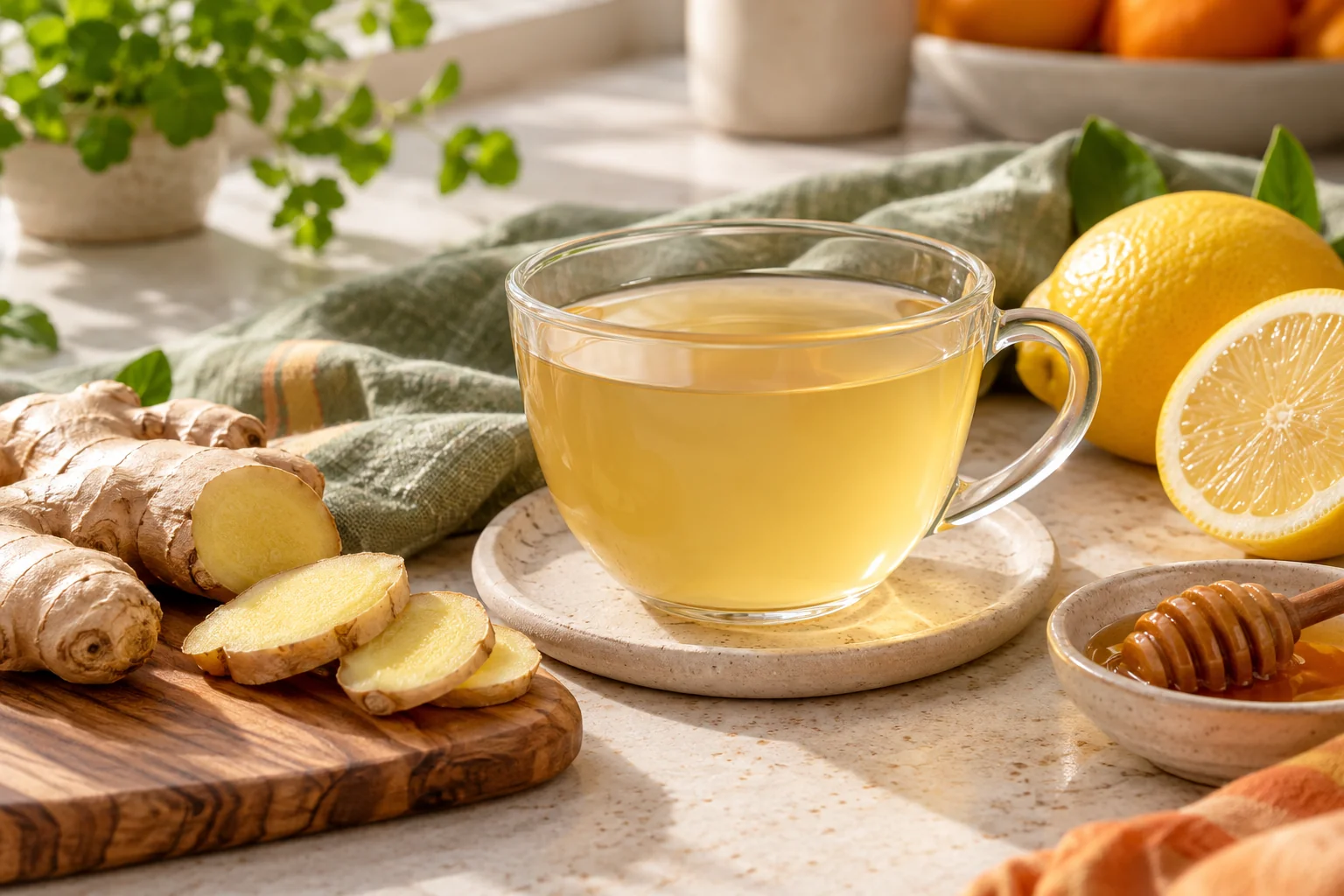
Lemon ginger tea, also called ginger lemon tea, is a warm herbal infusion made by simmering fresh ginger in water, then adding lemon juice after straining. For this two-cup recipe, start with 10 grams of thinly sliced ginger, 500 milliliters of water, and 2 teaspoons of lemon juice. Honey is optional. Without green or black tea leaves, the drink is naturally caffeine-free.
The useful part of making it yourself is control: you choose how peppery the ginger tastes, how much citrus to add, and whether the finished cup needs any sweetness. There is no need to turn a simple drink into a complicated supplement routine.
This guide explains the ingredients, a straightforward stovetop method, and practical fixes for tea that tastes too sharp, too weak, or too sour. For the evidence behind the health claims, read our separate guide to ginger tea benefits.
What Is Lemon Ginger Tea?
Despite its name, a drink containing only ginger, lemon, and water is an herbal infusion, sometimes called a tisane. It does not contain leaves from the tea plant. That distinction matters if you are avoiding caffeine or choosing a drink for the evening.
Fresh ginger supplies a peppery aroma and a warming taste. Lemon adds acidity and a citrus fragrance. Honey changes the balance by adding sweetness, but it is not required for the infusion to work as a recipe.
Some versions also include green tea, black tea, turmeric, or cinnamon. Those are different drinks with different flavor profiles. If you want tea leaves in your cup, our green tea with ginger recipe explains how to brew the leaves separately from the ginger.
Is Lemon Ginger Tea the Same as Ginger Lemon Tea?
In most recipe searches, yes. The two phrases generally describe the same combination, with the word order reflecting preference rather than a separate preparation. Read the ingredient list rather than assuming that one name contains more lemon or more ginger.
Likewise, lemon ginger honey tea usually means the same drink with an added sweetener. You can make that variation from the recipe below without needing a second method.
Ingredients and Equipment
The base recipe makes two small servings. A measuring jug, small saucepan, fine-mesh strainer, knife, and two heat-safe mugs are enough. A kitchen scale is useful because a one-inch piece of ginger can vary considerably in thickness and weight.
| Ingredient | Starting amount | Purpose |
|---|---|---|
| Drinking water | 500 ml, about 2 cups | Infusion base |
| Fresh ginger | 10 g, thinly sliced | Peppery flavor |
| Lemon juice | 2 tsp, plus more to taste | Citrus brightness |
| Honey | Optional, 1 tsp for the whole batch | Sweetness |
| Lemon slices | Optional | Garnish |
These are culinary proportions, not a medically established ginger dose. Make the drink milder or stronger according to taste and tolerance.
Choosing Fresh Ginger
Look for a firm piece with a clean, spicy smell. Avoid pieces with visible mold or a wet, deteriorating surface. Wrinkles alone do not tell you how strong the finished tea will taste, but very dry ginger is harder to slice evenly.
Wash the ginger under running water before cutting it. You may peel it if the skin is thick or you prefer that appearance. Removing a thin layer with the edge of a spoon can be easier than cutting away large strips with a knife.
Slice across the root into thin, reasonably even pieces. The goal is to expose the ingredient to water without making the finished drink unnecessarily gritty. A few thick chunks are convenient, but they may need more infusion time to give the same intensity.
Choosing the Lemon
Use a lemon that feels sound and has no spoiled areas. Wash it before cutting, especially if you will add a slice with the peel attached. Squeeze the juice separately and remove seeds.
Start with a measured amount of juice rather than adding half a lemon automatically. Lemons differ in size and acidity, and an already strong ginger infusion can become difficult to enjoy when too much juice is added at once.
How to Make Lemon Ginger Tea
1. Prepare the Ginger
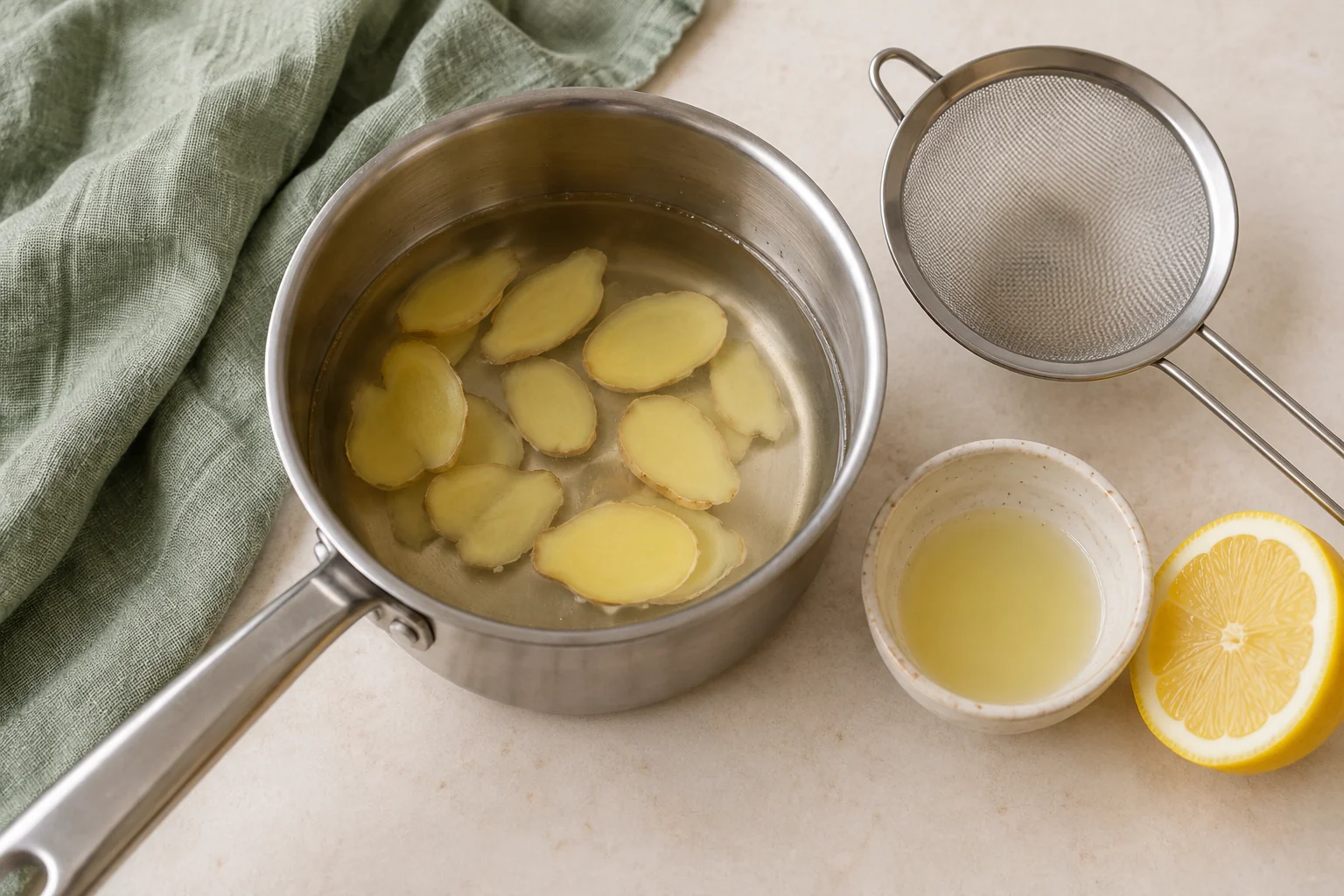
Wash and thinly slice 10 grams of fresh ginger. Put it in a small saucepan with 500 milliliters of drinking water. If you are making the recipe for the first time, keep the ginger amount modest rather than building a very concentrated brew.
2. Simmer the Infusion
Bring the water just to a boil, then reduce the heat to a gentle simmer. Simmer for 8 to 10 minutes. Keep an eye on the pan so excessive evaporation does not turn two servings into a small, concentrated amount.
Taste a cooled spoonful near the end. If the flavor is too light for your preference, continue briefly. If it is already strong enough, remove the pan from the heat. The timer is a useful starting point, but your ingredients and preferences determine the finish.
3. Strain Out the Ginger
Pour the infusion through a fine-mesh strainer into a heat-safe jug or directly into the mugs. Handle the saucepan carefully, and let the drink cool to a comfortable temperature before sipping.
Straining is particularly useful if you grated the ginger. Small fibers may remain even after a basic sieve; a finer strainer gives a smoother drink.
4. Add Lemon and Optional Honey
Stir 2 teaspoons of lemon juice into the batch. Taste, then add more in small increments if desired. If using honey, start with 1 teaspoon for the whole batch and adjust after tasting.
Adding lemon at this stage makes it easier to judge the balance. It also avoids a long simmer with the peel, which can bring an unwanted bitter note. This is a flavor choice, not a claim that the sequence creates special health effects.
5. Serve
Divide between two mugs. Add a thin lemon slice if you like. Serve warm rather than scalding, and dilute with a little hot water if the ginger has become too intense.
Lemon Ginger Tea Recipe
Print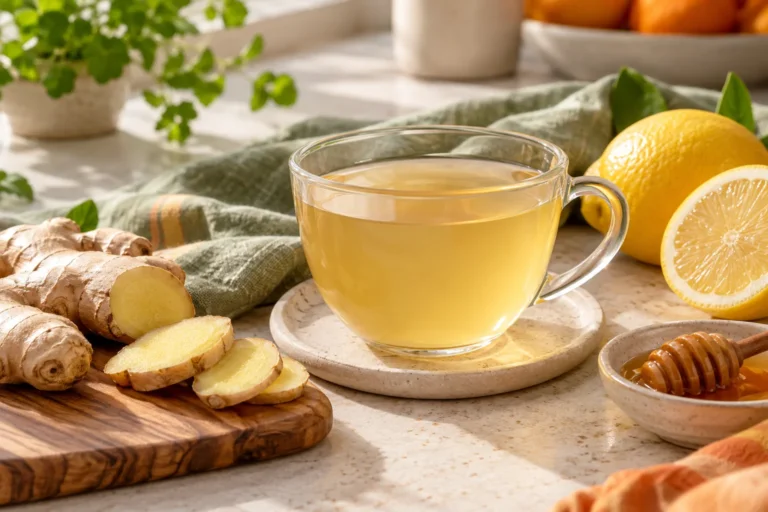
Lemon Ginger Tea
Fresh ginger infusion with lemon juice and optional honey. Naturally caffeine-free when made without tea leaves.
- Total Time: 15 minutes
- Yield: 2 small cups 1x
Ingredients
500 ml drinking water, about 2 cups
10 g fresh ginger, washed and thinly sliced
2 tsp fresh lemon juice, plus more to taste
1 tsp honey for the batch, optional
2 thin lemon slices, optional garnish
Instructions
1. Place the water and sliced ginger in a small saucepan.
2. Bring just to a boil, reduce the heat, and simmer gently for 8 to 10 minutes.
3. Strain into a heat-safe jug, taking care with the hot liquid.
4. Stir in the lemon juice and optional honey. Taste and adjust gradually.
5. Divide into two mugs, garnish if desired, and let cool to a comfortable drinking temperature.
Notes
Use less ginger for a milder cup. Honey makes the drink non-vegan; omit it or use an alternative sweetener if needed. The proportions are for flavor, not a therapeutic dose.
- Prep Time: 5 minutes
- Cook Time: 10 minutes
- Category: Drinks
- Method: Stovetop infusion
Keywords: ginger lemon tea, lemon ginger tea, ginger and lemon tea
Adjusting the Strength Without Starting Over
A drink that tastes too strong is usually easier to correct than one that has been excessively sweetened. Add plain hot water a little at a time, stir, and taste again. You can preserve the aromatic quality while reducing the sharpness.
If the tea is too weak, remember what you changed. Large ginger chunks, a shorter simmer, or a larger volume of water can all create a lighter cup. Next time, change one variable at a time rather than doubling both the ginger and the cooking time.
| Problem | Likely recipe issue | Practical adjustment |
|---|---|---|
| Too peppery | More ginger or a concentrated infusion | Dilute with water |
| Too sour | Too much lemon juice | Dilute; add a small amount of sweetness if desired |
| Too sweet | Sweetener added before tasting | Dilute or mix with an unsweetened batch |
| Too weak | Thick slices or short infusion | Slice more thinly or simmer a little longer next time |
| Bitter finish | Lemon peel simmered too long | Add juice after straining; keep garnish out of the pan |
| Gritty texture | Ground or grated ginger remaining | Use a finer strainer |
Avoid treating a stronger flavor as evidence of a stronger medical effect. A cup that is comfortable and enjoyable is a better culinary target than one that is difficult to swallow.
Fresh Ginger, Ground Ginger, or Tea Bags?
Fresh ginger gives you the most direct control over the ingredient and its intensity. Thin slices are easy to remove, and the aroma is different from a powdered spice.
Ground ginger can be convenient, but it stays suspended in the drink and may leave sediment. It is not an exact spoon-for-spoon replacement for fresh ginger. If you experiment with it, make a small cup first rather than a large pot.
A tea bag is the easiest option when you want minimal preparation. Check whether it contains only herbal ingredients or also green or black tea. A package described as ginger tea is not automatically caffeine-free when tea leaves are included.
Do not assume that a packaged blend with lemon flavoring is identical to fresh lemon juice. Both can be enjoyable, but the ingredient lists and flavors may differ substantially.
Honey, Mint, and Other Flavor Variations
Honey Lemon Ginger Tea
Prepare the base recipe, then stir in honey after straining. Taste before adding a second spoonful. The drink can easily become more sweet than spicy if you use a large amount.
Honey is an optional ingredient, not a reason to describe the beverage as a treatment. For a version without added sweetness, leave it out entirely.
Ginger Tea With Mint
Add a few washed mint leaves to the finished hot infusion for a brief steep, then remove them. This gives the cup a fresh aroma without changing the stovetop method.
Start with a small amount. Mint can become the main flavor surprisingly quickly, especially when the ginger infusion is mild.
A Citrus Aroma Without Lemon Juice
If you enjoy a lemony fragrance but prefer to skip added juice, try our lemongrass ginger tea recipe. Lemongrass provides an aromatic herbal variation rather than simply copying the lemon version.
That is a flavor distinction, not a promise that lemongrass is better for reflux or suitable for every person. Individual tolerance still matters.
How to Make Iced Lemon Ginger Tea
Prepare the infusion and strain it before cooling. Refrigerate it promptly in a clean container, then add lemon juice and pour over ice when ready to serve. If you add a large amount of ice to a hot drink, expect the melting water to weaken the flavor.
For the simplest approach, chill the regular-strength batch first and use a modest amount of ice. You can also freeze a little strained infusion in an ice-cube tray so the drink is diluted less as the cubes melt.
Add garnishes at serving time rather than leaving lemon slices sitting in the stored batch. That helps you control both the appearance and the final taste.
Storage and Reheating
Freshly prepared tea is the easiest way to judge the ginger-lemon balance. If you make extra, use a clean, covered container and refrigerate promptly. Prepare only enough for the same day or next day for the best quality.
Do not leave a pitcher with cut fruit on the counter overnight. General food-safety guidance recommends chilling perishable food promptly and keeping refrigerators at 40°F, or 4°C, or below.
Reheat only the amount you plan to drink. Warm it gently, then taste before adding more lemon or honey. Repeated heating and long storage can change the flavor even when the original recipe tasted balanced.
What About Digestion and Weight-Loss Claims?
The clearest reason to choose this recipe is that you enjoy the drink. It is not a proven fat-burning formula. Adding lemon or honey does not establish that a ginger infusion causes weight loss.
If your reason for searching is stomach discomfort, read our focused explanation of ginger tea and bloating. It separates a comforting beverage from a treatment claim and explains why studies using ginger supplements cannot automatically predict the effect of this cup.
Ginger can also cause discomfort in some people. The NCCIH ginger overview lists heartburn and abdominal discomfort among possible side effects. Stop if the drink bothers you rather than increasing its strength.
FAQs
Does lemon ginger tea have caffeine?
The recipe above contains no tea leaves and is naturally caffeine-free. A packaged blend or variation containing green tea, black tea, or another caffeine-containing ingredient is different.
Can I make ginger lemon tea without honey?
Yes. Honey is optional. Make the ginger infusion, add lemon juice to taste, and serve it unsweetened if you enjoy that balance.
Should I boil the lemon with the ginger?
You can, but this recipe adds lemon juice after straining so the acidity is easier to adjust and the peel is not simmered for a long time.
Do I need to peel fresh ginger for tea?
Peeling is optional when the ginger is sound and thoroughly washed. Remove any damaged areas, and peel if the skin is thick or you prefer the result.
Can I drink this tea cold?
Yes. Strain the infusion, refrigerate promptly, and serve chilled with ice. Add lemon and optional sweetness according to taste.
Is lemon ginger tea a weight-loss drink?
It is an ordinary beverage, not an established weight-loss treatment. Its role depends on your overall eating pattern and what it replaces, rather than a special fat-burning effect.
7 thoughts on “Lemon Ginger Tea Recipe: How to Make It With Fresh Ginger”