
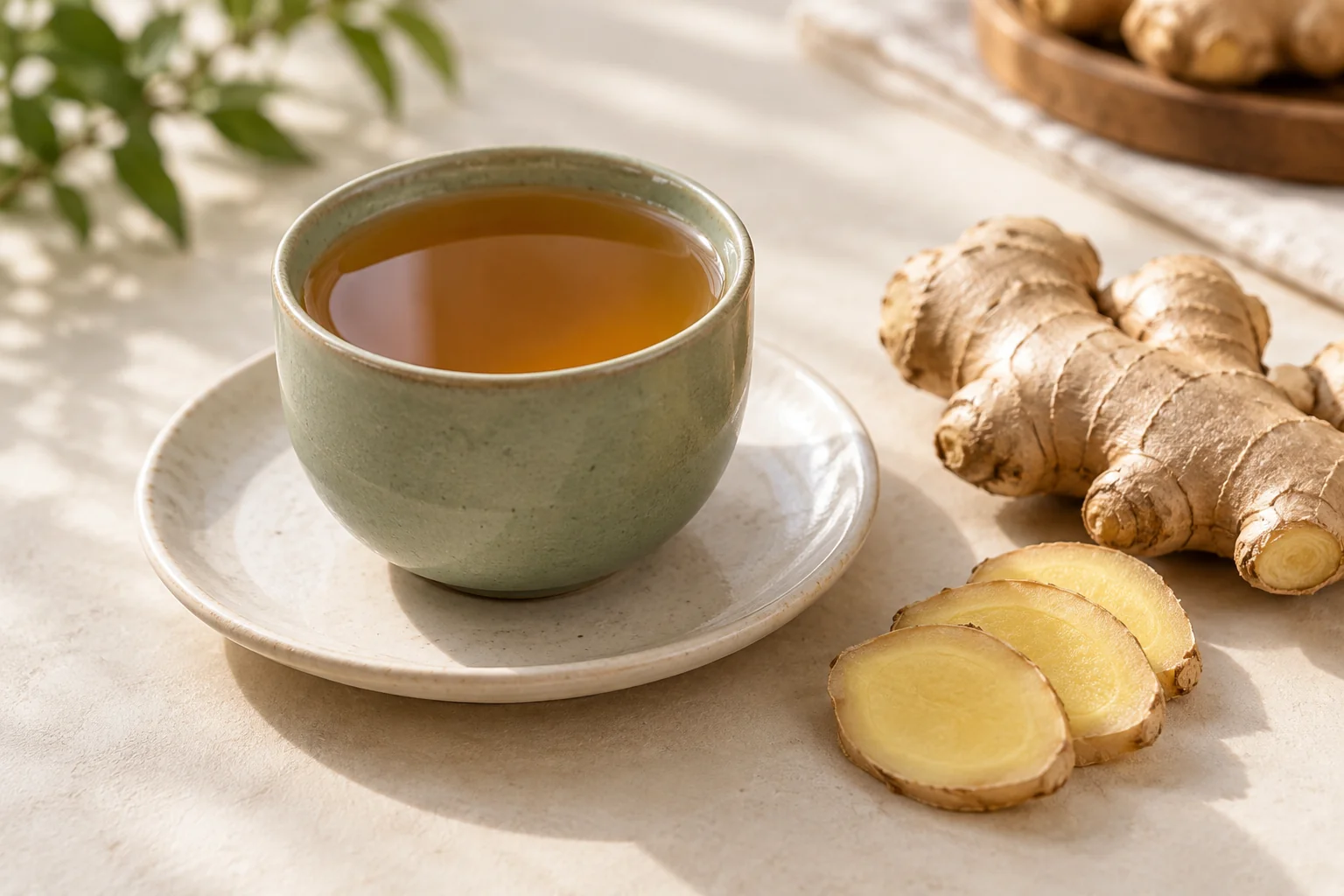
Ginger tea may feel soothing to some people, but evidence that a homemade infusion reliably relieves bloating is limited. Research involving ginger capsules has examined stomach movement, and a faster measured process does not necessarily mean less discomfort. The cause of the bloating, the other ingredients in the drink, and your individual tolerance all matter.
If you searched for a quick yes-or-no answer, the most accurate answer is that ginger tea is an optional beverage, not a dependable treatment for every bloated stomach. It is worth separating what researchers tested from what happens when you put a few slices of ginger in a mug.
For a broader review of claims, see our guide to ginger tea benefits. This article stays focused on bloating, upset-stomach searches, and the practical decisions those symptoms raise.
What Does Bloating Mean?
Bloating is the feeling that your abdomen is unusually full or swollen. It does not always mean your belly has visibly become larger. The NIDDK explanation of gas symptoms distinguishes that sensation from distention, a visible increase in abdominal size.
This distinction helps when describing what happens to you. Feeling pressure after a meal, noticing a visible change in your abdomen, and having pain are different observations. An accurate description is more useful than labeling all of them as trapped gas.
Also notice whether the symptom is occasional or recurring. A question about one uncomfortable afternoon is different from a pattern that repeatedly interferes with eating, sleep, or daily activities.
Bloating, Nausea, and Indigestion Are Not the Same
Nausea is the feeling that you may vomit. Bloating is fullness or swelling. Indigestion describes a group of symptoms that may include upper-abdominal discomfort or early fullness. These terms can overlap, but they are not interchangeable.
That matters because the phrase upset stomach is very broad. A result about ginger and nausea cannot automatically answer a question about abdominal swelling, constipation, or a burning sensation.
When evaluating advice, match the study to the symptom rather than accepting a general statement that ginger improves digestion. A useful explanation should say which outcome was measured and what preparation was used.
Why Ginger Is Often Suggested for Bloating
Ginger has a long history of use in foods and drinks, and its peppery flavor is familiar in many kitchens. It is also a subject of clinical research, including studies of nausea and gastrointestinal function.
Those facts help explain why it appears in so many digestive-comfort articles. However, familiarity and tradition are different forms of information from evidence that a specific homemade tea reduces bloating.
A warm cup may also be pleasant as part of a familiar routine. That personal experience is real as an experience, but it does not establish why the discomfort changed or predict the result for someone else.
For example, the symptom may settle with time, or the person may have changed what they were eating and drinking at the same time. A testimonial cannot isolate the effect of the tea from those other circumstances.
What Does the Research Actually Show?
A Small Trial Measured Stomach Emptying
A 2011 randomized crossover trial involved 11 people with functional dyspepsia. The participants received ginger capsules or placebo before a test meal. Ginger accelerated gastric emptying, but the study did not find improvement in the gastrointestinal symptoms measured during the observation period.
The study is useful because it prevents an easy shortcut. A measurable effect on stomach movement was observed, yet symptom relief did not follow in that trial. It also tested capsules, not tea made from fresh slices.
That does not prove that no person could ever find ginger tea comfortable. It means this particular study does not support a claim that a homemade cup reliably gets rid of bloating.
Gastric Emptying Is Not the Same as Bloating Relief
Gastric emptying concerns how material leaves the stomach. Bloating is a symptom that can involve different processes and different parts of the digestive system.
An article that turns a finding about gastric emptying into a promise to remove all gas is making an additional inference. That inference needs its own evidence.
The same applies to phrases such as stimulates digestion or speeds metabolism. Unless the outcome is defined, the wording can make a limited research finding sound much broader than it is.
Supplement Results Do Not Establish a Tea Dose
Fresh ginger infusions vary. A recipe may use slices, grated ginger, dried pieces, or a tea bag. The amount of water and cooking time also differ. The resulting cup is not a standardized substitute for a capsule used in a study.
That is why this article does not recommend a therapeutic number of grams, an exact number of cups, or a treatment schedule. A culinary recipe can specify proportions for flavor without presenting them as a proven bloating remedy.
Is Ginger Tea Good for an Upset Stomach?
It depends on what you mean by upset stomach and what is causing it. Some people like a mild herbal drink when they feel uncomfortable, while others find ginger too sharp or irritating.
The NCCIH ginger guidance notes that most nausea research studied supplements and lists possible effects such as heartburn and abdominal discomfort. It does not establish a homemade-tea treatment for every stomach symptom.
If your symptom is nausea, evidence about nausea is relevant. If it is recurring swelling, a painful burning sensation, or diarrhea, those are different questions. Do not assume that a drink described as digestive answers all of them.
A Question to Ask Before Changing the Drink
Try to describe the symptom in a simple sentence: I feel full after eating; I feel sick; my abdomen is swollen; or I have a burning sensation. You do not need to diagnose yourself to distinguish those observations.
That description can help you assess whether an article is answering your actual question. It also gives a health professional clearer information if the symptom persists.
Can Ginger Tea Make Bloating or Discomfort Worse?
It can be uncomfortable for some people. The fact that a product is herbal does not guarantee that it agrees with every stomach.
The full drink matters as well. A ginger beverage can include large amounts of sweetener, milk, lemon, tea leaves, carbonation, or several herbs. A symptom after drinking it does not automatically identify ginger as the cause.
Changing several ingredients at once makes the pattern harder to understand. A simpler ingredient list is easier to evaluate than a blend containing ginger, citrus, honey, green tea, and multiple spices.
| What you notice | What to consider |
|---|---|
| Burning after a strong cup | Strength and personal tolerance |
| Discomfort after a sweetened blend | The full ingredient list, not just ginger |
| Symptoms after a fizzy ginger drink | Carbonation and the difference from herbal tea |
| A reaction only to one packaged product | Additional ingredients and preparation instructions |
| Repeated symptoms despite different drinks | A reason to look beyond beverage changes |
This table does not diagnose the cause. It helps prevent one ingredient from receiving either all the credit or all the blame without enough information.
If You Choose Ginger Tea as a Beverage
Choose it because you enjoy and tolerate it, rather than expecting guaranteed relief. There is no need to prepare the strongest version you can manage.
A modest, unsweetened infusion is easier to judge than a heavily flavored mixture. Let it cool to a comfortable drinking temperature, and stop if it makes you feel worse.
If you want an actual cooking method, our lemon ginger tea recipe gives measured proportions for flavor. You can omit the lemon and honey rather than assuming every ingredient is required.
The recipe’s quantities are culinary starting points. They should not be interpreted as a clinical dose or proof that a certain cup size treats the symptom.
Why This Article Does Not Include a Bloating-Cure Recipe
A recipe card can accurately describe ingredients and preparation. It cannot turn a beverage into an established treatment by adding the word relief to its title.
Keeping the recipe separate also makes the intent clearer. This page answers an evidence question. The recipe page answers how to make the drink. Readers can use either without confusing cooking instructions with medical advice.
Lemon, Honey, Green Tea, and Other Additions
Lemon
Lemon gives a bright flavor, but it is not essential to ginger tea. If you prefer a simple cup or do not enjoy citrus, omit it rather than looking for a substitute that makes an equivalent health promise.
Adding lemon does not supply evidence that the drink reduces bloating. A combination needs evidence relevant to the combination, not just separate claims about its ingredients.
Honey and Sweeteners
Honey changes sweetness and texture. It is an optional ingredient, not an established way to make ginger more effective for a digestive symptom.
A small amount may suit your taste, but keep track of what you add. If you keep increasing sweetener to mask a very strong ginger flavor, a milder infusion may be the simpler recipe adjustment.
Green Tea
A green-tea blend is different from a plain ginger infusion because it includes tea leaves and can contain caffeine. If that is the drink you want, follow our green tea with ginger recipe and check the brewing guidance.
Do not choose it on the assumption that adding another popular ingredient doubles the benefit. More ingredients create a different drink, not automatically a more effective remedy.
Lemongrass
Our lemongrass ginger tea is a fragrant herbal option without tea leaves in the base recipe. It is suggested for flavor, not as a superior treatment for bloating.
If you are trying to understand a symptom pattern, adding a new herb may make that pattern harder to interpret. There is no need to experiment with multiple blends at the same time.
Before Meals, After Meals, or Before Bed?
There is no established tea-specific schedule that guarantees bloating relief. Claims that everyone should drink it exactly 20 or 30 minutes after eating are more precise than the evidence supports.
Think about comfort and routine instead. A drink that causes discomfort on an empty stomach should not be forced into an early-morning ritual. A large drink that feels uncomfortable before lying down is not made suitable by calling it a bedtime tea.
If you enjoy ginger tea, use it as a beverage at a time that suits you. Persistent digestive symptoms should not be managed only by moving the same cup from one part of the day to another.
Track a Pattern Without Overcomplicating It
If symptoms recur, a short record can make the pattern easier to discuss. You can note the time, what you ate and drank, the symptom you noticed, and roughly how long it lasted.
Keep the record descriptive rather than assigning a diagnosis. For example, uncomfortable fullness after lunch is more precise than my digestion failed. Note whether the same thing happens on days when you do not drink ginger tea.
Try not to change the ginger strength, meal size, sweetener, caffeine, and several other foods simultaneously. When everything changes together, it is difficult to know which change mattered.
The purpose is to improve the information available, not to construct a restrictive diet from a few isolated observations. Bring recurring patterns to a qualified professional rather than assuming a list of forbidden foods will solve every episode.
When to Seek Medical Advice
The NIDDK gas guidance recommends discussing symptoms that bother you, suddenly change, or occur with other symptoms such as abdominal pain, constipation, diarrhea, or weight loss.
For indigestion, its warning-sign guidance includes severe constant abdominal pain, difficulty swallowing, frequent vomiting, bloody vomit, black stools, and unexplained weight loss. These are reasons to seek care rather than continue experimenting with tea.
Do not let a familiar ingredient delay attention to a symptom that is persistent, worsening, or unusual for you. The right next step may be to understand the cause, not to find a stronger preparation.
How to Judge Online Claims About Ginger and Bloating
A useful page should identify the research it is using and state whether it studied tea, capsules, extracts, or another preparation. It should also explain whether participants actually reported less bloating.
Look for a clear distinction between a measured mechanism and a symptom outcome. Faster movement in one part of the digestive system is not proof that a person will feel less swollen or uncomfortable.
Be wary of guaranteed timeframes, before-and-after belly photographs, and claims that stronger tea removes more gas. Those claims require evidence beyond the popularity of ginger as an ingredient.
You can enjoy a drink while remaining skeptical of the marketing around it. There is no contradiction between liking ginger tea and asking for a better-supported answer about what it does.
FAQs
Does ginger tea help with bloating?
It may feel soothing to some people, but evidence that a homemade infusion reliably relieves bloating is limited. The cause of the symptom and personal tolerance matter.
Is ginger tea good for an upset stomach?
Upset stomach can refer to different symptoms. Ginger research does not establish one tea treatment for nausea, bloating, burning, pain, and diarrhea together.
How long does ginger tea take to reduce bloating?
There is no proven tea-specific timeframe that applies to everyone. Claims of guaranteed relief within a few minutes should not be treated as established evidence.
Should I drink ginger tea before or after eating?
No universal schedule has been established for bloating relief. If you enjoy it as a beverage, choose a time that feels comfortable rather than following an unsupported exact-minute rule.
Can ginger tea make my stomach feel worse?
Yes. Ginger or other ingredients in the drink can be uncomfortable for some people. Stop if the drink bothers you, and seek advice for persistent symptoms.
Does adding lemon make ginger tea more effective for bloating?
Not on the basis of the evidence discussed here. Lemon changes flavor; it does not establish that the combination treats bloating better than a plain infusion.
1 thought on “Does Ginger Tea Help With Bloating? Evidence and Precautions”