
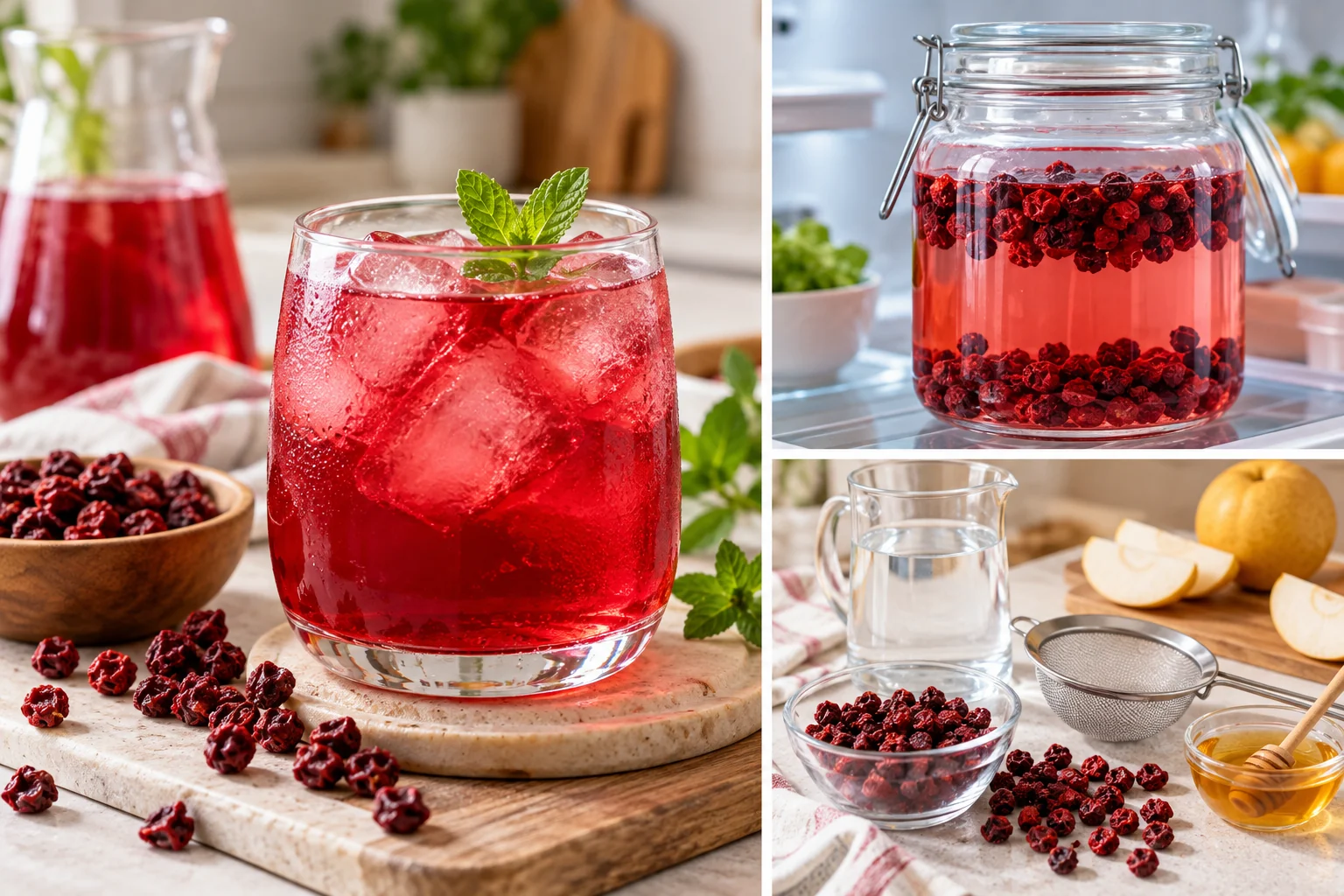
This omija tea recipe makes a bright ruby-red Korean berry infusion from dried omija, also called schisandra or five-flavor berries. The simplest method is to soak the dried berries in cold drinking water, strain the liquid, then serve it chilled or over ice with optional honey and pear.
Omija is the Korean name for the fruit of Schisandra chinensis. The name is commonly translated as “five-flavor berry” because the fruit is associated with sour, sweet, bitter, salty and pungent notes. In a drink, the balance can shift depending on the berries, steeping time, dilution and sweetener. This recipe focuses on the beverage itself rather than medical claims.
If you arrived here after seeing our Korean gelatin recipe, this is the drink behind that flavor profile. The gelatin page is a dessert recipe, while this page is specifically for making omija tea as a beverage.
Easy omija tea recipe
This small batch makes about two glasses. Start with a moderate amount of dried berries, because different products can vary in size, dryness and flavor intensity.
Ingredients
- 20 grams dried food-grade omija berries
- 500 milliliters cold drinking water
- 1 to 2 teaspoons honey, optional
- 4 to 6 thin slices Korean pear or another crisp pear, optional
- Ice, optional

Instructions
- Place the dried omija in a fine strainer and quickly rinse them under cool running water. Drain well.
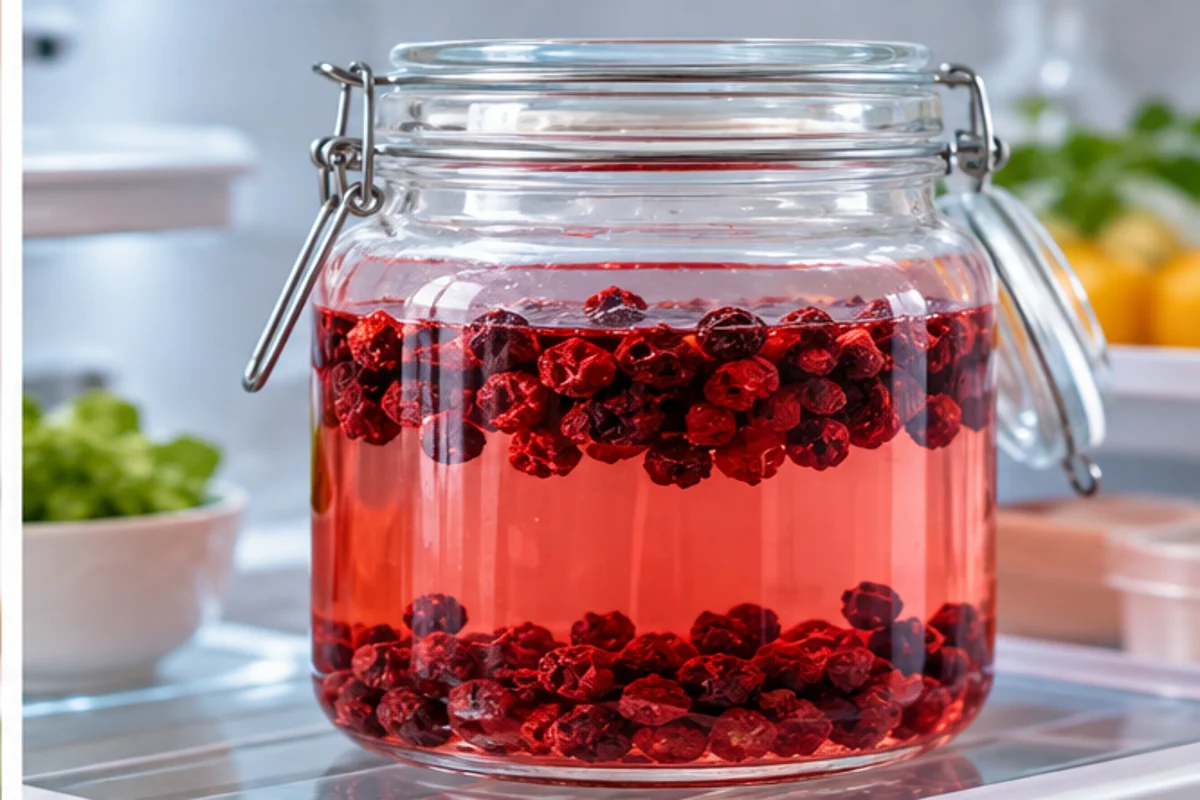
- Transfer the berries to a clean glass jar or covered pitcher. Add 500 milliliters cold drinking water.
- Cover and refrigerate for 8 to 12 hours. The liquid should gradually turn pink to red.
- Strain the tea through a fine mesh strainer. Discard the soaked berries.
- Taste the tea before adding anything else. If it is stronger or sharper than you prefer, dilute it with a small amount of cold water.
- Stir in honey only if desired. Add it gradually so the berry flavor remains noticeable.
- Serve cold, over ice if you like, with a few thin slices of pear for a fresh finish.
The finished color can range from pink to deep ruby depending on the berries and steeping time. Color is not a reliable measure of strength, so taste the strained tea and adjust it rather than assuming a darker batch is automatically better.
What is omija tea?
Omija tea is a Korean drink made with omija berries, which are also known in English as schisandra berries, five-flavor berries or magnolia berries. Dried omija are easier to find outside Korea than fresh fruit, and they are commonly used for cold infusions, punches and other drinks.
The Korean name “omija” refers to the idea of five tastes. That does not mean every sip will taste equally salty, sweet, sour, bitter and pungent. In practice, many people notice a tart, fruity and slightly complex flavor first. Honey, pear and dilution can soften the sharper edges without turning the drink into a syrup.
Traditional uses and wellness claims exist around schisandra, but those claims should not be treated as proof that a cup of tea prevents or treats disease. Human research on schisandra is limited, and concentrated supplements are different from a culinary berry infusion.
Why cold steeping works well for omija
Cold steeping gives you a simple way to extract color and flavor without boiling the berries. It is also convenient because the jar can infuse in the refrigerator while you do something else. The result is naturally suited to an iced drink.
A cold infusion also makes it easy to adjust the recipe. After straining, you can dilute a strong batch with cold water or add a little more honey to a tart batch. Because the tea is already chilled, you do not need to wait for a hot brew to cool before serving.
For food safety, keep the covered jar in the refrigerator rather than leaving a homemade berry infusion at room temperature for an extended period. Use clean equipment and refrigerate the strained tea promptly.
What does omija tea taste like?
Omija has a flavor that is difficult to reduce to a single familiar fruit. Expect noticeable tartness, a berry-like aroma and a layered finish that can seem slightly bitter or spicy to some people. The traditional “five flavors” description is useful as a clue that the drink is more complex than ordinary sweet berry juice.
If your first sip seems too sharp, do not immediately add a large spoonful of sweetener. Try a little cold water first. Dilution can make the aroma easier to notice and may be all the adjustment the drink needs.
Compared with our hibiscus tea recipe, omija tends to have a more layered berry character. Hibiscus is often distinctly tart and cranberry-like, while omija can move between fruity, sour and slightly bitter notes.
How long should you steep dried omija?
For this recipe, 8 to 12 hours in the refrigerator is a practical starting range. It gives the dried berries enough time to tint and flavor the water while still fitting into an overnight routine. Put the jar in the refrigerator after dinner, then strain it the next morning.
Some traditional recipes use longer soaks and larger batches. That does not mean one steeping time is universally correct. The berry-to-water ratio, berry quality, temperature and personal taste all change the result. If your product includes preparation instructions, follow those first.
For consistency, change one variable at a time. If your first batch is too weak, use a little more berry next time or extend the refrigerated steep. If it is too strong, dilute the finished tea before changing the recipe.
Can you make hot omija tea?
Yes, but a hot cup does not have to be made by aggressively boiling the berries. If you want to serve this drink warm, make the strained cold infusion first and gently warm the portion you plan to drink. Avoid a hard boil after sweetening with honey.
You can also follow the directions on a packaged omija tea product if it is specifically formulated for hot brewing. Products sold as tea bags, powdered mixes, syrups and dried whole berries are not interchangeable, so use the method intended for the product you actually have.
If you prefer a warm, spicy drink rather than a berry infusion, our lemon ginger tea uses fresh ginger and lemon and has a completely different flavor profile.
How to sweeten omija tea
Honey is optional. Start by tasting the unsweetened strained tea. If you want a softer flavor, stir in one teaspoon for the full 500-milliliter batch, taste again, and add the second teaspoon only if needed.
If cold honey is difficult to dissolve, mix it with a small spoonful of the tea in a separate cup until smooth, then stir that mixture back into the pitcher. This gives you better control than adding a large amount all at once.
Pear is another useful addition because it contributes aroma and mild sweetness without dominating the drink. Add a few thin slices to each glass when serving rather than soaking fresh fruit in the entire stored batch.
Omija tea with pear
Omija and pear are a classic pairing in Korean drinks. A simple home version does not need to become a full dessert punch. A few crisp pear slices in the glass give contrast to the ruby-red tea and add a fresh, lightly sweet bite.
Wash the pear, remove the core and slice it thinly. You can leave the peel on if the fruit is clean and you enjoy the texture. Add the slices immediately before serving. If you are preparing glasses for guests, keep the pear chilled until the tea is ready.
For a decorative presentation, cut the pear into small matchsticks or flower shapes, but keep the amount modest. The drink should still taste primarily of omija.
Iced omija tea
This recipe is naturally suited to an iced version because it is already brewed cold. Fill a glass with a small amount of ice, pour in the strained tea, then add optional pear. Keep in mind that melting ice dilutes the flavor.
If you prefer a stronger iced drink, chill the tea thoroughly and use fewer ice cubes instead of making the concentrate excessively strong. That keeps the recipe easier to repeat.
You can also freeze a small amount of unsweetened omija tea in an ice tray and use those cubes later. As they melt, they add berry flavor rather than plain water. Label the tray so it is not confused with ordinary ice.
Can you use omija syrup instead of dried berries?
Yes, if the product is intended to be diluted as a beverage, but it becomes a different recipe. Commercial omija syrup or omija-cheong can contain a substantial amount of sugar or honey, so follow the label’s dilution directions rather than substituting it one-for-one for dried berries.
Read the ingredient list before buying. A bottle labeled “omija drink” may already be ready to serve, while a concentrate may need water. A powdered drink mix can contain sweeteners, acids or other flavorings. Those products cannot be assumed to have the same nutrition or flavor as this dried-berry infusion.
Does omija tea contain caffeine?
A drink made only from dried omija berries and water does not contain tea leaves or coffee, so caffeine is not an ingredient in this recipe. However, a commercial blend can include green tea, black tea, yerba mate or another caffeine source. Check the complete label if avoiding caffeine matters to you.
This is similar to other herbal infusions. Our dandelion herbal tea is also different from true tea made from Camellia sinensis. Product blends can still change the caffeine picture, so the ingredient list matters more than the marketing name.
Is omija tea good for weight loss?
Omija tea should not be presented as a proven weight-loss treatment. A plain unsweetened cup can be a lower-sugar beverage choice, but that is different from claiming that the berries directly cause meaningful fat loss.
Claims about metabolism, detoxification or rapid weight loss often come from supplement marketing or extrapolation from laboratory research. Those claims are not a reason to increase the amount of berries or consume concentrated schisandra products.
If your goal is simply to reduce added sugar in drinks, keep this recipe unsweetened or use only a small amount of honey. The important distinction is between a beverage preference and a therapeutic claim.
Schisandra safety and medication interactions
Schisandra is also sold in concentrated extracts and supplements, and those products deserve more caution than an ordinary culinary drink. Human research is limited. Memorial Sloan Kettering Cancer Center notes that schisandra may affect how some medicines are metabolized and may interact with drugs involving CYP enzymes or P-glycoprotein.
If you take prescription medicines, especially medicines with a narrow therapeutic range, ask your clinician or pharmacist before making schisandra products a regular habit. Do not use a tea recipe to replace prescribed treatment.
Pregnancy, breastfeeding and chronic health conditions are also situations in which personalized advice is preferable to assuming an herbal product is automatically appropriate. A traditional history of use does not guarantee safety for every person or every dose.
How to buy dried omija berries
Look for dried berries sold specifically for culinary or tea use. Korean grocery stores and specialty Asian food shops may label them “omija,” “schisandra berry,” “five-flavor berry” or “five-flavor fruit.” Packaging should identify the ingredient clearly.
Avoid using unidentified dried berries or decorative botanicals. Color alone is not enough to confirm identity. Keep the original package so you can check the product name, country of origin, best-before date and preparation guidance.
Store the dried berries according to the package instructions, generally in a dry closed container protected from excess heat and moisture. Use a clean dry spoon when removing berries from the package.
How to store homemade omija tea
Keep the strained tea covered in the refrigerator. For a small homemade batch, making only what you plan to drink within a short period gives the best flavor and reduces unnecessary storage time.
If you add fresh pear to individual glasses, keep the remaining pitcher plain. This makes the base easier to store and prevents pieces of fruit from sitting in the tea for an extended period.
Discard the drink if it develops an unexpected odor, visible mold, unusual gas or another sign of spoilage. Clean the jar thoroughly before making the next batch.
Common omija tea mistakes
Using too much sweetener immediately
Omija’s complex flavor is the point of the drink. If you sweeten heavily before tasting, the result can become closer to sweetened berry punch than tea. Taste first, then adjust gradually.
Confusing dried berries with extract
A spoonful of concentrated extract is not equivalent to a spoonful of dried fruit. Do not use supplement dosing instructions as recipe measurements.
Leaving the infusion unrefrigerated
This recipe uses a long cold steep, so the refrigerator is the correct place for the jar. Do not leave a homemade fruit infusion sitting on a warm counter overnight.
Expecting a medicinal result
Enjoy omija tea for its flavor, color and place in Korean beverage traditions. Do not judge the recipe by whether it produces a dramatic health outcome.
FAQS
What is omija tea made from?
Omija tea is made from omija, also called schisandra or five-flavor berries, infused in water. This recipe uses dried food-grade berries, cold water, and optional honey and pear.
How long do you soak omija berries?
For this recipe, refrigerate the berries in cold water for 8 to 12 hours, then strain. Product directions can differ, so follow the package if it specifies another method.
Does omija tea have caffeine?
Plain omija and water do not contain a caffeine ingredient. Commercial blends can include green tea, black tea or another caffeine source, so check the label.
What does omija tea taste like?
Omija is traditionally described as a five-flavor berry. In a drink, expect tart, fruity and complex notes that can also seem slightly bitter or pungent depending on the batch.
Can I make omija tea with honey?
Yes. Honey is optional. Taste the strained tea first, then add a small amount at a time so you do not hide the berry flavor.
Is omija tea the same as Korean gelatin?
No. Omija tea is a beverage made from the berries and water. Korean gelatin recipes can use omija tea as a flavoring liquid, but the finished foods have different search intent and preparation.
1 thought on “Omija Tea Recipe: Korean Five Flavor Berry Tea”