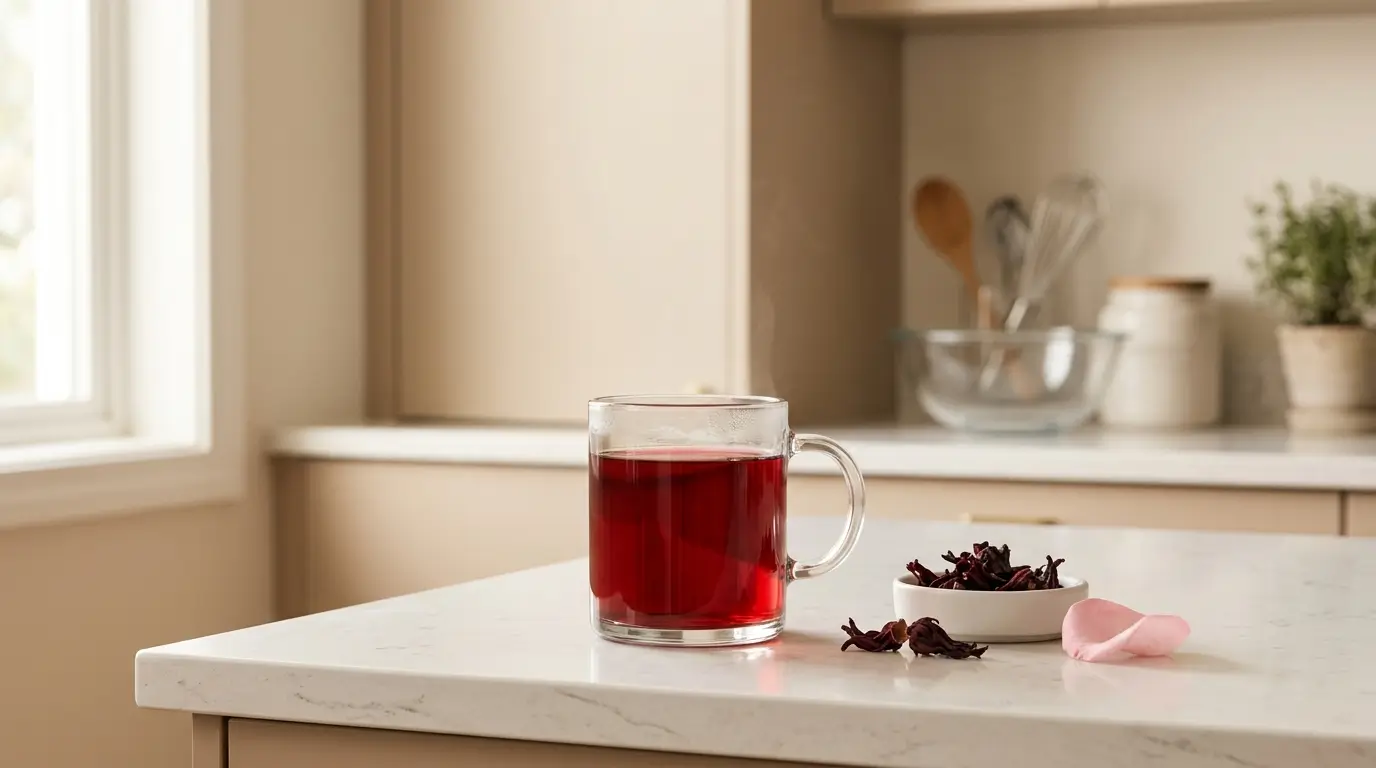
Hibiscus tea for menopause is often promoted for hot flashes, hormone balance, weight management and other symptoms. But what does the research actually show?
There is currently limited evidence studying hibiscus tea specifically in menopausal women. Hibiscus has been researched more broadly for areas such as blood pressure and certain metabolic markers, but these findings should not automatically be interpreted as proven menopause benefits.
There is also no good human evidence showing that drinking hibiscus tea increases estrogen, balances hormones or reliably reduces hot flashes.
That doesn’t mean hibiscus tea has no place in a menopause-friendly diet. As a naturally caffeine-free beverage, it may be a practical option for some women, and research on hibiscus more generally can help us understand its potential benefits and limitations.
Below, we’ll separate what research actually supports from claims that remain uncertain — including hibiscus tea’s possible effects on estrogen, hot flashes, blood pressure, weight, skin and sleep.
What Hibiscus Tea Does and Does Not Do for Menopause
| Menopausal concern | What the evidence suggests |
|---|---|
| Hot flashes | There is not enough human evidence to show that hibiscus tea reduces hot flashes. |
| Estrogen and hormone balance | There is no good human evidence that drinking hibiscus tea meaningfully increases estrogen or “balances” menopausal hormones. |
| Blood pressure | Hibiscus tea has been studied for blood pressure in adults generally, with some trials reporting modest reductions. This is not the same as proving a menopause-specific benefit. |
| Weight management | Hibiscus is not a proven weight-loss treatment. Unsweetened hibiscus tea can, however, replace higher-calorie sweetened beverages. |
| Skin health | Hibiscus contains plant compounds with antioxidant activity, but drinking the tea has not been proven to prevent or reverse menopausal skin aging. |
| Sleep | Hibiscus is naturally caffeine-free, but it has not been established as a treatment for menopausal sleep problems. |
| Bone health | There is insufficient evidence to recommend hibiscus tea for preventing menopause-related bone loss. |
| Vaginal dryness | There is no good evidence that hibiscus tea treats vaginal dryness. |
The key distinction is that research on hibiscus in adults generally should not automatically be interpreted as evidence for treating menopause symptoms. Hibiscus may fit into a balanced diet as a caffeine-free beverage, but it should not be presented as a substitute for evidence-based treatment of hot flashes, hormonal symptoms, osteoporosis or other menopause-related health concerns.
Hibiscus Tea, Menopause and Cardiovascular Health

Cardiovascular health becomes increasingly important with age, including during and after the menopause transition. However, hibiscus tea should not be presented as a treatment specifically for menopause-related cardiovascular risk.
Hibiscus has been studied in adults for its potential effects on blood pressure. Some clinical trials and reviews suggest that regular consumption may be associated with modest reductions in blood pressure, particularly in people whose levels are already elevated.
However, these studies are generally not designed specifically around menopausal women, so their findings cannot be used to claim that hibiscus prevents the cardiovascular changes associated with menopause.
Hibiscus tea should also not replace prescribed blood pressure medication or other cardiovascular treatment. People who take blood pressure medication should discuss regular hibiscus consumption with a healthcare professional, since combining substances that may affect blood pressure could potentially produce an additive effect.
For a closer look at the evidence, see our hibiscus tea and high blood pressure guide.
Bottom line: Hibiscus tea may be a reasonable caffeine-free beverage within a heart-conscious diet, and its potential effects on blood pressure are among the better-studied areas of hibiscus research. But this evidence should not be interpreted as proof that hibiscus specifically protects women from menopause-related cardiovascular disease.
Hibiscus Tea and Weight Management After Menopause
Changes in body composition and weight can occur during the menopause transition, but hibiscus tea should not be considered a weight-loss treatment.
Some research has examined hibiscus extracts and their effects on metabolic markers or body weight. However, studies using concentrated extracts are not equivalent to drinking an ordinary cup of hibiscus tea, and the available evidence does not establish that hibiscus tea produces meaningful weight loss in menopausal women.
One practical advantage is much simpler: plain hibiscus tea is naturally very low in calories when consumed without added sugar. Replacing sugary drinks with unsweetened hibiscus tea may therefore help reduce overall calorie intake.
There is currently no established amount, preparation method or time of day for drinking hibiscus tea specifically for menopause-related weight management.
If weight loss is your goal, hibiscus tea is best viewed as a low-calorie beverage that can fit into a broader eating pattern rather than as a drink that burns fat or boosts metabolism.
For a detailed look at this topic, see our hibiscus tea for weight loss guide.
Hibiscus Tea and Skin Changes During Menopause
Skin can change during and after menopause as hormone levels shift. Changes may include increased dryness, reduced elasticity and changes in skin thickness.
Hibiscus contains plant compounds with antioxidant activity, including anthocyanins. However, the presence of antioxidants in a beverage does not mean that drinking hibiscus tea has been proven to prevent or reverse menopausal skin aging.
Research involving hibiscus extracts, isolated compounds or laboratory models should also be distinguished from studies of people drinking hibiscus tea. At present, there is not enough direct human evidence to conclude that hibiscus tea increases collagen production, improves skin elasticity or reduces wrinkles in menopausal women.
Hibiscus tea can still be part of a balanced diet, but it should not be presented as an anti-aging treatment or as a substitute for established approaches to skin care.
For a closer look at the evidence, see our hibiscus tea benefits for skin guide.
Hibiscus Tea and Sleep During Menopause
Sleep problems are common during the menopause transition and may be influenced by factors such as hot flashes, night sweats, mood changes and other health or lifestyle factors.
Hibiscus tea is naturally caffeine-free, which can make it a practical evening alternative to caffeinated beverages. However, there is not enough evidence to show that hibiscus tea directly improves sleep in menopausal women.
Although hibiscus has been studied for blood pressure and antioxidant-related effects, these findings should not be interpreted as evidence that drinking hibiscus tea improves sleep quality, reduces nighttime waking or increases deep sleep.
Some people may simply enjoy hibiscus as part of a relaxing evening routine. Others may prefer to drink it earlier if consuming fluids close to bedtime leads to nighttime bathroom trips or digestive discomfort.
There is also no established evidence that combining hibiscus with chamomile produces a stronger sleep effect specifically during menopause.
For more information, see our hibiscus tea before bed guide and our best drinks for better sleep comparison.
Can Herbal Teas Help With Menopause Symptoms?
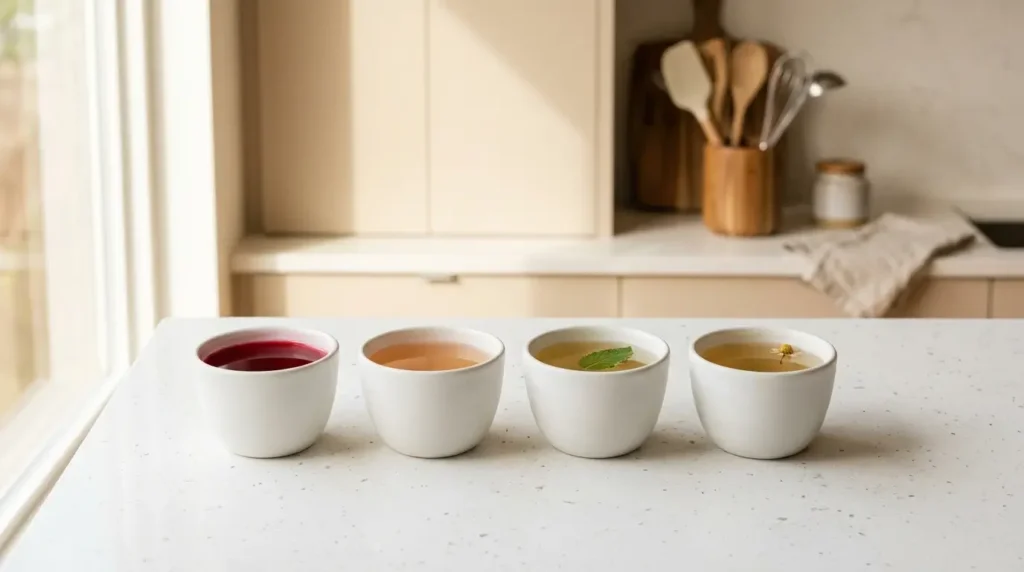
Different herbal teas are often promoted for menopause symptoms, but the quality of evidence varies considerably from one herb to another.
Hibiscus tea: Research has focused more on areas such as blood pressure and other cardiovascular markers than on menopause symptoms themselves. It has not been established as a treatment for hot flashes or hormonal imbalance.
Red clover tea: Red clover contains isoflavones and has been studied in relation to menopausal symptoms. However, research results are mixed, and it should not be presented as an herbal replacement for estrogen or hormone therapy.
Spearmint tea: A small amount of human research has examined spearmint in relation to androgen levels, particularly in women with certain hormonal conditions. This does not establish it as a treatment for menopause-related facial hair, acne or hair loss.
Chamomile tea: Chamomile has been studied in relation to relaxation and sleep, but evidence does not establish it as a treatment for menopause-related insomnia or anxiety.
Should You Combine These Herbal Teas?
There is no established clinical evidence showing that combining hibiscus, red clover, spearmint and chamomile provides a more effective menopause treatment than using any of them individually.
Using several herbal products together can also make it harder to identify side effects or interactions.
If you enjoy herbal teas, they can be selected according to taste, caffeine preference and individual tolerance rather than following a rigid “menopause protocol.”
Women who use medications, hormone therapy or herbal supplements should discuss regular use of medicinal herbs with an appropriate healthcare professional, particularly when combining several products.
Important Safety Considerations During Menopause
Herbal teas are often perceived as harmless because they are natural, but they can contain biologically active compounds and may not be appropriate for everyone.
Blood pressure medication: Hibiscus has been studied for potential blood-pressure-lowering effects. If you take antihypertensive medication, discuss regular or concentrated hibiscus use with your healthcare professional.
Hormone therapy: Hibiscus tea should not be used as a substitute for prescribed menopausal hormone therapy. If you use hormone therapy and regularly consume herbal supplements or concentrated herbal products, mention them to your healthcare professional.
Red clover and other herbal supplements: Some herbal products marketed for menopause contain compounds with potential hormonal activity. Their safety and possible interactions can depend on the product, dose, medications and individual medical history.
Multiple herbal products: Combining several teas, extracts or supplements does not necessarily provide greater benefits and may increase the possibility of unwanted effects or interactions.
If you take prescription medications or are being treated for a medical condition, ask a healthcare professional or pharmacist before using concentrated herbal extracts or supplements regularly.
For more information about hibiscus specifically, see our hibiscus tea side effects guide.
Frequently Asked Questions
Is hibiscus tea good for menopause?
Hibiscus tea can be part of a balanced diet during menopause, but it has not been established as a treatment for menopause symptoms. Research on hibiscus has focused more on areas such as blood pressure than on menopause itself.
Does hibiscus tea increase estrogen?
There is not enough human evidence to show that drinking hibiscus tea meaningfully increases estrogen levels. Hibiscus tea should not be considered a form of estrogen replacement or a substitute for menopausal hormone therapy.
Does hibiscus tea affect hormones?
Research does not currently establish that ordinary hibiscus tea meaningfully changes hormone levels in menopausal women. Findings from laboratory studies, animal research or concentrated extracts should not automatically be applied to brewed tea.
Does hibiscus tea help with hot flashes?
There is not enough clinical evidence to show that hibiscus tea reduces the frequency or severity of menopausal hot flashes.
Can I drink hibiscus tea during menopause?
Many women may choose to drink hibiscus tea as a caffeine-free beverage during menopause. However, individual circumstances matter, particularly for people taking medications or using concentrated herbal products.
Is hibiscus tea good for menopause weight gain?
Hibiscus tea has not been proven to prevent or reverse menopause-related weight gain. Unsweetened hibiscus tea is low in calories and may be useful as a replacement for sugary beverages, but it should not be considered a weight-loss treatment.
What is the best herbal tea for menopause?
There is no single herbal tea that has been proven to treat all menopause symptoms. The appropriate approach depends on the specific symptom, individual health history and medications. Persistent or disruptive symptoms should be discussed with a healthcare professional.
How much hibiscus tea should I drink for menopause?
There is no established menopause-specific dose of hibiscus tea. Research has not identified a particular number of cups per day that treats hot flashes, hormonal changes or other menopause symptoms.
Parfait ✅
On termine maintenant le contenu avec Key Takeaways. L’ancienne version contient encore les principales affirmations que nous avons retirées : baisse de tension de 7–13 mmHg, protocole à 2 cups/day, bénéfices sur le poids/peau/sommeil et combinaison hibiscus + red clover + spearmint + chamomile. Texte collé
Remplace toute la section par :
Key Takeaways
- Hibiscus tea has not been established as a treatment for menopause symptoms.
- There is not enough human evidence to show that hibiscus tea increases estrogen or meaningfully balances hormones.
- Hibiscus tea has not been proven to reduce menopausal hot flashes.
- Hibiscus has been studied for blood pressure in adults generally, but these findings should not automatically be interpreted as menopause-specific cardiovascular benefits.
- Hibiscus tea has not been proven to prevent menopause-related weight gain, skin aging, bone loss or sleep problems.
- Plain hibiscus tea is naturally caffeine-free and can be enjoyed as part of a balanced diet if it is well tolerated.
- There is no established menopause-specific dose or herbal-tea combination that has been proven to treat menopause symptoms.
- Women taking medications, using hormone therapy or considering concentrated herbal supplements should discuss regular herbal product use with an appropriate healthcare professional.