
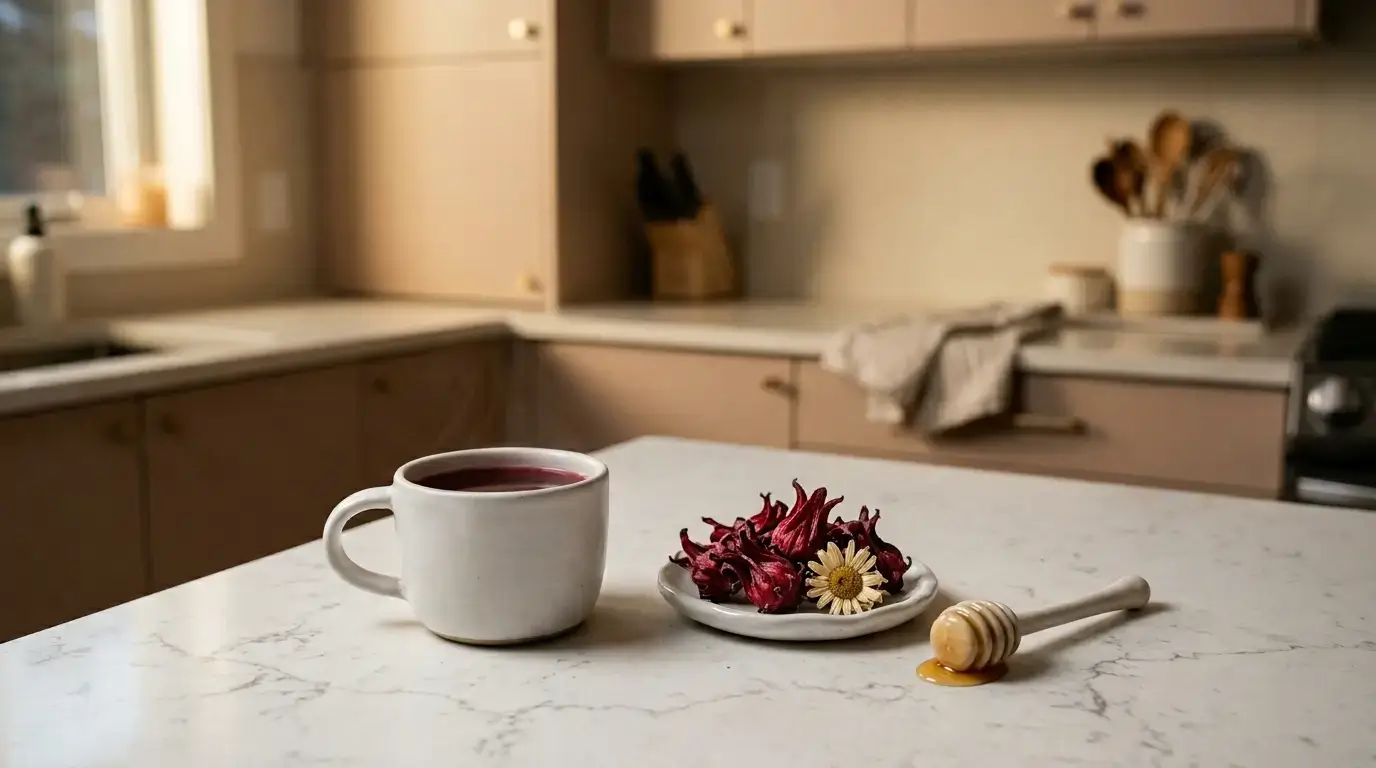
Can you drink hibiscus tea before bed? Because hibiscus tea is naturally caffeine-free, many people consider it an evening alternative to coffee, black tea or green tea. But being caffeine-free does not necessarily mean that a drink improves sleep.
Current research does not establish hibiscus tea as a treatment for insomnia or show that drinking it before bed directly improves sleep quality. However, it can still be part of an evening routine for people who enjoy it and tolerate it well.
Timing may matter for practical reasons. Drinking a large amount of any fluid shortly before bed can increase the chance of waking to use the bathroom, while people who experience acid reflux may find acidic drinks uncomfortable close to bedtime.
In this guide, we’ll look at whether hibiscus tea can make you sleepy, whether it can keep you awake, what may happen when you drink it at night, and what to consider before making it part of your bedtime routine.
Is Hibiscus Tea Good Before Bed?
Hibiscus tea can be an evening drink, but there is not enough evidence to say that drinking it before bed directly improves sleep.
| Factor | What to Know |
|---|---|
| Caffeine | Plain hibiscus tea is naturally caffeine-free, so caffeine from the hibiscus itself should not interfere with sleep. |
| Sleepiness | Hibiscus has not been established as a sedative or sleep aid. |
| Nighttime urination | Drinking a large amount of any fluid close to bedtime may increase the chance of waking to use the bathroom. |
| Acid reflux | Hibiscus is tart and acidic, so people sensitive to acidic drinks may prefer to avoid it close to lying down. |
| Blood pressure | Hibiscus has been studied for blood-pressure effects, but this does not mean that drinking it at bedtime improves sleep. |
| Serving size | A smaller evening serving may be more comfortable for people who are sensitive to nighttime fluid intake. |
Bottom line: If you enjoy hibiscus tea and it does not cause digestive discomfort or nighttime waking, it can be part of your evening routine. However, there is no established bedtime dose or timing that has been proven to improve sleep.
When Should You Drink Hibiscus Tea Before Bed?
There is no scientifically established “best” time to drink hibiscus tea before bed.
If hibiscus tea does not cause discomfort or nighttime waking for you, the timing can largely depend on personal preference. However, a few practical considerations may help.
Nighttime urination: Drinking a large amount of any beverage shortly before going to sleep can increase the likelihood of waking during the night to use the bathroom. If this happens to you, try drinking your tea earlier in the evening or choosing a smaller serving.
Acid reflux: People who experience nighttime heartburn or acid reflux may prefer to avoid acidic beverages close to lying down. Hibiscus tea has a naturally tart, acidic character and may trigger symptoms in some individuals.
Personal tolerance: Some people can comfortably drink herbal tea shortly before bed, while others sleep better when they limit fluids later in the evening.
Rather than following a strict two- or three-hour rule, pay attention to whether hibiscus tea affects your digestion, nighttime bathroom trips or sleep comfort.
For more information about reflux specifically, see our hibiscus tea and acid reflux guide.
Does Hibiscus Tea Help You Sleep?
Hibiscus tea is not an established sleep aid, and there is currently not enough direct human research showing that drinking it before bed improves sleep quality, helps you fall asleep faster or increases deep sleep.
One practical advantage is that plain hibiscus tea is naturally caffeine-free. This makes it different from caffeinated beverages such as coffee, black tea and green tea, which may interfere with sleep in caffeine-sensitive people when consumed later in the day.
Hibiscus has also been studied for other health effects, including its potential influence on blood pressure and its antioxidant compounds. However, research in these areas should not be interpreted as evidence that hibiscus tea improves sleep.
For some people, the main benefit may simply be behavioral: enjoying a warm, caffeine-free beverage can be part of a relaxing evening routine. That does not mean hibiscus itself has a sedative effect.
If your primary goal is improving sleep, see our best drinks for better sleep guide for a broader comparison of evening beverages.
How to Prepare Hibiscus Tea in the Evening

There is no special hibiscus tea recipe that has been proven to improve sleep. If you enjoy hibiscus in the evening, the goal is simply to prepare it in a way that is comfortable for you.
A standard cup can be made by steeping dried hibiscus calyces or a hibiscus tea bag in hot water according to the package directions.
If drinking a full cup close to bedtime tends to make you wake during the night, consider a smaller serving or drink it earlier in the evening.
People who experience heartburn or acid reflux may also want to pay attention to their individual response. Changing the water temperature or steeping time may change the flavor and strength of the tea, but these adjustments should not be presented as proven methods for making hibiscus safe for nighttime reflux.
What About Hibiscus and Chamomile Together?
Hibiscus and chamomile can be combined simply because their flavors work well together and both are naturally caffeine-free.
Chamomile has been studied more directly than hibiscus in relation to sleep, but research does not establish that combining the two creates a stronger or clinically proven sleep effect.
If you enjoy the combination, you can prepare hibiscus tea and add a chamomile tea bag according to its package directions. Think of it as a caffeine-free evening beverage rather than a treatment for insomnia.
For more information, see our chamomile tea benefits guide.
Print
Simple Evening Hibiscus Tea
A simple caffeine-free hibiscus tea that can be enjoyed as part of an evening routine. This recipe makes one small cup and can be adjusted to taste.- Total Time: 7 minutes
- Yield: 1 small cup (180ml) 1x
Ingredients
- 1 teaspoon dried hibiscus calyces or 1 hibiscus tea bag
- 180 ml (6 oz) hot water
- 1 teaspoon honey or another sweetener, optional
Instructions
1. Place the dried hibiscus calyces or tea bag in a cup.
2. Pour the hot water over the hibiscus.
3. Steep according to the package directions, usually about 5 minutes.
4. Remove the tea bag or strain out the hibiscus calyces.
5. Add honey or another sweetener if desired.
6. Serve warm and enjoy.
Notes
Hibiscus tea is naturally caffeine-free.
If drinking fluids close to bedtime makes you wake during the night, enjoy your tea earlier in the evening or choose a smaller serving.
People who experience acid reflux may find acidic drinks uncomfortable close to bedtime.
This recipe is intended as an evening beverage and is not a treatment for insomnia or other sleep problems.
- Prep Time: 2 minutes
- Cook Time: 5 minutes
- Category: Drinks
- Method: Steeping
- Cuisine: Universal
Nutrition
- Serving Size: 1 cup (180ml)
- Calories: 3
- Sugar: 0g
- Sodium: 1mg
- Fat: 0g
- Carbohydrates: 1g
- Fiber: 0g
- Protein: 0g
- Cholesterol: 0mg
Keywords: hibiscus tea before bed, evening hibiscus tea, caffeine-free herbal tea, nighttime hibiscus tea
Who Should Be Careful With Hibiscus Tea Before Bed?
Hibiscus tea is not suitable for everyone, and some people may need to be more cautious about drinking it in the evening.
People with acid reflux or GERD: Hibiscus tea is naturally tart and acidic. If acidic beverages trigger your symptoms, drinking hibiscus close to bedtime may be uncomfortable, particularly when followed by lying down. See our hibiscus tea and acid reflux guide.
People who frequently wake to urinate: Drinking any beverage late in the evening can contribute to nighttime bathroom trips. If this affects your sleep, consider a smaller serving or drinking hibiscus earlier.
People taking blood pressure medication: Hibiscus has been studied for its potential blood-pressure-lowering effects. If you take medication for high blood pressure, ask your healthcare professional whether regular hibiscus consumption is appropriate for you.
Pregnancy: Evidence about hibiscus use during pregnancy is limited, and concentrated herbal products may not have the same safety profile as ordinary foods and beverages. Pregnant people should discuss regular medicinal or supplemental use of hibiscus with their healthcare professional.
People taking medications or managing a medical condition: If you regularly use concentrated hibiscus extracts or supplements, check with a healthcare professional or pharmacist about possible interactions.
Hibiscus Tea vs Other Evening Herbal Teas

If you are choosing a caffeine-free drink for the evening, hibiscus, chamomile and rooibos are all options, but they have different characteristics.
| Tea | Caffeine | What to Know for Evening Use |
|---|---|---|
| Hibiscus | Naturally caffeine-free | Tart and acidic; it can be part of an evening routine, but it has not been proven to improve sleep. |
| Chamomile | Naturally caffeine-free | Has been studied more directly in relation to sleep and relaxation, although research remains limited. |
| Rooibos | Naturally caffeine-free | A caffeine-free alternative with a milder flavor and no established direct sleep-inducing effect. |
There is no universally “best” bedtime tea. The most suitable choice depends on your preferences, caffeine sensitivity, digestive comfort and how much fluid you tolerate in the evening.
If your main goal is sleep, hibiscus should be viewed primarily as a caffeine-free evening beverage rather than a sleep treatment.
For a broader comparison, see our best drinks for better sleep guide.
How to Include Hibiscus Tea in Your Evening Routine
If you enjoy hibiscus tea in the evening, there is no need to follow a strict schedule.
The most practical approach is to pay attention to how your body responds. If drinking tea close to bedtime causes you to wake during the night, try having it earlier or reducing the serving size.
If you experience heartburn or acid reflux after hibiscus tea, particularly when you lie down soon afterward, consider drinking it earlier in the day or choosing another caffeine-free beverage that you tolerate better.
Hibiscus tea can also simply be part of a relaxing evening routine. Its main advantage at night is that plain hibiscus tea is naturally caffeine-free — not that it has been proven to induce sleep.
Your ideal timing will therefore depend on your bedtime, fluid tolerance and digestive comfort rather than a specific clock time.
For more general timing information, see our best time to drink hibiscus tea guide. For general intake guidance, see how much hibiscus tea per day.
Frequently Asked Questions
Is hibiscus tea good before bed?
Hibiscus tea can be enjoyed before bed because plain hibiscus tea is naturally caffeine-free. However, there is not enough evidence to say that drinking it at bedtime directly improves sleep. If it causes reflux or nighttime bathroom trips, try drinking it earlier.
Does hibiscus tea help you sleep?
Hibiscus tea has not been established as a sleep aid. It does not contain caffeine, which can make it a suitable evening alternative to caffeinated drinks, but research has not shown that hibiscus itself reliably helps people fall asleep or improves sleep quality.
Does hibiscus tea make you sleepy?
There is not enough evidence to show that hibiscus tea has a direct sedative effect or makes people sleepy. Any relaxing effect may simply come from enjoying a warm, caffeine-free drink as part of an evening routine.
Does hibiscus tea keep you awake?
Plain hibiscus tea is naturally caffeine-free, so it does not provide caffeine-related stimulation. However, drinking a large amount close to bedtime could indirectly disturb sleep if it causes digestive discomfort or makes you wake to use the bathroom.
Can hibiscus tea cause insomnia?
There is no good evidence showing that hibiscus tea directly causes insomnia. Individual responses can vary, however, and factors such as fluid intake, digestive discomfort and personal sleep habits may influence how you sleep after drinking it.
What happens if you drink hibiscus tea at night?
For many people, it may simply serve as a caffeine-free evening beverage. Others may experience digestive discomfort or nighttime waking after drinking fluids close to bed. Hibiscus has not been proven to improve sleep simply because it is consumed at night.
How long before bed should I drink hibiscus tea?
There is no scientifically established ideal interval between drinking hibiscus tea and going to bed. If drinking it close to bedtime affects your digestion or causes nighttime bathroom trips, try having it earlier in the evening.
Is hibiscus tea before bed good for blood pressure?
Hibiscus has been studied for its potential effects on blood pressure, but this does not establish that drinking it specifically before bed provides additional cardiovascular benefits. People taking blood pressure medication should discuss regular hibiscus use with their healthcare professional.
Key Takeaways
- Hibiscus tea is naturally caffeine-free, so it can be an option for people who want a caffeine-free evening drink.
- There is currently not enough evidence to show that hibiscus tea directly improves sleep, makes you sleepy or treats insomnia.
- Hibiscus tea is not known to provide caffeine-related stimulation, but individual responses to drinking it at night can vary.
- Drinking a large amount of any beverage close to bedtime may contribute to nighttime bathroom trips.
- People who experience acid reflux may find tart or acidic drinks such as hibiscus uncomfortable close to bedtime.
- There is no scientifically established best time to drink hibiscus tea before bed.
- Hibiscus and chamomile can be enjoyed together, but the combination has not been proven to produce a stronger sleep effect.
- If hibiscus tea fits comfortably into your evening routine, think of it primarily as a caffeine-free beverage rather than a sleep treatment.