
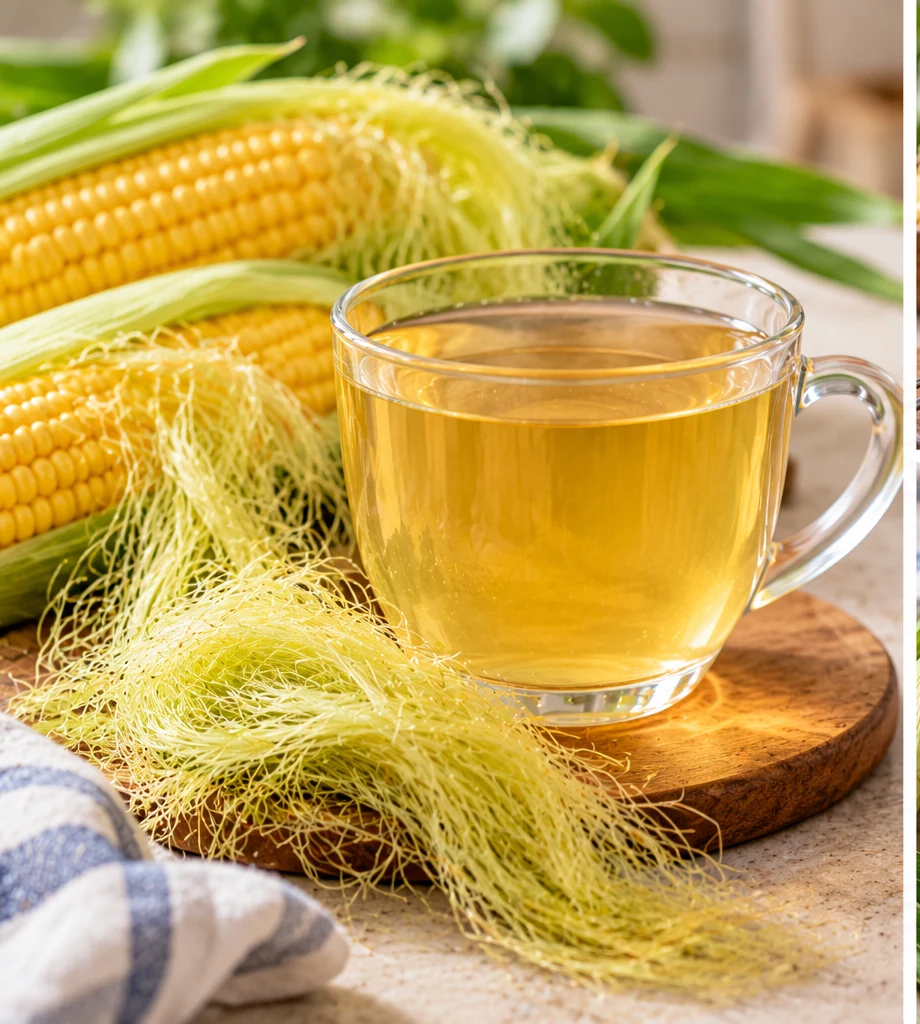
Corn silk tea is a mild herbal infusion made from the fine threads found under a corn husk. To make it at home, steep clean fresh or dried food-grade corn silk in hot water, strain it, and serve it plain or with a little lemon or honey. The drink is caffeine-free when it contains only corn silk and water.
Interest in corn silk tea often centers on three questions: how to make it, what benefits are actually supported, and whether it has side effects. This guide covers all three in one page so closely related searches such as “corn silk tea benefits,” “how to make corn silk tea,” “corn hair tea,” and “corn silk tea recipe” do not need separate articles.
Corn silk has a long history of traditional use, especially for urinary and fluid-related complaints. Modern research has identified flavonoids, phenolic compounds, polysaccharides, and other constituents in corn silk, but human evidence for many health claims remains limited. A cup of tea should therefore be treated as a beverage, not as a substitute for medical treatment.
Easy corn silk tea recipe
This simple recipe makes about two cups. You can use fresh silk removed from corn that is intended for eating, or dried food-grade corn silk sold for tea.
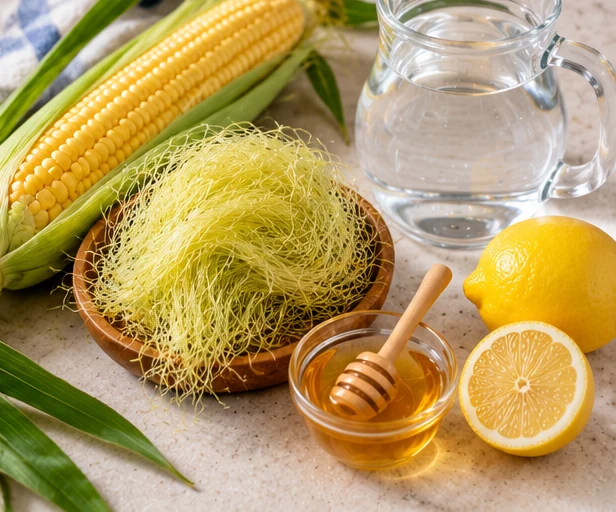
Ingredients
- 1 loosely packed cup fresh corn silk, or 1 to 2 tablespoons dried food-grade corn silk
- 2 cups (480 ml) hot drinking water
- 1 to 2 teaspoons honey, optional
- 1 to 2 teaspoons fresh lemon juice, optional
Instructions
- Sort through the corn silk and discard any brown, moldy, slimy, or damaged pieces.
- If using fresh silk, rinse it gently under cool running water and drain well.
- Place the silk in a heatproof teapot, jug, or large mug.
- Pour 2 cups of hot water over the silk.
- Cover and steep for 8 to 10 minutes.
- Strain through a fine mesh strainer.
- Taste the tea before adding anything else. Add a little honey or lemon only if desired.
- Serve warm, or cool and refrigerate before serving over ice.
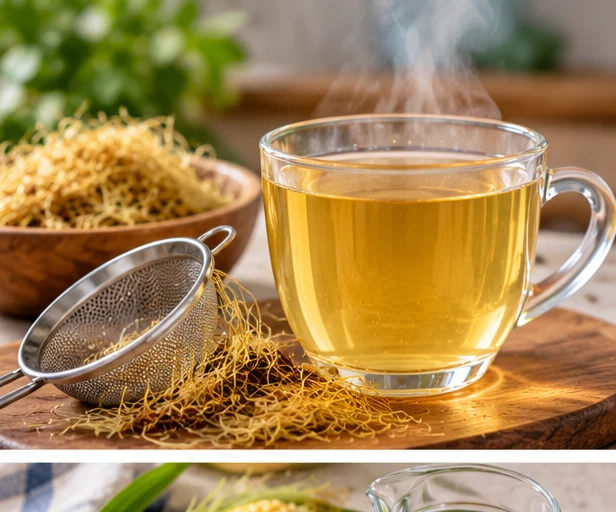
The finished tea is usually pale yellow to light golden. Fresh silk can produce a greener or lighter cup than dried silk, and different corn varieties can change the flavor slightly.
What is corn silk?
Corn silk is the mass of fine, thread-like structures that appear at the top of an ear of corn. Botanically, these threads are part of the plant’s reproductive system. Each silk is connected to a potential kernel on the cob and helps receive pollen during pollination.
In the kitchen, most people discard the silk when shucking corn. However, in several traditional herbal practices it has been dried and infused in water. You may also see it sold under names such as corn silk, maize silk, corn hair, or Stigma maydis.
If you use silk from fresh corn, use corn intended for food and wash the silk carefully. Do not use material that has been treated for decoration, exposed to pesticides not intended for edible produce, or stored in a way that raises mold concerns.
What does corn silk tea taste like?
Corn silk tea is mild, slightly earthy, and naturally a little sweet. It does not taste strongly like cooked corn. Fresh silk usually gives a softer, greener flavor, while dried silk can taste more toasted or hay-like depending on how it was processed.
If the tea tastes too strong, dilute the finished cup with hot water rather than adding large amounts of sweetener. Lemon adds brightness, while honey softens the earthy notes.
For a more floral herbal drink, compare it with our butterfly pea flower tea. If you prefer a tart red infusion, our hibiscus tea recipe has a much brighter, fruitier flavor.
Corn silk tea benefits: what does the evidence show?
Corn silk contains plant compounds including flavonoids, phenolic acids, terpenoids, and polysaccharides. Laboratory and animal studies have explored antioxidant, anti-inflammatory, blood-sugar, blood-pressure, and diuretic effects. However, these findings do not prove that drinking ordinary corn silk tea produces the same results in people.
A review indexed in PubMed describes corn silk as a traditional herbal material with several proposed pharmacological effects, but much of the evidence is preclinical. More recent reviews reach a similar conclusion: the plant contains potentially active compounds, but larger and better human trials are needed before firm therapeutic claims can be made.
The most responsible way to describe the tea is therefore as a traditional herbal beverage with interesting research behind it, not as a proven treatment for kidney disease, urinary infections, diabetes, high blood pressure, or weight loss.
Is corn silk tea a diuretic?
Corn silk has traditionally been described as a diuretic, meaning it may increase urine production. Animal research has observed diuretic and potassium-excretion effects at certain extract doses. That supports the historical reason corn silk became associated with urinary and fluid-balance uses, but it does not establish a standard tea dose for people.
Calling a food or herb a diuretic also does not mean “detox.” Your kidneys already regulate fluid and remove waste. Drinking more of a diuretic beverage is not automatically better and may be inappropriate for someone taking water pills, blood-pressure medicine, or medicines that affect potassium.
If you notice that corn silk tea makes you urinate more often, do not use that as a reason to keep increasing the amount. Hydration and electrolyte balance matter, especially during hot weather, illness, or exercise.
Corn silk tea for kidneys and urinary health
Searches for corn silk often include kidney health, urinary tract infections, bladder support, and kidney stones. These are areas where traditional use is common, but they are also areas where self-treatment can be risky.
A urinary tract infection may require medical evaluation and antibiotics. Kidney stones can cause obstruction, severe pain, infection, or bleeding. Kidney disease can alter fluid, potassium, and medication needs. Corn silk tea should not delay assessment for fever, flank pain, blood in the urine, vomiting, painful urination, inability to urinate, or persistent urinary symptoms.
If a clinician has already diagnosed a kidney or urinary condition, ask whether corn silk is appropriate before using it regularly. The answer can depend on your kidney function, medications, potassium level, and fluid restrictions.
Can corn silk tea lower blood pressure?
Some research has examined corn silk in relation to blood pressure. A 2019 systematic review and meta-analysis found that corn silk tea used alongside conventional antihypertensive medication was associated with better blood-pressure outcomes than medication alone in several small trials. However, the authors also noted that the included studies were generally low quality, which limits confidence in the result.
This is important because it means corn silk tea should not be presented as a replacement for prescribed blood-pressure medicine. It also means people already taking medication should be cautious about adding products that could potentially contribute to lower blood pressure.
If you have hypertension and want to drink corn silk tea regularly, ask your clinician or pharmacist whether monitoring is needed. Do not stop or reduce medication based on a tea recipe.
Corn silk tea and blood sugar
Laboratory and animal studies have investigated corn silk extracts for possible blood-sugar effects. These findings are interesting but do not establish that a normal cup of corn silk tea can treat diabetes or reliably reduce blood glucose in people.
If you take insulin or diabetes medication, regular use of concentrated corn silk products could complicate blood-sugar management. A source such as WebMD lists a possible interaction with diabetes medicines because corn silk may have glucose-lowering effects.
For everyday drinking, keep the recipe unsweetened or lightly sweetened if blood sugar is a concern. Adding a large amount of honey or sugar changes the drink substantially.
Is corn silk tea good for weight loss?
Corn silk tea is not a proven weight-loss treatment. Its reputation sometimes comes from its possible diuretic effect, but losing water is not the same as losing body fat. Any quick drop on a scale caused by fluid changes can return as hydration is restored.
An unsweetened cup can be a low-calorie beverage choice, which may be useful if it replaces a sugar-sweetened drink. That is a reasonable food-choice benefit, not evidence that corn silk itself burns fat.
The same distinction applies to many wellness drinks. Our matcha weight-loss guide and baking soda weight-loss article also separate ordinary beverage choices from unsupported rapid-loss claims.
Corn silk tea side effects
Food amounts of corn silk are generally different from concentrated extracts or supplement capsules. The more concentrated the product, the more important it is to consider interactions and dosing uncertainty.
Potential concerns described in herbal-reference sources include lower blood pressure, lower blood sugar, increased urination, and lower potassium. Large amounts may therefore be inappropriate for people with low potassium or those taking medications that already affect these areas.
Stop using the tea and seek medical advice if you develop an allergic reaction, severe dizziness, weakness, fainting, significant stomach symptoms, or another concerning response.
Corn silk tea medication interactions
Use extra caution if you take a diuretic, blood-pressure medicine, diabetes medicine, corticosteroid, or warfarin. Corn silk may affect fluid balance, potassium, blood pressure, blood glucose, or vitamin K exposure in ways that matter for these medicines.
This does not mean everyone taking one of these medicines must avoid all food amounts of corn silk. It means that regular herbal use deserves an individualized answer from a clinician or pharmacist rather than a generic internet dose.
How to prepare fresh corn silk tea
Fresh corn silk is soft, pale green to yellow, and slightly sticky when newly removed from the cob. Pull it away from the kernels, remove any brown tips or debris, and rinse it gently.
Because fresh silk contains water and packs loosely, use a larger volume than you would with dried silk. One loosely packed cup for two cups of water is a practical culinary starting point. Steep, strain, and adjust by taste rather than treating the amount as a medical dose.
Do not store wet fresh silk at room temperature. If you are not brewing it immediately, refrigerate it briefly in a clean container or dry it properly.
How to make corn silk tea from dried corn silk
Dried corn silk is more concentrated by volume because the water has been removed. Start with 1 to 2 tablespoons for two cups of hot water. If the package provides preparation instructions, use those instead.
Steep for about 8 to 10 minutes, then strain. If the cup is too earthy, add water. If it is very weak, slightly increase the dried silk in the next batch rather than extending the steep indefinitely.
Can you make iced corn silk tea?
Yes. Brew and strain the tea first, then cool it promptly and refrigerate. Pour the chilled tea over ice just before serving. Add lemon or mint to the glass rather than leaving fresh garnishes in the storage pitcher.
If you plan to use honey, dissolve it while the tea is warm. This is easier than trying to stir thick honey into an ice-cold drink.
Does corn silk tea have caffeine?
Plain corn silk tea does not contain tea leaves or coffee, so caffeine is not naturally present in the recipe. A commercial blend can be different if it includes green tea, black tea, mate, or another caffeinated ingredient.
If you specifically want caffeine-free herbal drinks, our dandelion herbal tea and omija tea recipe are other options made without true tea leaves.
How much corn silk tea should you drink?
There is no well-established evidence-based daily dose for corn silk tea. Herbal-reference sources generally note that reliable dosing information is limited. That is one reason this article gives a small culinary recipe rather than presenting a therapeutic daily intake.
If you are simply trying the beverage for flavor, start with one small cup and see how you tolerate it. Regular or concentrated use deserves more caution, especially if you take medication or have kidney, blood-pressure, blood-sugar, or potassium concerns.
Corn silk tea during pregnancy or breastfeeding
There is not enough high-quality evidence to establish a safe therapeutic amount of corn silk during pregnancy or breastfeeding. Avoid assuming that a natural product is automatically safe in large or concentrated amounts.
If you are pregnant or breastfeeding and want to use corn silk regularly as an herbal tea, ask your healthcare professional first. Food amounts of corn as part of a normal diet are a separate question from concentrated herbal use.
How to store corn silk and brewed tea
Store dried corn silk in a clean, dry, closed container according to the package directions. Keep it away from moisture, because plant material can mold if stored damp.
Keep brewed tea covered in the refrigerator and make modest batches. If the drink develops an unusual odor, visible mold, fizzing, or another sign of spoilage, discard it.
Common mistakes to avoid
Using dirty or damaged silk
Discard silk that is moldy, slimy, visibly contaminated, or badly damaged. Rinse fresh silk before brewing.
Confusing fluid loss with fat loss
More urination can temporarily change body weight through water loss, but that is not the same as losing body fat.
Using the tea instead of medical care
Urinary pain, fever, blood in the urine, severe back or flank pain, fainting, or persistent swelling need appropriate medical assessment rather than an herbal drink.
Assuming more is better
Herbal products can interact with medications and affect blood pressure, blood sugar, fluid balance, and potassium. Do not keep increasing the strength because of wellness claims.
FAQS
What is corn silk tea good for?
Corn silk tea has traditional use for urinary and fluid-related concerns, but human evidence for most claimed benefits is limited. It is best treated as an herbal beverage rather than a proven treatment.
How do you make corn silk tea?
Steep clean fresh or dried food-grade corn silk in hot water for about 8 to 10 minutes, then strain. This recipe uses one loosely packed cup of fresh silk or 1 to 2 tablespoons dried silk for two cups of water.
Is corn silk tea a diuretic?
Corn silk has traditionally been used as a diuretic, and some preclinical research supports increased urine output at certain extract doses. There is no standardized therapeutic tea dose for people.
Does corn silk tea have caffeine?
No. Plain corn silk and water do not naturally contain caffeine. Commercial blends may include caffeinated ingredients, so check the label.
Can corn silk tea help with weight loss?
Corn silk tea is not a proven fat-loss treatment. Any short-term scale change from increased urination would reflect fluid loss, not body-fat loss.
Can corn silk tea interact with medications?
Yes. Potential interactions include medicines for blood pressure, diabetes, fluid balance, corticosteroids, and warfarin. Ask a clinician or pharmacist before regular use if you take medication.
1 thought on “Corn Silk Tea: Benefits, Side Effects and How to Make It”