
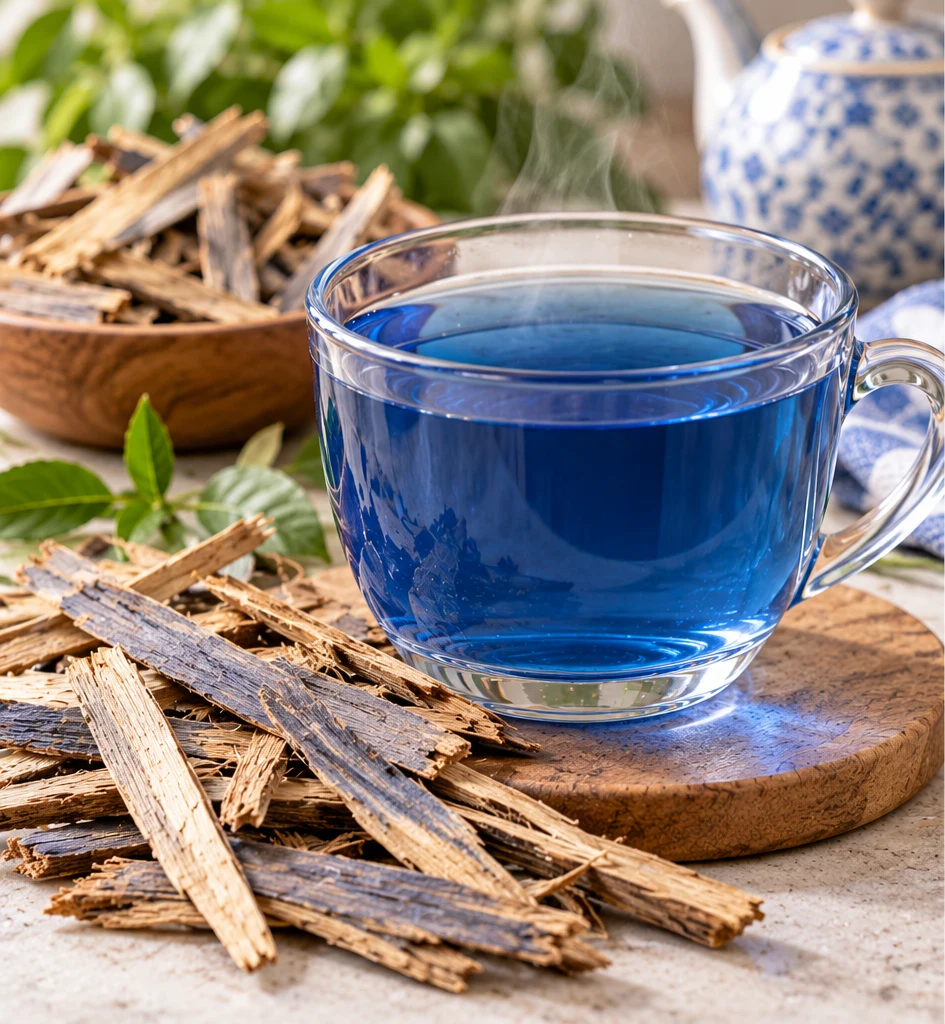
Palo azul tea is an herbal drink traditionally made by simmering wood or bark sold as palo azul, commonly associated with the Mexican tree Eysenhardtia polystachya. The finished infusion can look amber in ordinary light and show a blue or bluish fluorescence from certain angles. It is best treated as a traditional beverage, not as a proven kidney detox, weight-loss remedy, or drug-test solution.
Interest in palo azul tea often revolves around three things: how to make it, why it can look blue, and whether its traditional uses are supported by modern research. This guide keeps those closely related searches on one page, including “palo azul tea benefits,” “kidney wood tea,” “how to make palo azul tea,” “palo azul side effects,” and “what is palo azul good for.”
Because products sold as palo azul can vary, always check the botanical name and preparation instructions on the package. For this recipe, use food-grade palo azul specifically sold for brewing.
Easy palo azul tea recipe
This small batch is designed as a culinary starting point. Packaged palo azul can vary in thickness and strength, so the directions on your product should take priority if they differ.
Ingredients
- 1 ounce (28 g) food-grade palo azul bark or wood chips
- 6 cups (1.4 liters) drinking water
- Fresh lemon, optional for serving
- Honey, optional
- Ice, optional

Instructions
- Rinse the palo azul pieces briefly under cool water if the package recommends rinsing.
- Add the bark and 6 cups of water to a stainless-steel saucepan.
- Bring the water just to a boil, then reduce the heat to a gentle simmer.
- Simmer uncovered for about 20 to 30 minutes. The water should gradually turn amber to reddish brown.
- Turn off the heat and let the mixture stand for 10 minutes.
- Strain through a fine mesh strainer and discard the wood pieces.
- Serve warm, or cool and refrigerate before pouring over ice.
- Add lemon or a small amount of honey only if desired.
The tea may not look bright blue in the cup. The famous blue effect is often a fluorescence that becomes more noticeable under strong light, against a dark background, or when the light hits the liquid at certain angles. A brown or amber-looking cup does not necessarily mean the brew failed.
What is palo azul tea?
Palo azul means “blue stick” or “blue wood” in Spanish. In Mexican traditional use, the name is strongly associated with Eysenhardtia polystachya, a leguminous tree also called kidneywood. The bark or wood has been used in infusions for generations.
Researchers have studied extracts from Eysenhardtia polystachya for antioxidant, anti-inflammatory, antidiabetic, antimicrobial, pain-related, and kidney-related effects. Much of this research is laboratory or animal work rather than large human trials, so it should not be translated into promises about an ordinary cup of tea.
The plant is also known for fluorescent compounds in its extracts. Scientific work on Eysenhardtia polystachya has documented fluorescence from multiple plant-derived compounds, which helps explain the distinctive optical effect associated with palo azul.
Why does palo azul tea look blue?
The blue appearance is not the same as adding a blue dye. Palo azul extracts contain naturally fluorescent compounds that can absorb light and emit light at a different wavelength. That fluorescence can create a blue glow or sheen depending on the lighting conditions and viewing angle.
Scientific studies have isolated fluorescent fractions from Eysenhardtia polystachya and investigated them for imaging and biosensor applications. Researchers have shown that more than one compound contributes to the fluorescence.
In your kitchen, the effect may be subtle. Try viewing a clear glass of strained tea near bright daylight with a darker background. Tilting the glass can make the fluorescence easier to notice.

What does palo azul tea taste like?
Palo azul tea is generally mild, woody, slightly earthy, and not naturally very sweet. A longer simmer can make the flavor more pronounced, but stronger is not automatically better.
If the taste is too woody for you, dilute the finished tea with a little hot water. Lemon gives it brightness, while a small amount of honey softens the earthy notes.
For a lighter herbal infusion, compare it with our corn silk tea. If you prefer a more tart drink, our hibiscus tea recipe has a much sharper fruit-like profile.
Palo azul tea benefits: what does research actually show?
Palo azul contains several plant compounds that have been studied in extracts. Reviews of the Eysenhardtia genus describe research related to oxidative stress, diabetes, inflammation, pain, urinary disorders, microbial activity, and kidney injury. These findings make the plant scientifically interesting, but most do not come from trials where people simply drank homemade palo azul tea.
A pharmacological study of a standardized extract from Eysenhardtia polystachya found anti-inflammatory, antidiarrheal, pain-related, and antimicrobial activity in laboratory and animal models. The same study also reported low acute toxicity in the tested models. That does not establish a safe daily tea dose for humans.
Another review of the genus summarized potential activity across several biological systems, but emphasized pharmacological extracts and isolated compounds. Those preparations can be far more concentrated than a household infusion.
Is palo azul good for kidneys?
Palo azul has a long traditional association with kidney and urinary complaints, which is why “kidney wood tea” is a common search term. Recent experimental research has also investigated compounds from Eysenhardtia polystachya for possible kidney-protective effects in models of acute kidney injury.
That research is promising at the experimental level, but it does not prove that drinking palo azul tea treats kidney disease, dissolves stones, cures urinary infections, or improves kidney function in people.
If you have kidney disease, kidney stones, reduced kidney function, swelling, blood in the urine, severe flank pain, fever, or difficulty urinating, get medical advice rather than relying on an herbal drink. Kidney conditions can change how your body handles fluids and medications.
Palo azul detox tea claims
The word “detox” is often used in marketing, but it is vague. Your liver, kidneys, lungs, and digestive system already handle normal waste processing and elimination. There is no established evidence that palo azul tea “flushes toxins” in a way that creates a special detox effect.
Some online claims connect palo azul with increased urination. Even if a beverage changes urine output, that is not the same as removing stored toxins or accelerating fat loss.
Can palo azul help you pass a drug test?
No reliable evidence shows that palo azul tea can guarantee a negative drug test or rapidly remove drug metabolites from the body. Drug testing depends on the substance, dose, timing, individual metabolism, test type, and cutoff levels.
Trying to overhydrate or use a diuretic-style drink can create diluted urine, which may be flagged as dilute or invalid rather than producing the result someone expects. It can also create health risks if fluid intake becomes excessive.
For accuracy, do not market palo azul as a “drug test detox.” That claim is not supported by reliable clinical evidence.
Is palo azul tea good for weight loss?
Palo azul tea is not a proven weight-loss treatment. Animal research on Eysenhardtia polystachya extracts has explored blood-sugar and lipid-related effects, but that is very different from evidence that homemade palo azul tea causes meaningful fat loss in humans.
An unsweetened cup is naturally low in calories, so it can fit into a lower-sugar beverage routine. That is a practical dietary benefit, not proof that the plant burns fat.
If weight management is your goal, avoid turning the tea into a high-sugar drink with large amounts of honey or syrup.
Palo azul and blood sugar
Extracts of Eysenhardtia polystachya have shown antidiabetic and antioxidant activity in animal models. One study found changes in blood glucose, insulin, lipids, and markers of oxidative stress in diabetic mice.
These findings are not enough to use palo azul tea as diabetes treatment. If you take insulin or glucose-lowering medication, regular use of concentrated herbal products deserves caution because combining effects could potentially contribute to low blood sugar.
Palo azul side effects
Human safety data for regular palo azul tea consumption are limited. Laboratory and animal studies do not establish a universally safe dose for people, and commercial bark products can differ in botanical identity and concentration.
Possible concerns with herbal products include stomach upset, allergic reactions, changes in blood sugar or blood pressure, and interactions with medication. If you feel dizzy, weak, nauseated, or otherwise unwell after drinking it, stop and seek appropriate advice.
Do not use moldy, contaminated, or unidentified wood chips. Choose products intended specifically for human consumption.
Palo azul medication interactions
Because research on Eysenhardtia polystachya includes glucose-related and other pharmacological effects, people taking prescription medication should be cautious with regular or concentrated use.
Ask a clinician or pharmacist before using palo azul frequently if you take diabetes medication, blood-pressure medication, diuretics, anticoagulants, or medicines with a narrow therapeutic range. There is not enough high-quality human interaction data to assume that combinations are harmless.
Does palo azul tea contain caffeine?
Plain palo azul tea does not naturally contain caffeine because it is made from wood or bark rather than tea leaves or coffee beans. However, a commercial blend could contain other ingredients, so read the full label.
If you want another naturally caffeine-free herbal drink, our dandelion herbal tea is made from roasted root, while our butterfly pea flower tea is a floral infusion with a dramatic color change when lemon is added.
Can you drink palo azul tea cold?
Yes. After simmering and straining, cool the tea promptly and refrigerate it. Serve it over ice just before drinking. Chilling may make the blue fluorescence easier or harder to notice depending on lighting, glass shape, and concentration.
If you add lemon or another garnish, add it to the glass rather than storing fresh slices in the entire pitcher for an extended period.
How long should you boil palo azul?
For this recipe, a gentle simmer of about 20 to 30 minutes is enough to produce a flavorful small batch. Some traditional recipes simmer much longer or use much larger amounts of water.
There is no single standardized preparation across all products, so follow package directions if your supplier specifies a different ratio or simmer time. Longer cooking does not automatically create a safer or more effective drink.
How much palo azul tea should you drink?
There is no well-established evidence-based daily dose for palo azul tea. That is why this page gives a culinary batch rather than a therapeutic dosage schedule.
If you are trying it simply as a beverage, start with a small serving and see how you tolerate it. Avoid making concentrated extracts or drinking very large quantities because of internet health claims.
Palo azul during pregnancy or breastfeeding
There is not enough high-quality human evidence to establish the safety of regular palo azul use during pregnancy or breastfeeding. Because herbal extracts can contain biologically active compounds, it is better to ask a healthcare professional before using it regularly in these situations.
Where to buy palo azul tea
Palo azul is commonly sold by Mexican herbal shops, Latin American grocery stores, specialty tea retailers, and online herb sellers. Look for the botanical name Eysenhardtia polystachya when possible, and choose a product labeled for brewing or culinary use.
Avoid relying only on the phrase “blue tea,” because that term is also used for butterfly pea flower tea. Palo azul and butterfly pea are completely different plants.
Palo azul tea vs butterfly pea tea
Palo azul tea comes from wood or bark, while butterfly pea tea comes from blue flowers. Butterfly pea releases blue anthocyanin pigments directly into the water, while palo azul is better known for fluorescence that can appear blue under certain lighting.
The flavors are also different. Palo azul is mild and woody. Butterfly pea is mild, earthy, and floral. Lemon turns butterfly pea tea purple because of acidity, while palo azul’s optical effect is not the same pH-driven color change.
How to store brewed palo azul tea
Transfer the strained tea to a clean covered container and refrigerate it promptly. Make modest batches rather than keeping a large pitcher for a long time.
Discard the tea if it develops an unusual odor, visible mold, gas, slime, or another sign of spoilage. Keep dried bark in a dry sealed container according to the supplier’s directions.
Common palo azul tea mistakes
Expecting the tea to look neon blue
The infusion may look amber or brown in normal room light. The blue effect can depend on angle and illumination.
Buying unidentified bark
Choose a food-grade product with a botanical identity whenever possible. “Blue wood” is not precise enough on its own.
Using palo azul as a kidney treatment
Traditional use and early research do not make palo azul a replacement for evaluation of kidney disease, kidney stones, or urinary infection.
Believing detox or drug-test guarantees
There is no reliable evidence that palo azul can guarantee a negative drug test or “flush” toxins on demand.
FAQS
What is palo azul tea?
Palo azul tea is an herbal infusion traditionally made from wood or bark associated with Eysenhardtia polystachya, a Mexican tree also called kidneywood.
Why does palo azul tea look blue?
Palo azul contains naturally fluorescent compounds. Depending on lighting and viewing angle, the strained tea can show a blue glow or sheen even when the liquid looks amber in ordinary light.
What are palo azul tea benefits?
Extracts of Eysenhardtia polystachya have been studied for antioxidant, anti-inflammatory, metabolic and kidney-related effects, mostly in laboratory and animal research. Those findings do not prove that homemade tea treats disease.
Can palo azul help with a drug test?
No reliable clinical evidence shows that palo azul tea can guarantee a negative drug test or rapidly remove drug metabolites from the body.
Does palo azul tea have caffeine?
Plain palo azul tea does not naturally contain caffeine. Commercial blends can include other ingredients, so check the label.
Is palo azul tea good for kidneys?
Palo azul has traditional kidney and urinary uses, and experimental research has investigated kidney-related effects. It is not a proven treatment for kidney disease, stones, or urinary infections.