

Chamomile tea is a caffeine-free herbal infusion made by steeping dried chamomile flowers in hot water. It has a mild floral flavor and is commonly enjoyed in the evening. Research suggests chamomile may help some people relax and may modestly support sleep quality, but it should not be presented as a guaranteed treatment for insomnia, anxiety, or other medical conditions.
Search interest around chamomile tea clusters around a few closely related questions: benefits, sleep, caffeine, side effects, pregnancy, and how to make it. This guide keeps those intents together on one page so the site does not need separate articles for every small variation.
If you prefer caffeine-free herbal drinks, you may also like our dandelion herbal tea, hibiscus tea recipe, or butterfly pea flower tea.
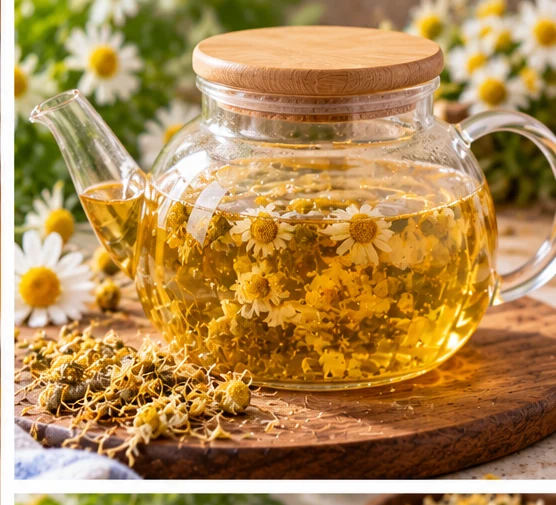
Easy chamomile tea recipe
This simple recipe makes two cups and works with dried loose chamomile flowers. If your product gives different preparation directions, follow the package first.
Ingredients
- 2 tablespoons dried food-grade chamomile flowers
- 2 cups (480 ml) hot drinking water
- 1 to 2 teaspoons honey, optional
- 1 to 2 teaspoons fresh lemon juice, optional
Instructions
- Place the dried chamomile flowers in a teapot or heatproof jug.
- Pour 2 cups of hot water over the flowers.
- Cover and steep for 5 to 7 minutes.
- Strain through a fine mesh strainer.
- Taste the tea plain before adding sweetener.
- Add honey or lemon if desired and serve warm.
A longer steep can make the cup taste more bitter or grassy, so start with 5 minutes and adjust next time if you want a stronger infusion.
What is chamomile tea?
Chamomile tea is an herbal infusion made from dried chamomile flowers. The two species most commonly discussed are German chamomile, Matricaria chamomilla, and Roman chamomile, Chamaemelum nobile. Commercial tea bags may use one species or a blend.
Because chamomile is not made from the tea plant Camellia sinensis, plain chamomile tea does not naturally contain tea-leaf caffeine. That is one reason many people choose it in the evening.
The aroma is soft, floral, and slightly apple-like. The flavor is mild enough to drink plain, although honey and lemon are common additions.
Chamomile tea benefits: what does research support?
Chamomile contains plant compounds including flavonoids and terpenoids. One of the best-known is apigenin, which has attracted research interest because it can interact with certain receptors involved in sedation and relaxation.
Human studies have explored chamomile for sleep quality, anxiety symptoms, digestive comfort, and other outcomes. Some findings are promising, but the evidence is not strong enough to treat a cup of chamomile tea as a medicine for a diagnosed condition.
The most realistic way to describe the benefit is that chamomile can be a calming, caffeine-free evening drink, and some people may notice better subjective sleep quality. That is different from claiming that it cures insomnia.
Chamomile tea for sleep
Chamomile is strongly associated with bedtime routines. That association is not purely marketing: small human studies and reviews have found signals that chamomile may improve certain measures of sleep quality, although results are not always consistent.
One reason chamomile may feel helpful at night is simply that it provides a warm caffeine-free ritual. A quiet routine, dim light, and consistent bedtime can also influence sleep independently of the tea itself.
If you want to use chamomile before bed, one small cup about 30 to 60 minutes before sleep is a practical routine for many adults. That is a beverage habit, not a therapeutic dosing recommendation.
If poor sleep is persistent, severe, or accompanied by loud snoring, pauses in breathing, major daytime sleepiness, or mood symptoms, a tea routine should not replace medical assessment.
Does chamomile tea have caffeine?
Plain chamomile tea is naturally caffeine-free. It does not contain tea leaves, coffee, yerba mate, or another common caffeine source.
However, some commercial blends combine chamomile with green tea, black tea, or mate. Always read the ingredient list if avoiding caffeine matters to you.
For comparison, our green tea with ginger does contain caffeine because green tea leaves are part of the recipe.
What does chamomile tea taste like?
Chamomile tea tastes lightly floral, soft, and mildly sweet, with an aroma often compared with apple. A properly brewed cup should not taste sharply bitter.
If it tastes harsh, try a shorter steep, fewer flowers, or a little extra hot water. If it tastes too weak, use slightly more chamomile next time rather than steeping indefinitely.
Chamomile tea with honey
Honey is one of the simplest additions to chamomile tea. Add it after straining while the tea is still warm. Start with one teaspoon for two cups and taste before adding more.
Honey changes the sweetness but does not make the tea a treatment for cough, sleep problems, or anxiety. Enjoy it mainly for flavor.

Chamomile tea with lemon
Lemon gives chamomile a brighter, fresher flavor. Add a small amount after brewing rather than squeezing in a large quantity immediately.
If you have reflux or a sensitive stomach, acidic drinks can sometimes make symptoms worse. In that case, plain chamomile may be more comfortable than a lemon version.
Lavender chamomile tea
Chamomile and lavender are often paired in evening blends. To make a simple version, add a very small amount of culinary lavender to the chamomile before steeping.
Lavender has a strong aroma, so use less than you think you need. Too much can make the tea taste perfumed or soapy.
Use lavender sold specifically for culinary use. Decorative flowers from florists or craft stores are not automatically suitable for drinking.
Chamomile tea side effects
Chamomile tea is generally well tolerated in food amounts, but side effects are possible. The main concern is allergy, especially in people sensitive to plants in the daisy family, such as ragweed, chrysanthemums, marigolds, or daisies.
Possible symptoms include itching, rash, swelling, wheezing, or throat discomfort. Severe allergic symptoms require urgent medical attention.
Some people may also notice nausea or stomach discomfort. If the tea repeatedly causes symptoms, stop using it.
Chamomile tea and medication interactions
Chamomile may interact with certain medications. The most commonly discussed concern is anticoagulant or antiplatelet therapy because chamomile contains compounds that may theoretically add to bleeding risk.
There are also potential concerns with sedating medicines because chamomile may have mild calming effects. If you take prescription medication, especially blood thinners or sedatives, regular concentrated chamomile use deserves a conversation with a clinician or pharmacist.
Ordinary food amounts and concentrated extracts are not the same thing. Capsules, tinctures, and strong extracts can deliver much more plant material than a cup of tea.
Chamomile tea during pregnancy
Pregnancy is one area where online advice is often oversimplified. There is not enough high-quality evidence to define a universally safe therapeutic amount of chamomile during pregnancy.
Occasional food amounts may be different from concentrated herbal use, but regular use should be discussed with a prenatal care professional. This is especially important if the tea is part of a multi-herb blend.
Chamomile tea while breastfeeding
Safety data during breastfeeding are also limited. If you want to drink chamomile regularly while breastfeeding, ask a healthcare professional who can consider your health, your baby’s age, and any medications involved.
Can children drink chamomile tea?
Do not assume an adult herbal tea routine is automatically appropriate for a child. Herbal products can cause allergy or interact with medications, and younger children have different fluid and dosing needs.
For babies and young children, ask a pediatric professional before using chamomile tea regularly or for sleep, colic, or other symptoms.
Can chamomile tea help with anxiety?
Chamomile has been studied for anxiety symptoms, including in small trials using chamomile extracts. Some studies found improvement, but an extract is not the same as a normal cup of tea.
A warm chamomile drink may feel relaxing and can fit into a calming routine, but anxiety that is persistent, severe, or interfering with daily life deserves proper assessment and treatment.
Can chamomile tea help digestion?
Chamomile has a long history of traditional use for digestive discomfort. Laboratory and animal research has explored antispasmodic and anti-inflammatory effects, but human evidence for specific digestive conditions is limited.
If a warm caffeine-free drink feels soothing after a meal, that can be a reasonable personal preference. Persistent abdominal pain, vomiting, bleeding, severe reflux, or unexplained weight loss needs medical evaluation rather than herbal self-treatment.
Is chamomile tea good for weight loss?
Chamomile tea is not a proven fat-loss treatment. An unsweetened cup is low in calories and can replace a sweetened evening drink, but that is different from directly causing weight loss.
Any weight-management benefit would come mainly from the broader diet and beverage pattern, not from a special fat-burning effect of chamomile.
How to make iced chamomile tea
Brew and strain the chamomile as usual, then cool it promptly and refrigerate. Serve over ice with optional lemon slices or mint.
If you want honey, add it while the tea is still warm so it dissolves easily. If you want a naturally colorful iced herbal drink, our butterfly pea flower tea changes from blue to purple when lemon is added.
How long should chamomile tea steep?
For loose dried chamomile, 5 to 7 minutes is a practical starting point. Tea bags may have their own directions, so check the package.
A longer steep can make the drink stronger but may also bring out more bitterness. If you want a stronger cup, slightly increasing the amount of chamomile next time can be more predictable than leaving the same batch steeping for a long time.
How much chamomile tea should you drink?
There is no universally established therapeutic daily dose for chamomile tea. For ordinary beverage use, one small cup is a sensible starting point if you have not used it before.
If you want to drink chamomile several times a day, use concentrated products, or take it for a health condition, ask a clinician or pharmacist whether that is appropriate for you.
Best time to drink chamomile tea
There is no medically required time. Many people choose evening because the tea is caffeine-free and fits naturally into a wind-down routine.
If you drink a lot of fluid right before bed, however, waking to urinate can interrupt sleep. In that case, have the tea a little earlier in the evening rather than immediately before lying down.
How to buy chamomile tea
Look for chamomile sold specifically for food or tea use. Loose dried flowers should smell pleasantly floral and look dry rather than damp or moldy.
For tea bags, check the ingredient list. A product labeled “sleep tea” may contain several herbs rather than chamomile alone, and some blends include ingredients with their own precautions.
How to store dried chamomile and brewed tea
Keep dried chamomile in a tightly closed container away from moisture, heat, and direct light. Follow the product’s best-before date and storage directions.
Keep brewed tea covered in the refrigerator and make small batches. Add fresh lemon, fruit, or herbs to individual glasses rather than leaving them in the storage pitcher for a long time.
Common chamomile tea mistakes
Using non-food-grade flowers
Use chamomile sold for tea or culinary use. Decorative flowers are not automatically safe to brew.
Oversteeping the tea
If the cup becomes bitter, shorten the steep or use slightly less chamomile next time.
Assuming chamomile is safe for everyone
Allergy, pregnancy, breastfeeding, medication interactions, and age can all change whether regular herbal use is appropriate.
Treating chamomile like a sleeping pill
Chamomile may support relaxation for some people, but persistent insomnia needs a broader look at sleep habits, medications, stress, and possible medical causes.
FAQS
What are the main chamomile tea benefits?
Chamomile is a caffeine-free herbal drink with research interest around relaxation, sleep quality, anxiety symptoms, and digestive comfort. Evidence is promising in some areas but not strong enough to treat a cup of tea as a proven medical therapy.
Does chamomile tea help you sleep?
Some studies suggest chamomile may modestly support sleep quality, and many people find a warm caffeine-free cup relaxing. It is not a guaranteed treatment for insomnia.
Does chamomile tea have caffeine?
Plain chamomile tea is naturally caffeine-free. Blends can include green tea, black tea, or other caffeinated ingredients, so read the label.
How do you make chamomile tea?
Steep about 2 tablespoons of dried food-grade chamomile flowers in 2 cups of hot water for 5 to 7 minutes, then strain. Add honey or lemon only if desired.
What are chamomile tea side effects?
The main concern is allergy, especially in people sensitive to ragweed or other daisy-family plants. Chamomile may also interact with blood thinners or sedating medicines.
Can you drink chamomile tea during pregnancy?
High-quality safety data during pregnancy are limited. Occasional food amounts and concentrated herbal use are different, so regular use should be discussed with a prenatal care professional.
2 thoughts on “Chamomile Tea: Benefits, Sleep, Side Effects and How to Make It”