
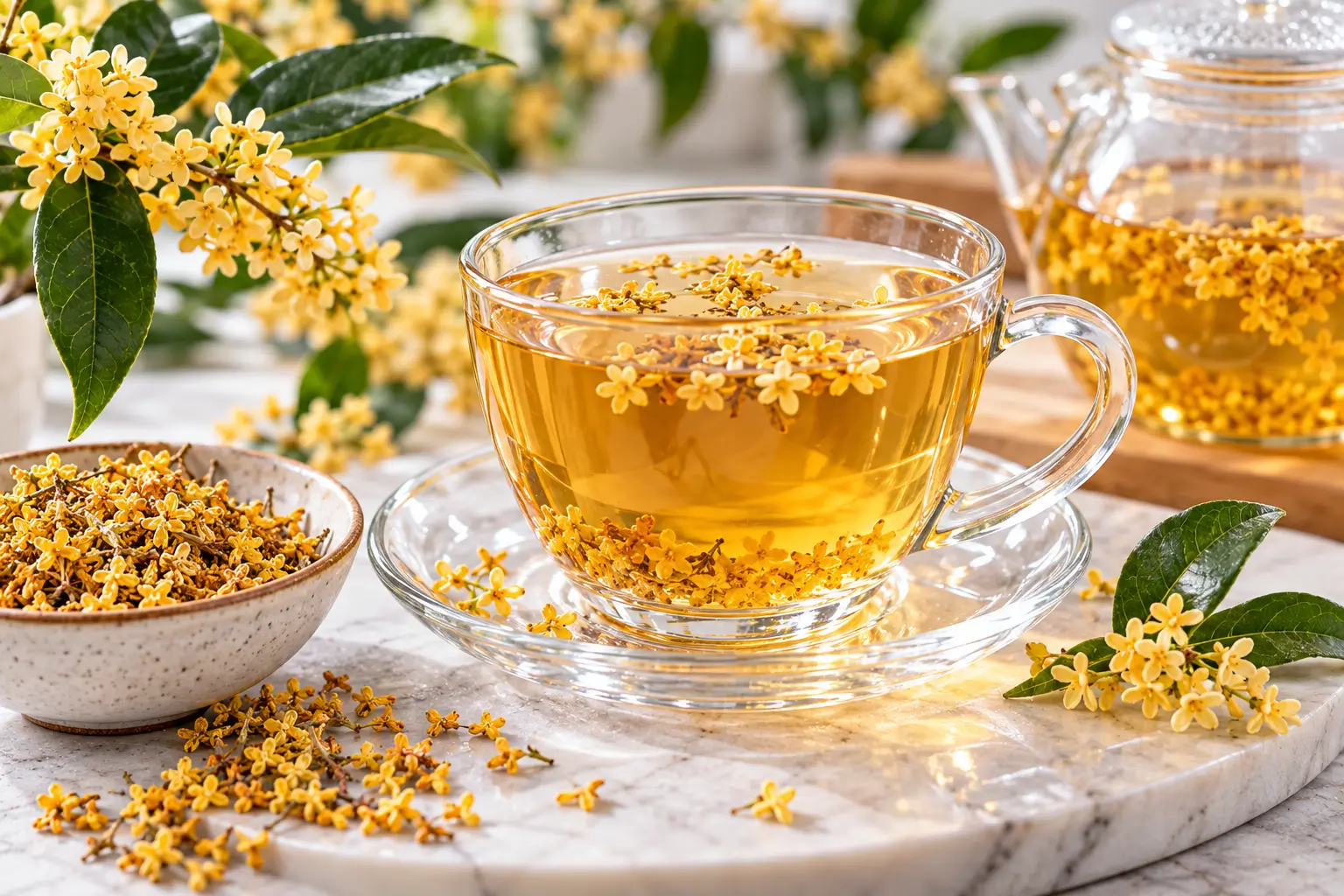
Osmanthus tea is a fragrant floral drink known for its delicate aroma and naturally sweet, fruity character. Made with dried osmanthus flowers or by combining the blossoms with traditional tea leaves, it has long been enjoyed in parts of East Asia.
Its aroma is often described as floral with notes reminiscent of apricot or ripe stone fruit. But beyond its distinctive flavor, many people are now searching for osmanthus tea benefits, whether it contains caffeine, how to prepare it, and whether there are any side effects to consider.
Unlike some of the better-known herbal infusions covered in our herbal teas guide, osmanthus can be prepared either as a caffeine-free flower infusion or blended with caffeinated tea leaves.
That distinction matters.
What Is Osmanthus Tea?
Osmanthus tea is made using the small fragrant flowers of plants belonging to the Osmanthus genus.
One of the best-known species is Osmanthus fragrans, an evergreen shrub or small tree valued for its strongly scented flowers.
The blossoms may be dried and infused on their own or combined with teas such as green, black, or oolong tea.
This means the term osmanthus tea can describe more than one type of drink.
A pure osmanthus flower infusion is different from green tea scented or blended with osmanthus flowers.
The difference affects both the flavor and caffeine content.
What Does Osmanthus Tea Taste Like?
Osmanthus is especially valued for its aroma.
The flavor is generally delicate rather than intensely herbal.
People commonly describe it as:
- floral
- lightly sweet
- fruity
- honey-like
- reminiscent of apricot or peach
The exact taste depends on how much flower is used and whether it is blended with another tea.
Pure osmanthus flower tea tends to be light and aromatic.
Osmanthus green tea will also carry the grassy or vegetal character of green tea, while an oolong blend can taste deeper and more complex.
Osmanthus Tea Benefits
Osmanthus flowers contain naturally occurring plant compounds that have attracted scientific interest.
However, an important distinction is necessary:
research on osmanthus plants or isolated compounds isn’t the same as clinical evidence showing that drinking osmanthus tea treats a health condition.
Many traditional uses haven’t yet been confirmed through strong human clinical trials.
With that limitation in mind, there are still several reasons people enjoy the drink.
1. It Provides Plant Compounds
Osmanthus flowers contain naturally occurring aromatic and phenolic compounds.
Researchers have studied components of the plant for antioxidant and other biological properties.
But laboratory findings shouldn’t be interpreted as proof that a cup of osmanthus tea prevents or treats disease.
2. It Can Be a Low-Calorie Drink
Plain osmanthus tea prepared with water and no added sugar can be a low-calorie beverage.
That makes it an alternative to sweetened soft drinks, juices, or heavily sweetened specialty beverages.
The calorie content changes when honey, sugar, syrups, or other ingredients are added.
3. Pure Osmanthus Flower Tea Can Be Caffeine-Free
Osmanthus flowers themselves don’t provide caffeine in the way traditional tea leaves do.
Therefore, an infusion made exclusively from osmanthus flowers can provide a floral drink without the caffeine found in green or black tea.
If avoiding caffeine is important to you, our guide to the best caffeine-free drinks provides additional options.
4. It Can Add Variety to Your Fluid Intake
Tea and herbal infusions contribute fluid to your daily intake.
If the pleasant aroma of osmanthus encourages you to choose an unsweetened drink instead of a heavily sweetened beverage, that can be a practical advantage.
For broader hydration guidance, see how much water you need daily.
Does Osmanthus Tea Have Caffeine?
Pure osmanthus flower tea is naturally caffeine-free.
But not every product labeled “osmanthus tea” contains only flowers.
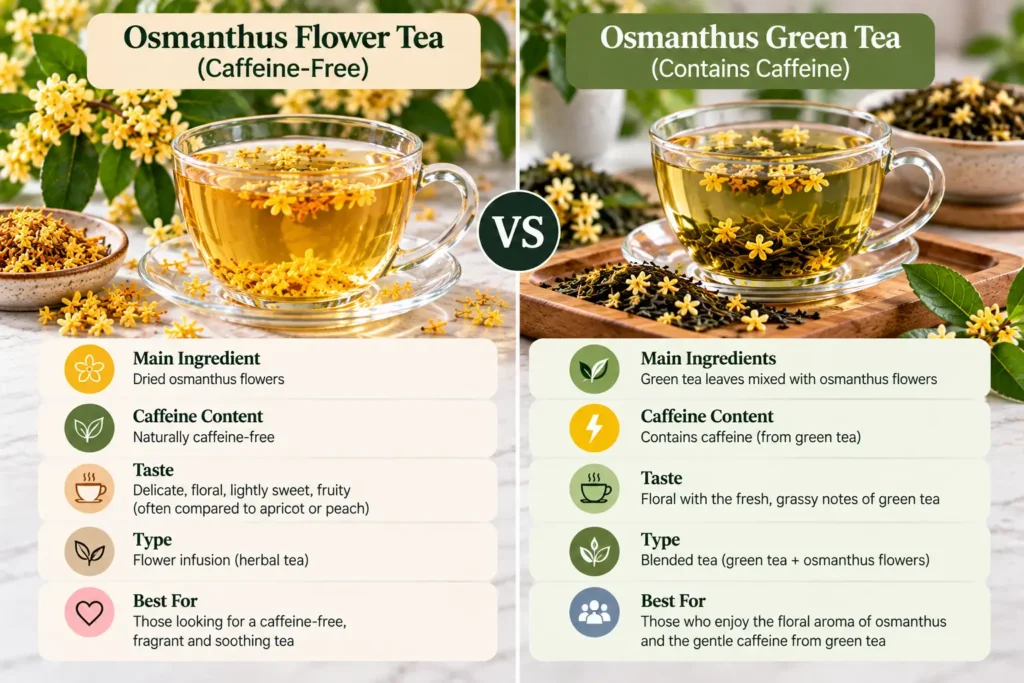
An osmanthus tea made with:
Green tea → contains caffeine
Black tea → contains caffeine
Oolong tea → contains caffeine
Only osmanthus flowers → naturally caffeine-free
This is why checking the ingredient list is important.
Don’t assume an osmanthus tea is caffeine-free based only on its name.
Osmanthus Tea vs. Green Tea
These aren’t the same type of tea.
Green tea comes from the leaves of Camellia sinensis and naturally contains caffeine.
Pure osmanthus tea is a flower infusion.
However, the two are frequently combined to create osmanthus green tea.
In that case, the beverage gets its floral aroma from osmanthus while retaining the characteristics and caffeine of green tea.
You can learn more about traditional green tea in our guide to green tea benefits.
Osmanthus Tea vs. Herbal Tea
Pure osmanthus flower tea fits broadly within the category of herbal or botanical infusions because it isn’t made from Camellia sinensis.
This puts it closer to beverages such as chamomile or peppermint tea than to conventional black or green tea.
For example, chamomile tea is also prepared from flowers.
But terminology can become confusing when osmanthus flowers are blended with true tea leaves.
Always check what the product actually contains.
How to Make Osmanthus Tea
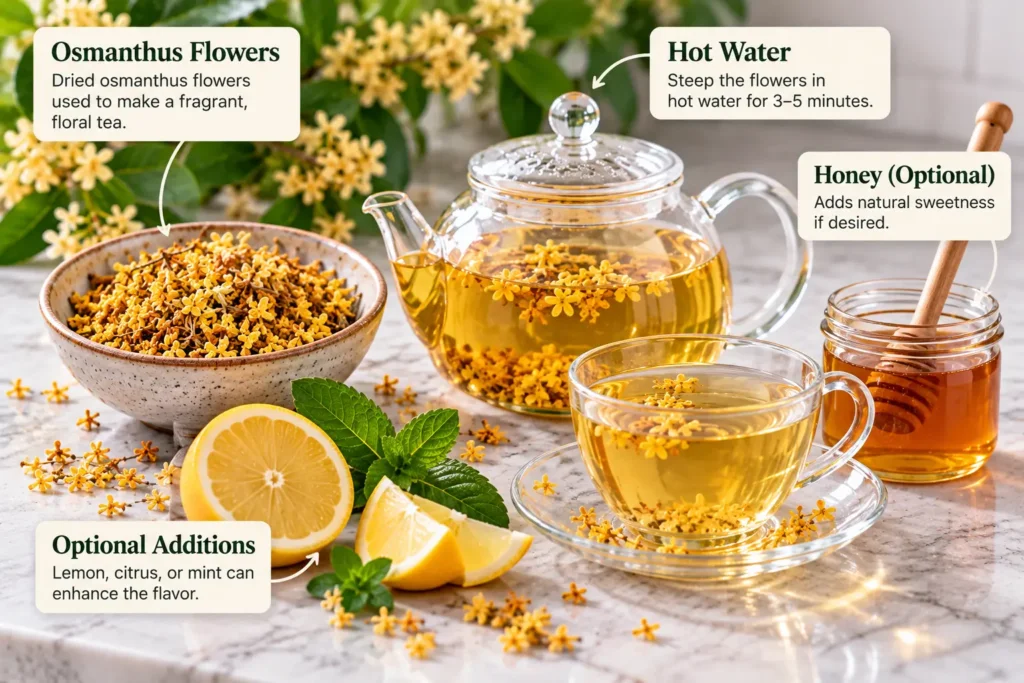
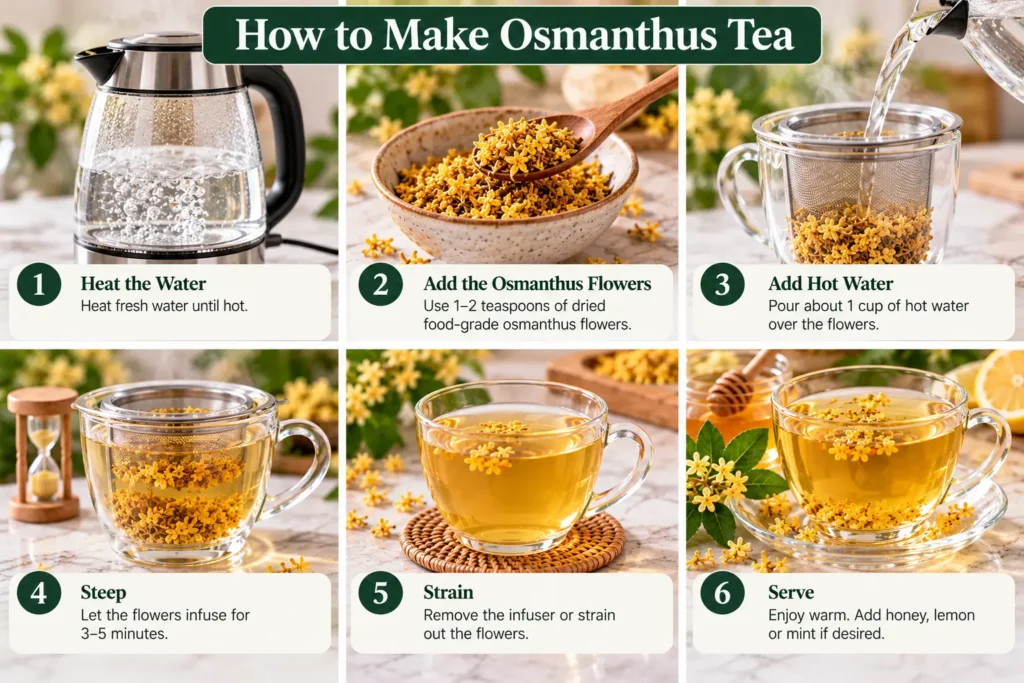
Making pure osmanthus flower tea is simple. This basic recipe uses dried food-grade osmanthus flowers and hot water, with honey as an optional addition.
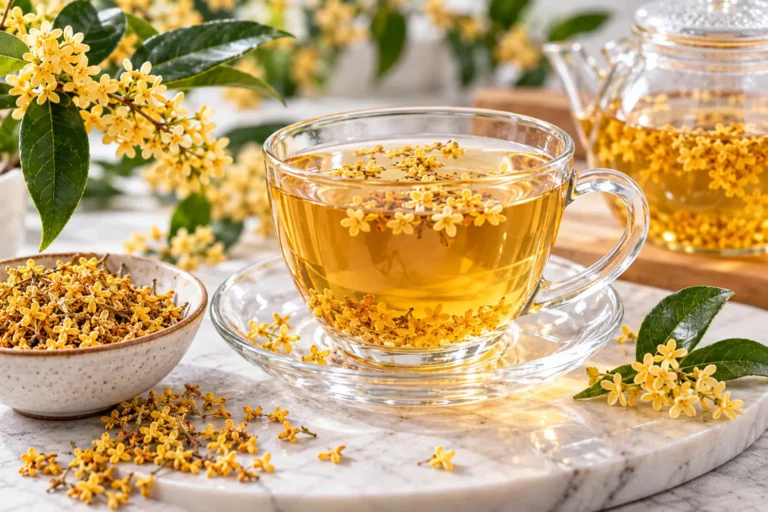
Osmanthus Tea: Benefits, Taste, Caffeine & How to Make It
A simple floral osmanthus tea made with dried food-grade osmanthus flowers and hot water. This delicate golden infusion has a naturally fragrant, lightly fruity aroma and can be served plain or with a little honey.
- Total Time: 7 minutes
- Yield: 1 cup 1x
Ingredients
- 1–2 teaspoons dried food-grade osmanthus flowers
- 1 cup hot water
- Honey, optional
- Lemon or fresh mint, optional
Instructions
- Heat fresh water until hot.
- Place 1–2 teaspoons of dried food-grade osmanthus flowers in a tea infuser or heat-safe cup.
- Pour 1 cup of hot water over the flowers.
- Steep for 3–5 minutes, depending on how strong you prefer the floral flavor.
- Remove the infuser or strain out the flowers.
- Serve warm. Add a small amount of honey, lemon, or fresh mint if desired.
Notes
Use osmanthus flowers specifically sold as food-grade or suitable for tea. Do not use decorative flowers unless they are clearly labeled as safe for consumption. Pure osmanthus flower tea is naturally caffeine-free. If you combine osmanthus with green, black, or oolong tea, the finished drink will contain caffeine. Start with a shorter steeping time and adjust according to taste. For iced osmanthus tea, allow the brewed tea to cool, refrigerate until chilled, and serve over ice.
- Prep Time: 2 minutes
- Cook Time: 5 minutes
- Category: Drinks
- Method: Steeping
Keywords: osmanthus tea, osmanthus tea recipe, how to make osmanthus tea, osmanthus flower tea
Can You Make Osmanthus Tea With Green Tea?
Yes.
Osmanthus and green tea are commonly paired.
For a simple homemade version, combine a small quantity of dried osmanthus flowers with your preferred green tea.
Follow the brewing temperature and steeping instructions for the green tea, since excessive heat or steeping can make green tea bitter.
Remember that this version will contain caffeine.
Can You Make Iced Osmanthus Tea?
Yes.
Prepare the infusion slightly stronger than you normally would, because melting ice will dilute the flavor.
After steeping:
- Strain the flowers.
- Allow the tea to cool.
- Refrigerate until chilled.
- Pour over ice.
- Add lemon, peach, or a small amount of honey if desired.
Its floral-fruity character works particularly well as a chilled drink.
You can also use techniques from our cold brew herbal tea recipes when experimenting with cold botanical infusions.
When Is the Best Time to Drink Osmanthus Tea?
There isn’t a scientifically established best time to drink osmanthus tea.
A caffeine-free pure flower infusion can generally be enjoyed whenever it fits comfortably into your routine.
The situation changes when osmanthus is combined with green, black, or oolong tea.
Those versions contain caffeine and may be less suitable close to bedtime for people who are sensitive to its effects.
The broader principles are similar to those discussed in our guide to the best time to drink herbal tea.
Can You Drink Osmanthus Tea Before Bed?
If the product contains only osmanthus flowers, caffeine isn’t normally a concern.
That doesn’t mean osmanthus has been proven to improve sleep, however.
It simply means that pure flower tea doesn’t contain the caffeine naturally present in traditional tea leaves.
If your product contains green, black, or oolong tea, it will contain caffeine and could interfere with sleep in caffeine-sensitive people.
Is Osmanthus Tea Good for Weight Loss?
Osmanthus tea is sometimes promoted online in connection with weight loss, but expectations should remain realistic.
There isn’t strong clinical evidence demonstrating that drinking osmanthus flower tea by itself causes meaningful body-fat loss.
An unsweetened cup can be low in calories.
Replacing a high-calorie sugary drink with unsweetened tea could therefore reduce calorie intake, but that’s different from claiming osmanthus directly burns fat.
Avoid treating terms such as “detox” or “fat-burning tea” as established scientific effects.
Is Osmanthus Tea Good for Digestion?
Osmanthus has a history of traditional use, and digestive benefits are sometimes associated with the plant.
However, strong human evidence specifically demonstrating that osmanthus tea treats digestive problems is limited.
Someone primarily looking for teas traditionally consumed after meals may also want to explore our guide to the best tea for digestion.
Osmanthus Tea Side Effects
Pure osmanthus flower tea is consumed as a beverage, but “natural” doesn’t automatically mean risk-free for everyone.
Potential considerations include:
Allergic Reactions
People can be sensitive or allergic to botanical ingredients.
Stop drinking the tea if you develop symptoms suggesting an allergic reaction.
Added Caffeine
This isn’t caused by the osmanthus flowers themselves.
It becomes relevant when the product also contains green, black, or oolong tea.
Added Sugar
Bottled or commercially prepared osmanthus drinks may contain substantial added sugar even though plain homemade flower tea does not.
Always check the nutrition label.
Individual Medical Considerations
Research establishing specific medicinal doses, medication interactions, and long-term high-dose safety for osmanthus tea is limited.
People taking medication or managing a medical condition should avoid using concentrated botanical products as substitutes for prescribed treatment.
Can You Drink Osmanthus Tea Every Day?
There isn’t a well-established clinical recommendation defining an ideal number of cups of osmanthus tea per day.
Occasional consumption as a beverage is different from consuming highly concentrated extracts or supplements.
If you drink a blended product daily, also consider:
- caffeine
- added sugar
- other herbs
- serving size
- your medications
- individual tolerance
Moderation and ingredient transparency are more useful than assuming that more tea produces greater benefits.
How to Buy Osmanthus Tea
When purchasing dried flowers, look for products specifically sold for food or tea use.
Avoid using decorative flowers unless they’re clearly labeled as suitable for consumption.
Also check whether you’re buying:
Pure osmanthus flowers
or
Osmanthus blended with green, black, or oolong tea.
This distinction determines both the flavor and caffeine content.
How to Store Dried Osmanthus Flowers
Store dried flowers in a tightly sealed container away from:
- heat
- moisture
- direct sunlight
- strong odors
A cool, dry cupboard generally works well.
Botanical ingredients can gradually lose aroma over time, so keeping the container tightly closed helps preserve their fragrance.
Frequently Asked Questions
What is osmanthus tea?
Osmanthus tea is a fragrant drink made with dried osmanthus flowers. The flowers may be infused alone or combined with green, black, or oolong tea.
What does osmanthus tea taste like?
Osmanthus tea has a delicate floral and fruity aroma often compared with apricot, peach, or honey.
What are the benefits of osmanthus tea?
Osmanthus flowers contain naturally occurring plant compounds, and plain flower tea can be a low-calorie, caffeine-free beverage. However, strong human clinical evidence supporting many specific health claims remains limited.
Does osmanthus tea have caffeine?
Pure osmanthus flower tea is naturally caffeine-free. Osmanthus green tea, black tea, and oolong blends contain caffeine from the traditional tea leaves.
How do you make osmanthus tea?
Steep approximately 1–2 teaspoons of dried food-grade osmanthus flowers in one cup of hot water for about 3–5 minutes, then strain and serve.
Can you drink osmanthus tea at night?
Pure osmanthus flower tea doesn’t naturally contain caffeine. Blends containing green, black, or oolong tea do contain caffeine and may not be ideal close to bedtime for caffeine-sensitive people.
Does osmanthus tea help with weight loss?
There isn’t strong evidence showing that osmanthus tea directly causes meaningful fat loss. Unsweetened tea can simply provide a low-calorie alternative to sugary drinks.
Is osmanthus tea good for digestion?
Digestive benefits are sometimes associated with osmanthus in traditional use, but strong clinical evidence specifically supporting osmanthus tea as a digestive treatment is limited.
Can I drink osmanthus tea every day?
There is no established universal daily amount. Consider the complete ingredient list, particularly if the product contains caffeinated tea leaves or other added ingredients.
Is osmanthus tea the same as green tea?
No. Pure osmanthus tea is a flower infusion. However, osmanthus flowers are frequently blended with green tea, producing a caffeinated beverage known as osmanthus green tea.
Bottom Line
Osmanthus tea stands out primarily for its delicate floral aroma and naturally fruity character.
When made exclusively from osmanthus flowers, it’s naturally caffeine-free and can provide a simple low-calorie beverage when consumed without added sugar.
When osmanthus is blended with green, black, or oolong tea, however, the drink contains caffeine and takes on characteristics of the underlying tea.
Osmanthus contains interesting plant compounds, but many of the stronger health claims found online go beyond the available human evidence.
Enjoy it primarily as a fragrant tea rather than as a treatment—and always check the ingredient list so you know whether you’re drinking pure osmanthus flowers or a caffeinated tea blend.
1 thought on “Osmanthus Tea: Benefits, Taste, Caffeine & How to Make It”