
Yes, green tea has caffeine. A typical 8-ounce (237 ml) cup of brewed green tea contains about 29 mg of caffeine, although the actual amount can vary depending on the tea, how much you use, and how you brew it. Mayo Clinic
That’s considerably less than a typical cup of brewed coffee, but green tea isn’t naturally caffeine-free.
If you’re trying to reduce caffeine, understanding these differences can help you choose between regular green tea, decaffeinated green tea, and naturally caffeine-free herbal infusions.
How Much Caffeine Is in Green Tea?
There isn’t one exact amount of caffeine in every cup of green tea.
As a useful reference, Mayo Clinic lists approximately:
| Beverage | Serving | Approx. Caffeine |
|---|---|---|
| Brewed green tea | 8 oz (237 ml) | 29 mg |
| Brewed black tea | 8 oz (237 ml) | 48 mg |
| Brewed coffee | 8 oz (237 ml) | 96 mg |
| Decaf brewed coffee | 8 oz (237 ml) | 1 mg |
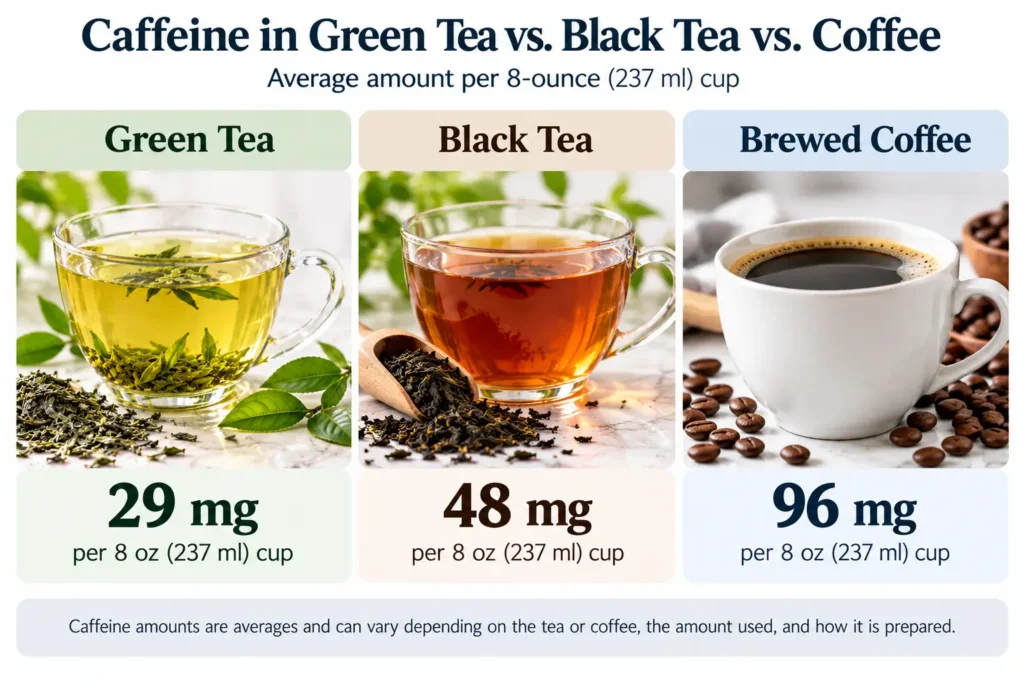
These numbers should be treated as estimates rather than guarantees. Growing conditions and brewing time can change the caffeine concentration of tea. Mayo Clinic
The FDA provides another useful reference point: about 37 mg of caffeine in a typical 12-fluid-ounce green tea. U.S. Food and Drug Administration
So if you see different numbers online, that doesn’t necessarily mean one is wrong. Serving size and preparation matter.
Why Does Green Tea Have Caffeine?
Green tea comes from the plant Camellia sinensis.
The same plant is also used to produce other traditional teas, including black and oolong tea.
Caffeine occurs naturally in the tea leaves.
That’s an important difference between green tea and many drinks commonly called “herbal teas.”
Infusions made only from caffeine-free herbs, flowers, or other botanicals don’t naturally contain tea-leaf caffeine.
If you’d like to explore those alternatives, see our best caffeine-free drinks.
What Affects the Caffeine in Green Tea?
The amount in your cup can vary considerably.
Several factors can influence it.
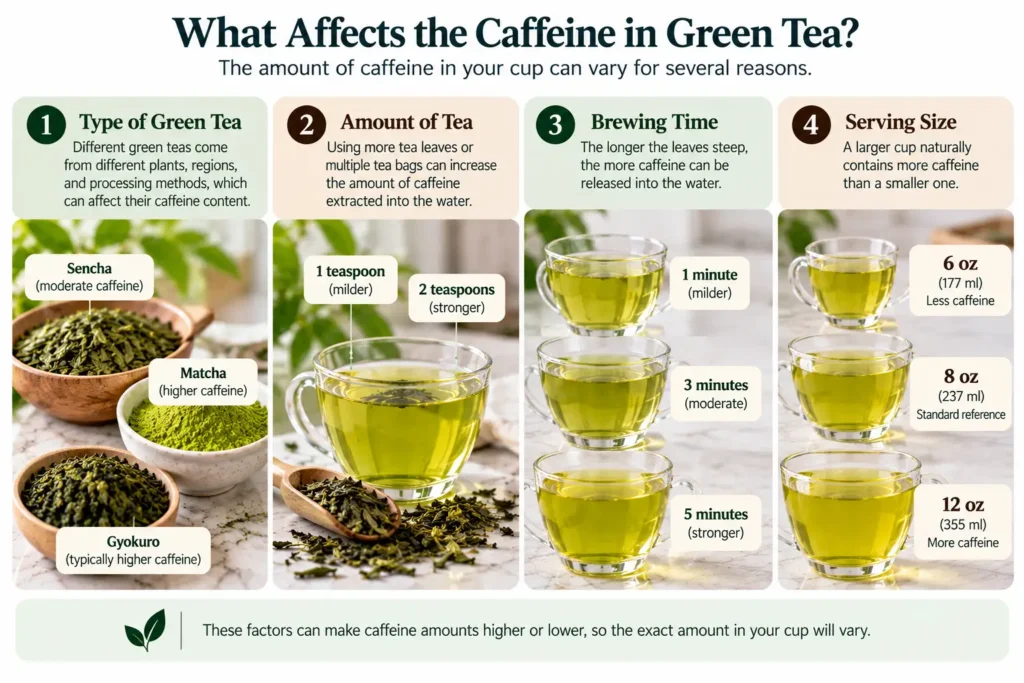
Type of Green Tea
Not every green tea is produced from identical leaves or grown under identical conditions.
The particular tea you choose can therefore affect its caffeine content.
Amount of Tea
Using more tea leaves or multiple tea bags can increase the amount of caffeine available for extraction.
A large mug made with two tea bags shouldn’t automatically be compared with an 8-ounce cup made with one.
Brewing Time
Brewing conditions influence how much caffeine moves from the leaves into the water.
This is one reason caffeine figures for tea are usually estimates rather than universal values.
Serving Size
This is easy to overlook.
A label or chart may give caffeine for an 8-ounce serving while your mug holds 12, 16, or even 20 ounces.
Always compare caffeine amounts using similar serving sizes.
Does Green Tea Have More Caffeine Than Coffee?
Usually, no.
Mayo Clinic lists brewed green tea at about 29 mg per 8 ounces, compared with about 96 mg for 8 ounces of brewed coffee. Mayo Clinic
That makes green tea a lower-caffeine choice in this comparison.
However, this doesn’t mean every green tea contains less caffeine than every coffee.
Product type, serving size, brewing method, and concentration all matter.
Does Green Tea Have Less Caffeine Than Black Tea?
Typically, yes, based on standard brewed-beverage reference values.
For an 8-ounce serving, Mayo Clinic lists approximately:
Green tea: 29 mg
Black tea: 48 mg
Both contain caffeine because both are produced from Camellia sinensis. Mayo Clinic
The numbers can overlap between individual products, however, so don’t treat the difference as an absolute rule for every cup.
If you’re interested in how tea types differ beyond caffeine, our herbal tea vs green tea benefits guide explains another important distinction.
Does Decaf Green Tea Have Caffeine?
Usually, yes — but much less.
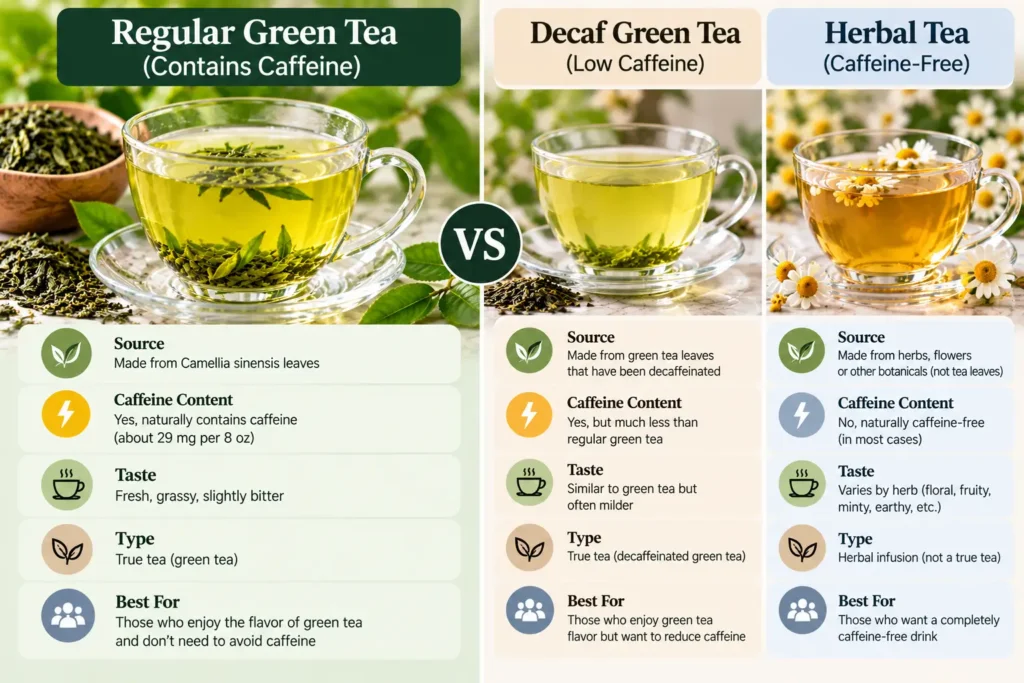
“Decaffeinated” doesn’t necessarily mean completely caffeine-free.
The FDA notes that decaffeinated coffees and teas generally retain some caffeine after processing. U.S. Food and Drug Administration
This distinction matters if you’re especially sensitive to caffeine.
Decaf green tea: caffeine has been removed to a large extent.
Caffeine-free herbal infusion: the ingredients may naturally contain no caffeine in the first place.
Always check the package if avoiding caffeine is particularly important to you.
Is Green Tea Naturally Caffeine-Free?
No.
Regular green tea naturally contains caffeine because it is made from Camellia sinensis leaves.
To substantially reduce the caffeine, the tea has to undergo a decaffeination process.
Alternatively, you can choose a naturally caffeine-free botanical infusion.
For example, pure chamomile tea doesn’t come from traditional tea leaves.
The same distinction applies to pure osmanthus flower tea versus osmanthus blended with green tea.
Does Matcha Have Caffeine?
Yes.
Matcha is made from powdered green tea leaves, so it contains caffeine.
Unlike ordinary brewed green tea, where the leaves are steeped and then removed, matcha involves consuming the powdered tea itself.
The exact caffeine content varies according to the product and the amount of matcha used.
Therefore, don’t assume a matcha drink contains the same amount of caffeine as a standard cup of brewed green tea.
Does Iced Green Tea Have Caffeine?
It can.
Cooling green tea or pouring it over ice doesn’t remove its caffeine.
If you brew caffeinated green tea and then chill it, the resulting iced tea still contains caffeine.
However, bottled iced green tea can have a different caffeine concentration because recipes, serving sizes, and formulations vary.
Check the nutrition or product information when caffeine intake matters to you.
Does Green Tea Have Enough Caffeine to Keep You Awake?
It can, especially if you’re sensitive to caffeine.
Green tea generally provides less caffeine than coffee, but lower doesn’t mean zero.
Some people can drink green tea later in the day without noticing much effect, while others may find that even modest amounts of caffeine interfere with sleep.
Caffeine sensitivity varies from person to person.
If you notice that evening tea affects your sleep, move caffeinated tea earlier in the day or choose a caffeine-free drink instead.
Our guide to the best drinks for better sleep covers alternatives for the evening.
Can You Drink Green Tea Before Bed?
You can, but regular green tea contains caffeine.
Whether that’s a problem depends partly on your individual caffeine sensitivity and how close to bedtime you drink it.
If you’re specifically looking for a bedtime beverage, a naturally caffeine-free infusion may be a more straightforward choice.
Don’t assume that green tea is caffeine-free simply because it feels lighter than coffee.
How Much Caffeine Is Too Much?
Caffeine intake needs to be considered across your entire day, not just one cup of green tea.
For most adults, the FDA says 400 mg per day is an amount not generally associated with negative effects, although sensitivity varies substantially between individuals. The FDA also notes that factors such as medications and certain medical conditions can affect caffeine sensitivity. U.S. Food and Drug Administration
That doesn’t mean everyone should aim for 400 mg.
Some people experience unwanted effects at much lower amounts.
Also remember to count caffeine from:
- coffee
- other teas
- energy drinks
- soft drinks
- chocolate
- certain foods or supplements
- some medications
What Happens If You’re Sensitive to Caffeine?
People respond differently to caffeine.
Too much may contribute to symptoms such as nervousness, restlessness or difficulty sleeping in sensitive individuals.
Mayo Clinic notes that even people staying below 400 mg per day may want to reduce caffeine if they experience unwanted symptoms. Mayo Clinic
If you notice a consistent connection between green tea and symptoms, reducing the amount, choosing decaf, or switching to caffeine-free drinks may help you determine whether caffeine is contributing.
Is Green Tea a Good Alternative to Coffee?
It can be if your goal is simply to choose a beverage that typically contains less caffeine than brewed coffee.
Using Mayo Clinic’s reference values:
8 oz green tea: about 29 mg caffeine
8 oz brewed coffee: about 96 mg caffeine Mayo Clinic
But caffeine isn’t the only consideration when choosing a beverage.
Taste, serving size, added sugar, your overall diet, and individual caffeine tolerance also matter.
For more information about the tea itself, read our green tea benefits guide.
How to Reduce Caffeine From Green Tea
If you enjoy green tea but want less caffeine, the most reliable option is to choose a product specifically labeled decaffeinated.
You can also:
- drink smaller servings
- avoid using multiple tea bags
- check caffeine information provided by the manufacturer
- replace some cups with caffeine-free herbal infusions
Don’t rely on home brewing tricks to guarantee that you’ve removed most of the caffeine.
If strict caffeine avoidance is necessary, choose a beverage specifically identified as caffeine-free.
Green Tea vs. Caffeine-Free Herbal Tea
One of the easiest mistakes is assuming all drinks called “tea” contain caffeine.
They don’t.
Green tea comes from Camellia sinensis and naturally contains caffeine.
Many herbal teas are botanical infusions made without tea leaves and may naturally contain no caffeine.
However, herbal blends can contain added tea or other caffeine-containing ingredients, so checking the label remains important.
You can explore the different options in our complete herbal teas guide.
Frequently Asked Questions
Does green tea have caffeine?
Yes. Regular green tea naturally contains caffeine because it is made from Camellia sinensis. Mayo Clinic lists about 29 mg in an 8-ounce cup of brewed green tea, although actual amounts vary. Mayo Clinic
How much caffeine is in a cup of green tea?
A useful reference is approximately 29 mg per 8-ounce (237 ml) cup of brewed green tea. The exact amount varies according to the tea and preparation. Mayo Clinic
Does green tea have more caffeine than coffee?
Typically, no. Mayo Clinic lists about 29 mg for 8 ounces of brewed green tea versus 96 mg for the same volume of brewed coffee. Mayo Clinic
Does green tea have more caffeine than black tea?
Typical reference values are lower for green tea. Mayo Clinic lists approximately 29 mg for brewed green tea and 48 mg for brewed black tea per 8-ounce serving. Mayo Clinic
Does decaf green tea have caffeine?
Decaffeinated tea can still contain some caffeine. “Decaf” shouldn’t automatically be interpreted as completely caffeine-free. U.S. Food and Drug Administration
Does matcha have caffeine?
Yes. Matcha is powdered green tea and contains caffeine. The amount depends on the product and quantity used.
Does iced green tea have caffeine?
Yes, if it is made from caffeinated green tea. Cooling the drink or adding ice doesn’t remove caffeine.
Can green tea keep you awake?
It can, particularly in people who are sensitive to caffeine or who drink it close to bedtime.
Is green tea caffeine-free?
Regular green tea is not caffeine-free. Look for decaffeinated green tea or choose a naturally caffeine-free botanical infusion if you want to avoid caffeine.
Bottom Line
Green tea does contain caffeine, but typically less than brewed coffee.
A useful benchmark is about 29 mg of caffeine in an 8-ounce cup of brewed green tea, compared with roughly 48 mg in black tea and 96 mg in brewed coffee. Mayo Clinic
The exact amount in your cup can vary with the tea, serving size and preparation.
If you’re reducing caffeine rather than eliminating it, green tea may fit your needs. If you need to avoid caffeine, look for decaffeinated green tea or choose a naturally caffeine-free infusion and check the ingredient label.
2 thoughts on “Does Green Tea Have Caffeine? How Much Is in a Cup?”