

The best time to drink ginger tea for acid reflux is 20–30 minutes before a meal — when it can prime digestion, stimulate gastric motility, and reduce the likelihood of post-meal reflux. However, timing is only part of the equation. How strong you brew it, what you add to it, and whether your stomach is empty all significantly affect whether ginger tea helps or worsens your symptoms. This guide breaks down every timing scenario with clear, practical recommendations.
Why Ginger Tea Is One of the Best Options for Acid Reflux
Before diving into timing, it helps to understand why ginger tea is one of the few herbal drinks that actively benefits reflux sufferers — rather than simply being neutral or harmless.
Ginger (Zingiber officinale) contains two primary bioactive compounds: gingerols (dominant in fresh ginger) and shogaols (dominant in dried ginger). Both have well-documented anti-inflammatory and gastroprotective effects. Specifically relevant for acid reflux:
- Ginger accelerates gastric emptying — it speeds up the rate at which food leaves the stomach, which directly reduces the pressure and acid volume available to reflux upward
- Ginger reduces inflammation in the esophageal and gastric lining — making it easier for irritated tissue to heal
- Ginger has antiemetic properties — it reduces nausea and the urge to regurgitate, which are common GERD symptoms
- Ginger tea is near-neutral in pH (around 7) — unlike hibiscus tea and acid reflux, where the high acidity is the core problem, ginger tea does not add to the acid load in your esophagus
This combination of properties makes ginger one of the most evidence-supported natural approaches to managing mild to moderate acid reflux. For a full overview of what ginger tea does for the body, see our guide on ginger tea benefits.
The Best Time to Drink Ginger Tea for Acid Reflux: By Scenario
The best time to drink ginger tea for acid reflux is not the same for everyone — it depends on your specific reflux pattern, your daily schedule, and what you’re trying to achieve.

1. Before Meals
Optimal timing: 20–30 minutes before eating
Some people prefer ginger tea before a meal, but evidence does not establish a specific pre-meal window as the most effective way to prevent reflux. If you try it, use a modest portion and pay attention to your own symptoms.
- Stimulates digestive enzymes and gastric juice production, preparing the stomach for food
- Begins the process of accelerating gastric motility, so food moves through faster and spends less time sitting in the stomach
- Reduces pre-meal nausea that some GERD patients experience
- Creates a mild warming effect that relaxes the digestive tract without relaxing the lower esophageal sphincter (LES)
Keep the portion small — a 6 oz (180ml) cup is ideal before meals. A large volume of any liquid before eating increases stomach pressure, which can itself trigger reflux.
2. After Meals
Optimal timing: 30–60 minutes after eating
If your reflux typically strikes after eating — especially after large or fatty meals — a small cup of ginger tea 30–60 minutes after the meal can help by continuing to stimulate gastric motility and reducing post-meal bloating and gas pressure.
The key rule here: do not drink ginger tea immediately after eating. Drinking any significant volume of liquid right after a meal dilutes digestive enzymes and adds to stomach volume, increasing reflux risk. Wait at least 30 minutes.
Also avoid lying down after your post-meal ginger tea — stay upright for at least 2 hours after eating.
3. In the Morning
Optimal timing: with or just after breakfast — not on an empty stomach
Some people tolerate ginger tea on an empty stomach, while others experience irritation, nausea, or heartburn. There is no universal rule that everyone with reflux must avoid it while fasting. If it bothers your stomach, try it with food or stop drinking it.
Concentrated ginger tea on an empty stomach can cause stomach irritation, nausea, and — paradoxically — increased stomach acid production in some individuals. The solution is simple: have a small breakfast first (even just a few crackers or a banana), then drink your ginger tea alongside or immediately after.
A morning ginger tea routine, done correctly, can set up better digestion for the entire day. For broader ideas on morning drink routines, our morning hydration drink guide covers the full picture.
4. In the Evening
Optimal timing: 2–3 hours before bed, not right before lying down
Nighttime and early morning reflux — often the most uncomfortable kind, because you’re horizontal and gravity isn’t helping — can be reduced with an evening cup of ginger tea, provided you observe the timing rule strictly.
Drinking ginger tea 2–3 hours before bed:
- Helps clear the stomach of residual food before you lie down
- Reduces nighttime nausea
- Has a mild calming effect on the digestive system
Never drink ginger tea within 30–45 minutes of lying down. Even a near-neutral pH drink adds volume and warmth to the stomach, and the horizontal position removes gravity’s protective role. If you’re looking for drinks that genuinely help with sleep and don’t worsen reflux, our guide to the best drinks for better sleep has a curated list.
5. During a Reflux Episode
Timing: as needed, small sips, room temperature
Ginger tea should not be presented as a proven rescue remedy for an active reflux episode. If you choose to drink it, use a small amount and stop if symptoms worsen. Frequent, severe, or persistent heartburn should be evaluated by a healthcare professional.
Timing Summary Table
| When | Recommended | Notes |
|---|---|---|
| Empty stomach (fasting) | ❌ Avoid | Can irritate stomach, increase acid production |
| 20–30 min before meals | ✅ Best option | Primes digestion, reduces post-meal reflux |
| Immediately after meals | ❌ Avoid | Dilutes enzymes, increases stomach volume |
| 30–60 min after meals | ✅ Good | Helps post-meal heartburn and bloating |
| Morning with breakfast | ✅ Good | With food — never alone |
| 2–3 hours before bed | ✅ Good | Helps nighttime reflux if timed correctly |
| Right before lying down | ❌ Avoid | Gravity removed, worsens nighttime reflux |
| During active reflux | ⚠️ Use with caution | Room temperature, small sips only |
How Strong Should Your Ginger Tea Be for Acid Reflux?
Concentration matters as much as timing. Highly concentrated ginger tea — especially made from large amounts of fresh ginger steeped for a long time — can irritate the stomach lining and trigger nausea in sensitive individuals.
For acid reflux specifically, use this preparation:
- Fresh ginger: 3–4 thin slices (about 1 teaspoon grated) per 8 oz of water
- Steep time: 5–8 minutes maximum
- Temperature: Hot but not boiling — around 85–90°C (185–195°F)
- Amount per serving: 6–8 oz (180–240ml) — no more than 10 oz at once
Ginger tea bags are a convenient alternative. Choose brands that contain 100% ginger root without added flavors or citric acid.
For more general timing guidance across all health goals, our article on the best time to drink ginger tea covers morning, evening, and fasting windows in detail.
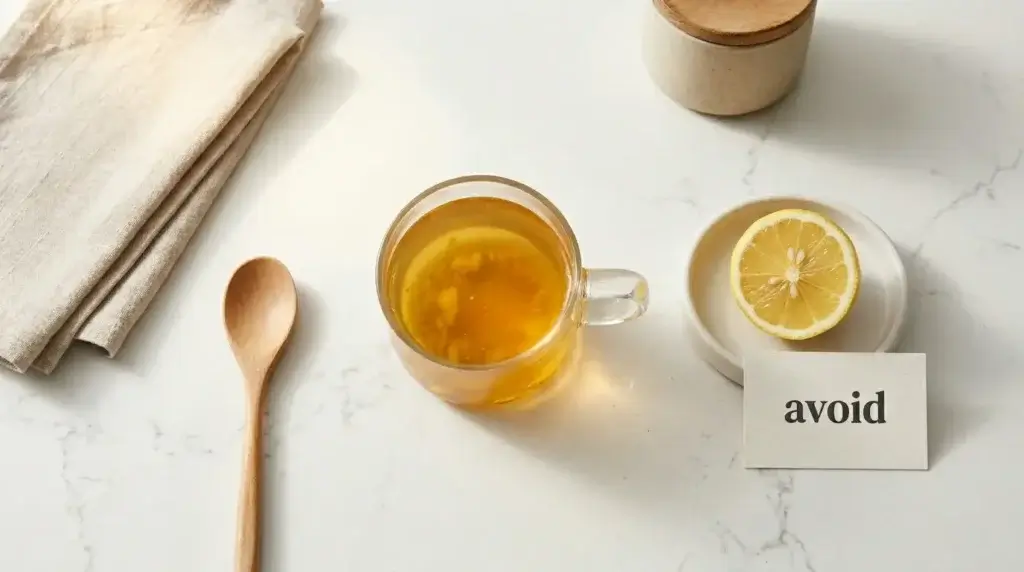
What NOT to Add to Ginger Tea If You Have Acid Reflux
The additions matter enormously. Ginger tea on its own is near-neutral in pH and reflux-friendly. Several common additions change this completely:
Lemon — Avoid
Adding lemon juice to ginger tea is extremely popular in wellness circles, but it drops the pH of the drink from ~7 to below 3 — transforming a reflux-safe drink into an acidic one. For people with acid reflux or GERD, ginger lemon tea is not the same as ginger tea and should be treated with the same caution as other acidic beverages.
Apple Cider Vinegar — Avoid
Some wellness sources recommend adding apple cider vinegar (ACV) to ginger tea for digestive benefits. ACV has a pH of approximately 2.5 and will significantly acidify the drink. Avoid this combination entirely if you have reflux.
Honey — Use According to Tolerance
Raw honey is slightly alkaline and adds a pleasant sweetness without acidifying the drink. It also has mild antibacterial and soothing properties. A teaspoon of honey per cup is the ideal sweetener for reflux sufferers.
Milk or Plant Milk — Safe
Adding a small amount of milk or oat milk creates a creamier, slightly buffered drink. Dairy milk has a near-neutral pH and does not worsen reflux for most people. Avoid soy milk, which is slightly more acidic.
Peppermint — Avoid
Peppermint is widely associated with digestive health, but it is specifically contraindicated for acid reflux. Peppermint relaxes the lower esophageal sphincter — the exact mechanism that causes reflux. Never combine peppermint and ginger if you’re using ginger tea for reflux management.
Ginger Tea vs. Other Herbal Teas for Acid Reflux
Not all herbal teas are equal when it comes to reflux management. Our herbal teas guide covers the full spectrum, but here’s how ginger compares to the most common options:
| Herbal Tea | pH | Effect on Reflux | Best Timing |
|---|---|---|---|
| Ginger tea | ~7 | ✅ Actively beneficial | 20–30 min before meals |
| Chamomile tea | 6–7 | ✅ Soothing, safe | Evening, before bed |
| Licorice root tea | 6–7 | ✅ Protective for esophagus | After meals |
| Slippery elm tea | ~7 | ✅ Coats esophageal lining | After meals |
| Hibiscus tea | 2.5–3.5 | ❌ Can worsen reflux | Avoid or cold brew only |
| Peppermint tea | ~6 | ❌ Relaxes LES | Avoid with reflux |
| Green tea | 7–10 | ⚠️ Caffeine can worsen | Morning with food only |
For a deeper comparison of the herbal vs. green tea category, our article on herbal tea vs green tea benefits is a useful reference.
Building a Ginger Tea Routine for Acid Reflux
For people managing chronic reflux, consistency matters more than any single cup. Here is a practical daily routine that incorporates ginger tea at the optimal moments:
Morning: Small breakfast first (oatmeal, banana, or whole grain toast), then one cup of mild ginger tea with honey alongside or 20 minutes after. This sets up better gastric motility for the day. Pair with a good morning hydration drink routine for maximum benefit.
Lunch: If you typically experience reflux after lunch, have a 6 oz cup of ginger tea 20–30 minutes before your meal rather than with it.
Dinner: Most reflux sufferers have their worst symptoms in the evening. Drink one cup of ginger tea 20–30 minutes before dinner. If you want something warm and soothing after dinner, chamomile is safer than a second cup of ginger. Our warm functional drinks guide has more evening-friendly options.
Before bed: If nighttime reflux is a concern, a very weak cup of ginger tea 2–3 hours before lying down — not right before bed. Elevating the head of your bed by 6–8 inches remains one of the most effective non-pharmacological interventions for nighttime GERD.
For a complete framework on timing different herbal teas throughout the day, our best time to drink herbal tea guide covers the full schedule.
How Much Ginger Tea Is Safe for Acid Reflux?
There is no established number of cups of ginger tea per day that is proven to treat acid reflux. Ginger can cause heartburn, stomach discomfort, or irritation in some people, especially in larger amounts. Start with a modest serving if you choose to drink it and adjust according to tolerance.
The general dose guidelines for reflux management:
- Mild reflux, occasional symptoms: 1 cup before the meal that typically triggers symptoms
- Moderate reflux, daily symptoms: 2 cups per day — one before lunch, one before dinner
- Severe GERD: Ginger tea is a complementary approach, not a substitute for medical treatment. Use alongside prescribed medication, not instead of it
Frequently Asked Questions
What is the best time to drink ginger tea for acid reflux?
There is no clinically proven best time to drink ginger tea for acid reflux. If you enjoy it, choose a time and serving size that you tolerate well, and avoid using ginger tea as a substitute for appropriate treatment of persistent GERD.
Can I drink ginger tea on an empty stomach if I have acid reflux?
Some people tolerate ginger tea on an empty stomach, while others experience nausea, irritation, or heartburn. If it bothers you, try it with food or avoid it.
Does ginger tea help with acid reflux?
Ginger has been studied for nausea and gastric motility, but evidence does not establish ginger tea as a treatment for GERD. Some people tolerate it well, while others find that ginger worsens heartburn. Stop if your symptoms increase.
Can I drink ginger tea before bed if I have acid reflux?
Yes, but with strict timing. Drink it 2–3 hours before lying down, not right before bed. Drinking any liquid right before lying down increases reflux risk because gravity no longer helps keep stomach contents down.
Is lemon ginger tea good for acid reflux?
No. Adding lemon drops the pH of ginger tea below 3, making it as acidic as hibiscus tea or orange juice. For reflux sufferers, drink plain ginger tea with honey — never with lemon.
How many cups of ginger tea per day for acid reflux?
There is no established number of cups per day that is proven to treat acid reflux. If you drink ginger tea, start with a modest serving and adjust according to your tolerance.
Is ginger tea or chamomile tea better for acid reflux?
Neither ginger tea nor chamomile tea should be considered a proven treatment for GERD. Individual tolerance varies, so choose the beverage that does not worsen your symptoms.
Should I drink ginger tea before or after meals for acid reflux?
There is no proven before-or-after-meal timing that prevents reflux. Choose the timing that feels comfortable for you, keep portions modest, and stop if ginger tea worsens your symptoms.
Key Takeaways
- There is no clinically proven best time to drink ginger tea for acid reflux; timing and tolerance vary from person to person.
- Ginger tea is near-neutral in pH (~7), making it one of the most reflux-safe herbal teas available
- Its active compounds (gingerols and shogaols) accelerate gastric emptying and reduce esophageal inflammation — directly addressing the root causes of reflux
- Never add lemon, apple cider vinegar, or peppermint to ginger tea if you have reflux — all three worsen symptoms
- Honey is the ideal sweetener — slightly alkaline, soothing, and reflux-safe
- For nighttime reflux, drink ginger tea 2–3 hours before bed — never right before lying down
- One to two cups per day is the optimal dose for most reflux sufferers
- Ginger tea is a complementary approach — it supports medical treatment but does not replace it for severe GERD