

Spearmint tea benefits are often discussed in relation to digestion, women’s health and hormone-related concerns. Made from the leaves of Mentha spicata, spearmint tea is naturally caffeine-free and has a milder, sweeter flavor than peppermint tea.
Spearmint has attracted particular interest because a small number of human studies have investigated its effects on androgen levels in women, including women with hirsutism or PCOS. Some results are promising, but the studies are limited and do not establish spearmint tea as a treatment for PCOS, hormonal acne, unwanted facial hair or other hormone-related conditions.
Spearmint also contains plant compounds such as carvone, rosmarinic acid and flavonoids. While these compounds have biological activity, their presence does not mean that drinking spearmint tea produces all of the health effects sometimes attributed to them.
In this guide, we’ll look at what research actually says about spearmint tea benefits, testosterone and hormones, PCOS, facial hair, digestion, safety, and how spearmint differs from peppermint.
What Makes Spearmint Different From Peppermint?
Spearmint (Mentha spicata) and peppermint (Mentha × piperita) are related mint plants, but they have different chemical profiles and flavors.
Peppermint is particularly known for its menthol content, which gives it its characteristic cooling sensation.
Spearmint generally contains much less menthol and is characterized by compounds such as carvone, along with rosmarinic acid and other polyphenols.
Spearmint has also been investigated in a small number of human studies for possible effects on androgen levels, particularly in women with hirsutism or PCOS. This area of research has received more attention for spearmint than for peppermint, but the available evidence remains limited.
For this reason, do not treat peppermint and spearmint as interchangeable when discussing hormone research.
Spearmint Tea Benefits: What the Research Shows
1-Spearmint Tea and Androgen Levels
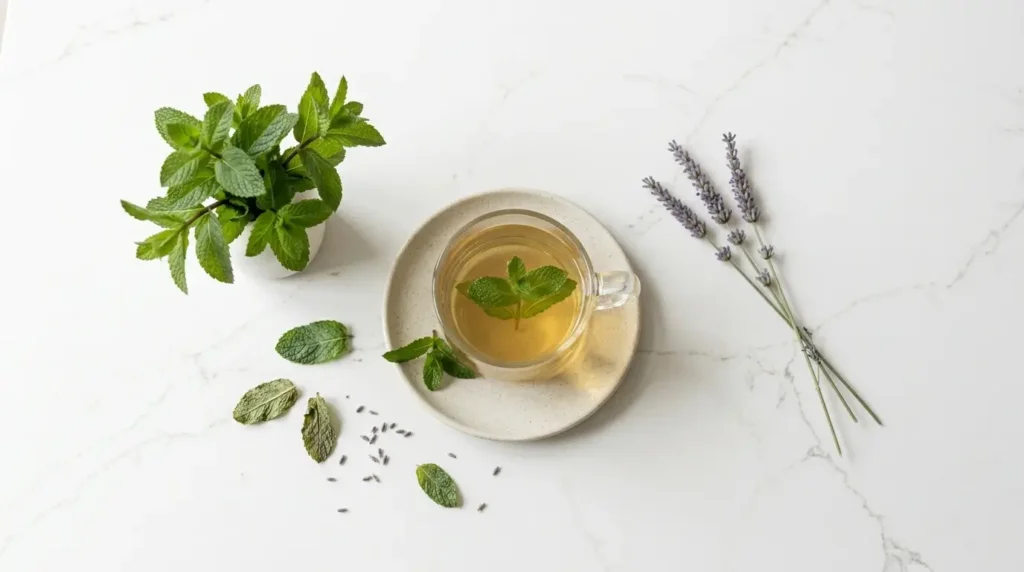
One of the most studied aspects of spearmint tea is its possible effect on androgen levels in women.
A small number of human studies have investigated this question. In one 30-day study involving women with hirsutism, participants who consumed spearmint tea showed changes in some hormone measurements, including free testosterone. Another short-term study also reported changes in free and total testosterone after spearmint tea consumption.
These findings have contributed to interest in spearmint tea for conditions associated with elevated androgens. However, the studies were relatively small and short, and changes in laboratory hormone measurements do not necessarily translate into meaningful improvements in symptoms such as unwanted facial hair, acne or irregular menstrual cycles.
More and larger clinical studies are needed to determine how consistent these effects are, how long they last, and whether drinking spearmint tea produces meaningful clinical benefits.
Spearmint tea should therefore not be considered a substitute for medical evaluation or treatment of elevated androgen levels or related symptoms.
2. Spearmint Tea and PCOS
Spearmint tea has attracted interest among women with polycystic ovary syndrome (PCOS), particularly because elevated androgen levels can be part of the condition.
A small clinical study involving women with PCOS reported changes in some hormone measurements after regular spearmint tea consumption, including a reduction in free testosterone. However, the study was short and involved a relatively small number of participants.
Importantly, changes in hormone levels do not by themselves demonstrate that spearmint tea improves PCOS symptoms or treats the condition. More research is needed to determine whether the effects are consistent and whether they lead to meaningful improvements in symptoms such as hirsutism, acne or menstrual irregularities.
Spearmint tea should not be considered a treatment for PCOS or a replacement for medical care. Women with PCOS who enjoy spearmint tea can consider it a caffeine-free herbal beverage, while treatment decisions should be discussed with a qualified healthcare professional.
3. Spearmint Tea and Hormonal Acne
Spearmint tea is sometimes promoted as a natural option for hormonal acne because androgens can influence sebum production and acne development.
Small studies of spearmint tea have reported changes in androgen levels in some women, which has led to interest in whether the tea could also affect androgen-related skin concerns.
However, the available studies were not designed to establish spearmint tea as an acne treatment, and evidence showing that drinking it visibly improves acne is currently limited.
Changes in blood hormone measurements should not automatically be interpreted as improvements in acne. More direct clinical research is needed before spearmint tea can be considered an evidence-based treatment for hormonal acne.
Persistent, severe or scarring acne should be evaluated by a qualified healthcare professional.
4. Spearmint Tea and Digestion
Spearmint has a long history of culinary and traditional use for digestive comfort, and mint teas are commonly consumed after meals.
Spearmint contains plant compounds that have been studied for biological effects on the digestive system. However, research specifically showing that brewed spearmint tea reliably relieves bloating, gas, nausea, digestive cramps or irritable bowel syndrome (IBS) is limited.
Spearmint and peppermint also have different chemical profiles, so findings about peppermint — particularly research involving peppermint oil — should not automatically be applied to spearmint tea.
Similarly, there is not enough evidence to conclude that spearmint tea is a treatment for acid reflux or that it is necessarily a better choice for everyone with reflux symptoms.
If you experience frequent or persistent digestive symptoms, herbal tea should not replace appropriate medical evaluation.
For more options, see our best tea for digestion and bloating guide.
5. Antioxidant and Anti-Inflammatory Compounds
Spearmint contains rosmarinic acid, flavonoids and other polyphenols that have demonstrated antioxidant and anti-inflammatory activity in laboratory research.
However, laboratory findings about individual plant compounds do not necessarily mean that drinking spearmint tea produces significant antioxidant or anti-inflammatory effects in the human body.
The concentration of these compounds can also vary depending on the leaves, preparation method and strength of the tea.
More human research is needed to determine whether regular consumption of spearmint tea produces meaningful anti-inflammatory or antioxidant health benefits.
6. Spearmint and Cognitive Health
Spearmint has also been studied in relation to cognitive function, but an important distinction is necessary between concentrated spearmint extracts and ordinary brewed tea.
Some research using standardized spearmint extracts has reported improvements in certain measures of memory and cognitive performance. These products can contain specific concentrations of compounds such as rosmarinic acid that may differ substantially from those found in a typical cup of spearmint tea.
For this reason, results from studies of concentrated extracts should not automatically be applied to brewed spearmint tea.
At present, there is not enough evidence to conclude that drinking spearmint tea improves memory, concentration or cognitive function.
7. Spearmint Tea, Relaxation, and Sleep
Spearmint tea is naturally caffeine-free, which makes it a convenient beverage for people who prefer to avoid caffeine in the evening.
A warm cup of herbal tea may also be part of a relaxing bedtime routine. However, there is currently limited human evidence showing that spearmint tea itself reduces anxiety, acts as a sedative or improves sleep quality.
Although spearmint contains flavonoids and other plant compounds that have been studied for various biological activities, these findings should not be interpreted as proof that drinking the tea has a clinically meaningful effect on sleep or anxiety.
For evidence and options involving other evening beverages, see our best drinks for better sleep guide.
How to Make Spearmint Tea
Spearmint tea can be prepared with either dried or fresh spearmint leaves.
Hot spearmint tea:
- Add 1–2 teaspoons of dried spearmint leaves to a cup or tea infuser.
- Pour about 240 ml (8 oz) of hot water over the leaves.
- Cover and steep for 5–7 minutes.
- Strain and serve plain or add a small amount of honey if desired.
Iced spearmint tea:
Prepare the tea as above, allow it to cool, then refrigerate and serve over ice. Add lemon or fresh mint if desired.

Fresh spearmint tea:
Add several washed fresh spearmint leaves to a cup, pour hot water over them and steep for about 5 minutes before straining.
Fresh and dried spearmint can produce slightly different flavors, so you can adjust the amount of leaves and steeping time according to taste.
For more chilled herbal drink ideas, see our cold brew herbal tea recipes guide.
How Much Spearmint Tea Per Day?
There is no established therapeutic dose of spearmint tea for hormonal benefits.
Some small clinical studies investigating androgen levels in women used spearmint tea twice daily. However, the amount used in a study should not automatically be interpreted as a recommended dose for treating PCOS, hirsutism, acne or other hormone-related concerns.
Research is also not sufficient to determine whether drinking more spearmint tea produces greater hormonal effects or whether long-term daily consumption provides additional benefits.
If you enjoy spearmint tea as a beverage, follow the preparation instructions on the product you use. If you are considering regular use specifically for a hormonal or medical concern, discuss it with a qualified healthcare professional.
There is no scientifically established best time of day to drink spearmint tea.
Because plain spearmint tea is naturally caffeine-free, it can generally be enjoyed at different times of the day according to personal preference.
Some people prefer it after meals as a refreshing herbal drink, while others enjoy it in the evening as a caffeine-free alternative to coffee or traditional tea.
Studies investigating spearmint and androgen levels have used specific consumption schedules, but this does not establish that drinking spearmint at a particular time of day improves its hormonal effects.
Consistency and timing recommendations for therapeutic purposes have not been established.
For a broader discussion, see our best time to drink herbal tea guide.
Spearmint Tea Side Effects and Safety

Spearmint tea is commonly consumed as an herbal beverage, but research on the safety of regular or high-dose consumption is more limited than research on its culinary use.
Hormones: Small studies in women have reported changes in some androgen measurements after spearmint tea consumption. However, there is not enough evidence to determine the hormonal effects of long-term use or to assume that the same effects occur in men.
Pregnancy and breastfeeding: Evidence specifically evaluating regular spearmint tea consumption during pregnancy or breastfeeding is limited. If you are pregnant or breastfeeding and plan to drink spearmint tea regularly, discuss it with a qualified healthcare professional.
Medications and medical conditions: Research on interactions between spearmint tea and medications is limited. People taking hormonal medications or managing a hormone-related condition should discuss regular use with their healthcare professional rather than assuming the tea will have a predictable hormonal effect.
Concentrated products: Findings from animal studies or studies using concentrated spearmint extracts should not automatically be applied to ordinary brewed spearmint tea.
If you experience an unexpected reaction after drinking spearmint tea, stop using it and seek appropriate medical advice if necessary.
For more general information about herbal tea safety, see our hibiscus tea side effects guide.
Spearmint Tea vs. Other Herbal Teas
Different herbal teas contain different plant compounds and have been studied for different purposes, so they should not be considered interchangeable.
Spearmint tea has attracted research interest because small human studies have reported changes in some androgen measurements in women. More research is needed to determine whether these changes lead to meaningful improvements in PCOS, hirsutism or acne.
Hibiscus tea has been studied for several health outcomes, particularly blood pressure. This research is different from the studies investigating spearmint and androgen levels.
Ginger tea is commonly consumed for digestive comfort and has been studied in several forms, but results from ginger supplements or concentrated preparations should not automatically be applied to ordinary ginger tea.
Chamomile tea is commonly associated with relaxation and bedtime routines, although the strength of evidence depends on the preparation and outcome being studied.
Peppermint tea differs chemically from spearmint. Research involving peppermint oil or extracts should not automatically be interpreted as evidence about peppermint tea or spearmint tea.
For more information, see our hibiscus tea benefits for women guide and our broader herbal teas guide.
Frequently Asked Questions
What are the benefits of spearmint tea?
Spearmint tea is a naturally caffeine-free herbal tea that has been studied for several potential health effects. Small human studies have reported changes in some androgen measurements in women, while other research has examined compounds in spearmint for antioxidant and biological activity. However, evidence for specific clinical benefits remains limited.
Does spearmint tea help with PCOS?
Small studies have investigated spearmint tea in women with PCOS or hirsutism and reported changes in some androgen measurements, including free testosterone. However, there is not enough evidence to conclude that spearmint tea treats PCOS or reliably improves its symptoms.
Does spearmint tea reduce testosterone in women?
Some small human studies have reported reductions in certain testosterone measurements after spearmint tea consumption. However, the studies were short and involved relatively few participants, so more research is needed to understand the size, consistency and clinical importance of these effects.
How much spearmint tea should I drink for hormonal benefits?
There is no established therapeutic dose of spearmint tea for hormonal benefits. Some studies used spearmint tea twice daily, but a research protocol should not automatically be interpreted as a recommended dose for PCOS, hirsutism, acne or other hormonal concerns.
Does spearmint tea help with facial hair?
Spearmint tea has been studied in women with hirsutism, and some studies reported changes in androgen levels. However, evidence showing that drinking spearmint tea produces a meaningful visible reduction in facial hair is limited.
Does spearmint tea help with hormonal acne?
Spearmint tea is sometimes promoted for hormonal acne because androgens can influence acne development. However, clinical evidence showing that drinking spearmint tea reliably improves acne is currently limited.
Can men drink spearmint tea?
Men can consume spearmint tea as a caffeine-free herbal beverage. Research on its hormonal effects in men is limited, so there is not enough evidence to conclude that normal consumption meaningfully lowers testosterone in men.
Is spearmint tea the same as peppermint tea?
No. Spearmint and peppermint are related but different plants with different chemical profiles. Spearmint generally contains less menthol and is characterized by compounds such as carvone. Research findings involving one should not automatically be applied to the other.
When is the best time to drink spearmint tea?
There is no scientifically established best time to drink spearmint tea. Because plain spearmint tea is naturally caffeine-free, it can be enjoyed at different times of day according to personal preference.
Key Takeaways
- Spearmint tea is a naturally caffeine-free herbal tea made from Mentha spicata.
- Spearmint and peppermint are different plants with distinct chemical profiles and should not be treated as interchangeable.
- Small human studies have reported changes in some androgen measurements after spearmint tea consumption, particularly in women with PCOS or hirsutism.
- These studies are limited and do not establish spearmint tea as a treatment for PCOS, hirsutism, hormonal acne or other hormone-related conditions.
- There is no established therapeutic dose or best time of day to drink spearmint tea for hormonal benefits.
- Evidence showing that spearmint tea visibly reduces facial hair or acne remains limited.
- Research involving concentrated spearmint extracts should not automatically be applied to ordinary brewed spearmint tea.
- The long-term hormonal effects of regular spearmint tea consumption, including its effects in men, are not well established.
- Spearmint tea can be enjoyed as a caffeine-free herbal beverage, but it should not replace appropriate medical care for hormonal or other health conditions.