
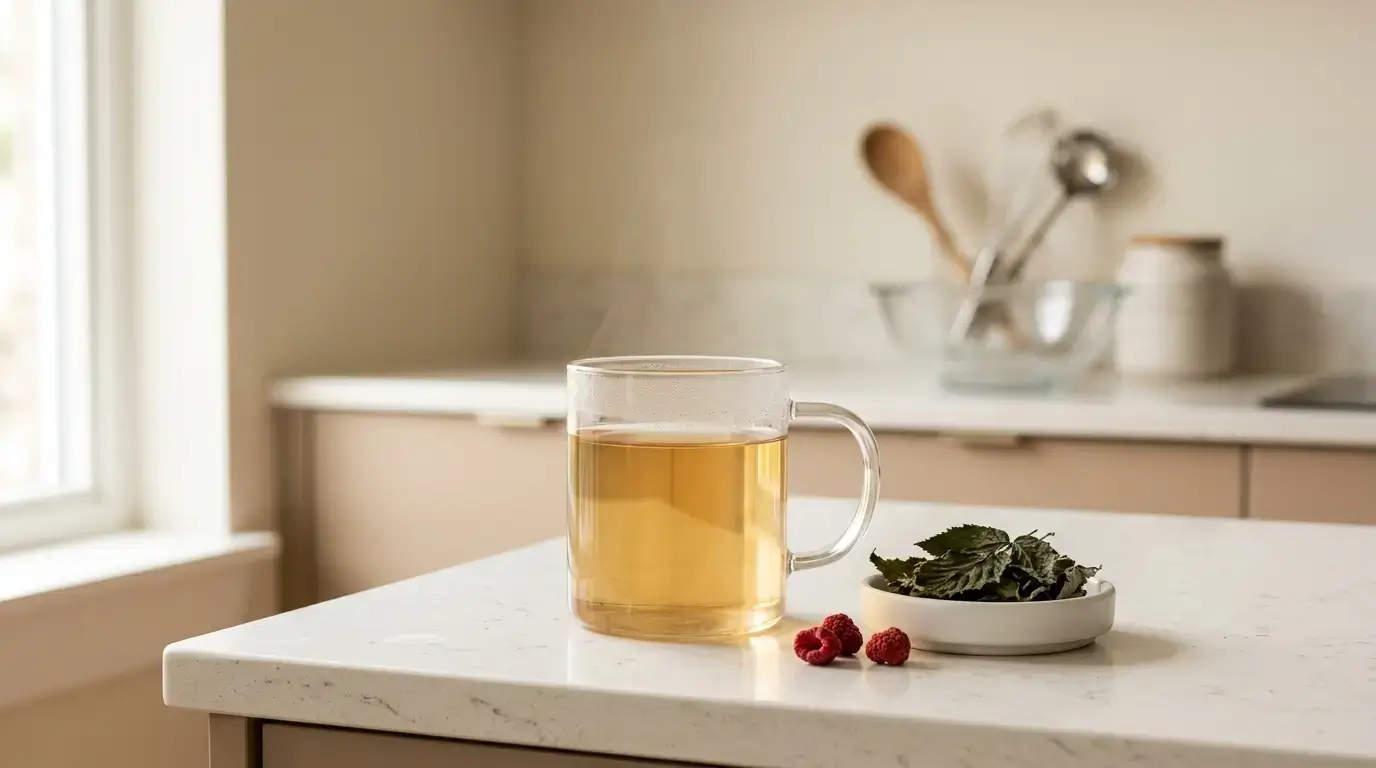
Raspberry leaf tea benefits are often discussed in relation to women’s health, menstruation and pregnancy. Made from the leaves of Rubus idaeus — the same plant that produces red raspberries — this naturally caffeine-free herbal tea has a long history of traditional use.
Raspberry leaf is particularly associated with pregnancy and preparation for labor, but the scientific evidence is more limited and uncertain than many online claims suggest. Research has included laboratory studies, observational research and a small number of human trials, and these findings do not establish all of the benefits commonly attributed to the tea.
Raspberry leaf also contains tannins, flavonoids and other plant compounds, but their presence does not automatically mean that drinking the tea produces specific therapeutic effects.
In this guide, we’ll look at what research actually says about raspberry leaf tea benefits, periods and menstruation, pregnancy and labor, caffeine, possible side effects, and what is known — and not known — about compounds such as fragarine.
What Is Raspberry Leaf Tea?
Raspberry leaf tea is brewed from the dried leaves of Rubus idaeus — the same plant that produces red raspberries, but using the leaf, not the fruit. The flavor is mild, slightly earthy, and gently astringent — often compared to a light black tea, but completely caffeine-free.
Important distinction: raspberry leaf tea is made from the leaf, not the fruit. Raspberry-flavored teas or fruit teas containing raspberry flavor are entirely different products and do not contain the active compounds in raspberry leaf.
Does raspberry leaf tea have caffeine? No. Raspberry leaf tea is completely caffeine-free.
The Active Compounds in Raspberry Leaf
Raspberry leaves contain a mixture of plant compounds, including tannins, flavonoids and other polyphenols. Compounds reported in raspberry leaf include quercetin and kaempferol derivatives, which are also found in many other plants.
Fragarine is frequently mentioned in discussions about raspberry leaf and uterine activity. However, claims that fragarine in a cup of raspberry leaf tea reliably “tones” the uterus or makes contractions more coordinated should be treated cautiously. Laboratory findings about plant compounds do not automatically establish a clinical effect from drinking the tea.
Tannins contribute to raspberry leaf tea’s characteristic astringent taste. Although tannins have biological properties that are studied in plants and laboratory settings, their presence does not prove that raspberry leaf tea treats digestive or inflammatory conditions.
Flavonoids and other polyphenols have antioxidant activity in laboratory research, but this should not be interpreted as evidence that drinking raspberry leaf tea prevents disease or produces a specific therapeutic effect.
The composition of brewed raspberry leaf tea can also vary depending on the product, amount of leaf, steeping method and preparation.
Raspberry Leaf Tea Benefits
1. Raspberry Leaf Tea and Periods
Raspberry leaf tea is commonly associated with menstrual health and is traditionally used by some people during their periods.
You may see claims that raspberry leaf tea relieves menstrual cramps by affecting uterine smooth muscle. However, good-quality human clinical evidence showing that drinking raspberry leaf tea reliably reduces period pain is limited.
Research on raspberry leaf and uterine activity does not provide enough evidence to establish raspberry leaf tea as a treatment for dysmenorrhea or to determine a proven dose for menstrual cramps.
If you enjoy raspberry leaf tea during your period, it can be consumed as a naturally caffeine-free herbal beverage, but it should not be presented as a proven treatment for painful or heavy periods.
Persistent, severe or unusually painful periods can have underlying causes and are worth discussing with a healthcare professional.
2. Raspberry Leaf Tea and Labor Preparation

Raspberry leaf tea is widely associated with pregnancy and preparation for labor, particularly during the later stages of pregnancy. However, its popularity and long history of traditional use should not be confused with strong evidence of effectiveness.
A small number of human studies have investigated raspberry leaf preparations during pregnancy. Some have reported differences in certain labor outcomes, while others have not found clear or clinically meaningful benefits.
Importantly, studies have used different forms of raspberry leaf, including tablets and tea, so results from one preparation should not automatically be applied to another.
Current evidence is not strong enough to conclude that raspberry leaf tea reliably shortens labor, makes contractions more efficient, reduces the need for assisted delivery, or improves pregnancy outcomes.
It is also frequently described online as either a “labor-inducing” herb or a “uterine tonic.” The available human evidence does not establish either claim with certainty.
Because pregnancy is a situation in which individual medical circumstances matter, anyone considering raspberry leaf tea during pregnancy should discuss it with their midwife, obstetrician or other qualified healthcare professional.
3. When Can You Drink Raspberry Leaf Tea During Pregnancy?
One of the most common questions about raspberry leaf tea is when it can be consumed during pregnancy.
There is no universally established gestational week or evidence-based dosing schedule for raspberry leaf tea during pregnancy. Recommendations found online can vary considerably, and schedules such as starting at a specific week and gradually increasing the number of cups should not be treated as established medical guidance.
Research involving raspberry leaf preparations has generally focused on later pregnancy, but the available evidence is limited and does not establish an ideal starting time, dose or frequency for brewed raspberry leaf tea.
Pregnancy circumstances also differ from person to person. Factors such as pregnancy complications, previous preterm birth, multiple pregnancy, placental conditions or previous uterine surgery may affect whether an herbal product is appropriate.
For this reason, if you are pregnant and considering raspberry leaf tea, ask your midwife, obstetrician or other qualified healthcare professional whether it is appropriate for your individual pregnancy and when — if at all — you should start drinking it.
4. Minerals and Nutritional Content
Raspberry leaves naturally contain minerals and other plant compounds, but the amount that ends up in a cup of brewed raspberry leaf tea can vary considerably depending on the product and preparation method.
For this reason, raspberry leaf tea should not be presented as a significant source of iron, calcium, magnesium or vitamin C without reliable nutritional data for the prepared beverage.
In particular, drinking raspberry leaf tea should not be considered a treatment for iron deficiency or anemia, including during menstruation or pregnancy.
If iron intake or iron deficiency is a concern, appropriate foods, fortified products, supplements when recommended, and medical evaluation provide more reliable approaches than relying on herbal tea.
5. Raspberry Leaf Tea and Digestion
Raspberry leaf contains tannins, which contribute to its astringent taste and help explain its traditional use in herbal preparations for digestive complaints.
However, traditional use and the presence of tannins do not establish that drinking raspberry leaf tea treats diarrhea, gastroenteritis, intestinal inflammation or other digestive conditions.
Human research specifically evaluating raspberry leaf tea for digestive health is limited, so any digestive benefits should be considered uncertain rather than established.
Puis remplace “6. Antioxidant and Anti-Inflammatory Activity” par :
6. Antioxidant and Anti-Inflammatory Compounds
Raspberry leaves contain flavonoids and other polyphenols, including compounds related to quercetin and kaempferol. These plant compounds are widely studied for their antioxidant and biological activity.
However, antioxidant or anti-inflammatory activity observed in laboratory research does not necessarily translate into measurable health benefits from drinking raspberry leaf tea.
More human research is needed to determine whether regularly drinking raspberry leaf tea produces meaningful antioxidant or anti-inflammatory effects in the body.
Raspberry Leaf Tea vs Other Herbal Teas
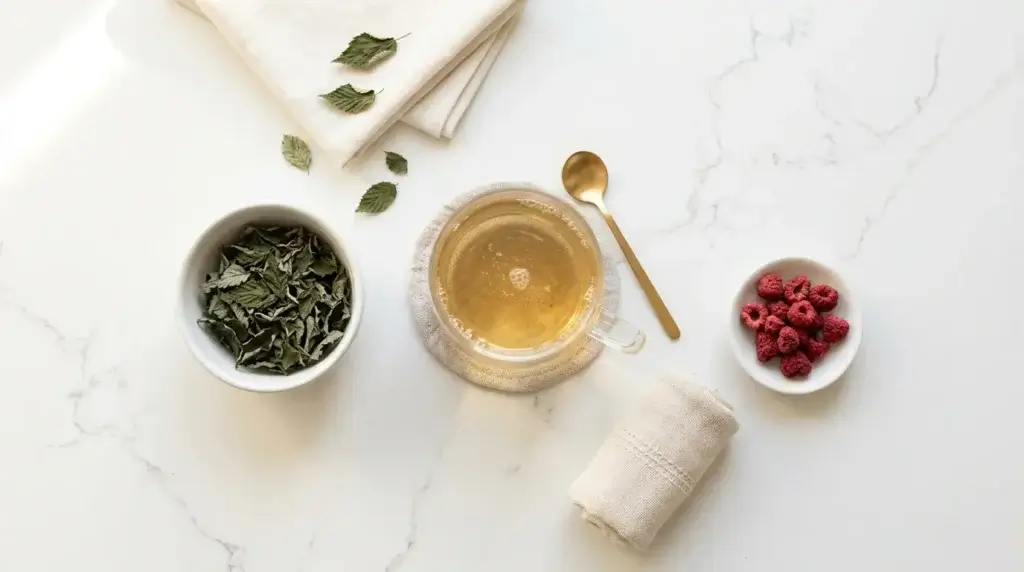
Raspberry leaf tea is often grouped with other herbal teas used in women’s wellness, but these teas contain different plant compounds and have been studied for different purposes.
Raspberry leaf tea is traditionally associated with menstruation and pregnancy, although human evidence supporting specific benefits remains limited.
Red clover tea contains isoflavones, which can interact with estrogen receptors. Most menopause research, however, has studied standardized red clover extracts rather than ordinary brewed tea.
Spearmint tea has been investigated in small studies related to androgen levels, but the evidence is not sufficient to treat it as a therapy for hormonal conditions.
Hibiscus tea has been studied for several health outcomes, particularly blood pressure, but it should not be considered interchangeable with raspberry leaf or other herbal teas.
The safety of herbal teas can also differ during pregnancy, when taking medications, or when managing a medical condition. A tea that is appropriate for one person may not be appropriate for another.
For more information, see our guides on red clover tea benefits, spearmint tea benefits, and hibiscus tea benefits for women.
Can Men Drink Raspberry Leaf Tea?
Raspberry leaf tea is often marketed toward women because of its traditional association with menstruation and pregnancy, but the plant itself is not exclusively used by women.
Men can drink raspberry leaf tea as a caffeine-free herbal beverage. However, research specifically investigating raspberry leaf tea in men is very limited, so claims about particular benefits for male health are not well established.
There is currently insufficient evidence to conclude that drinking raspberry leaf tea meaningfully increases or decreases testosterone, DHT or other male hormones.
Similarly, while raspberry leaves contain tannins, flavonoids and minerals, their presence should not be interpreted as proof that the brewed tea provides significant nutritional, digestive or hormonal benefits.
For most people, it makes more sense to think of raspberry leaf tea as an herbal beverage rather than a treatment or supplement targeted to male health.
How to Make Raspberry Leaf Tea
Print
Standard hot brew
A simple raspberry leaf tea using dried red raspberry leaves — the right steeping time extracts the maximum tannins and fragarine content for uterine toning and menstrual support benefits.
- Total Time: 12 minutes
- Yield: 1 cup (240ml) 1x
Ingredients
- 1–2 tsp dried red raspberry leaves per 240ml water
- 240ml (8 oz) hot water at 90°C (195°F)
- Raw honey to taste (optional)
- Fresh lemon juice (optional)
- Ice (for iced version)
Instructions
- Add dried raspberry leaves to your cup or infuser.
- Pour hot water at 90°C over the leaves.
- Cover while steeping to preserve volatile compounds.
- Steep for 5–10 minutes — 5 minutes for lighter flavor, 10 minutes for stronger.
- Strain through a fine mesh strainer.
- Add honey and a small squeeze of lemon if desired.
- For iced tea: brew double-strength and pour over ice.
Notes
Raspberry leaf tea has a mild, slightly earthy, gently astringent flavor similar to black tea but lighter and without caffeine. The astringency comes from tannins — the same compounds that contribute to its uterine-toning properties. For pregnancy use (third trimester only, from 32–34 weeks), start with 1 cup per day and increase to 2–3 cups as advised by your midwife. Always consult your healthcare provider before use during pregnancy.
- Prep Time: 2 minutes
- Cook Time: 10 minutes
- Category: Drinks
- Method: Steeping
- Cuisine: Universal
Nutrition
- Serving Size: 1 cup (240ml)
- Calories: 2
- Sugar: 0g
- Sodium: 1mg
- Fat: 0g
- Saturated Fat: 0g
- Unsaturated Fat: 0g
- Trans Fat: 0g
- Carbohydrates: 1g
- Fiber: 0g
- Protein: 0g
- Cholesterol: 0mg
Keywords: raspberry leaf tea benefits, how to make raspberry leaf tea, red raspberry leaf tea, raspberry leaf tea pregnancy, raspberry leaf tea recipe
Cold iced version:

Prepare the tea as above, allow it to cool, then refrigerate and serve over ice. Fresh raspberries, lemon or mint can be added for flavor.
Raspberry leaf tea has a mild, earthy and slightly astringent flavor. Despite its name, it does not usually taste strongly of raspberries because the tea is made from the leaves rather than the fruit.
For more chilled herbal drink ideas, see our cold brew herbal tea recipes guide.
Raspberry Leaf Tea Side Effects and Safety
Raspberry leaf tea is commonly consumed as an herbal beverage, but research on its safety — particularly during pregnancy and with regular or concentrated use — is limited.
Pregnancy: Raspberry leaf is frequently used during later pregnancy, but there is not enough high-quality evidence to establish a universally safe starting week, dose or frequency. If you are pregnant, discuss raspberry leaf tea with your midwife, obstetrician or healthcare professional before using it.
Medications and medical conditions: Research on potential interactions between raspberry leaf tea and medications is limited. If you take prescription medication or have a medical condition, ask a healthcare professional before using raspberry leaf regularly.
Hormone-sensitive conditions: Claims that raspberry leaf tea has clinically meaningful estrogen-like effects are not well established. However, people managing a hormone-sensitive condition should discuss herbal products with their healthcare professional rather than relying on claims about hormonal effects found online.
Possible side effects: Human safety data are limited, and individual responses can vary. Stop using the tea and seek appropriate medical advice if you experience an unexpected or concerning reaction.
Raspberry leaf tea should not be used as a substitute for medical care during pregnancy or for menstrual, digestive or other health conditions.
For more general information about evaluating herbal tea safety, see our hibiscus tea side effects guide.
Frequently Asked Questions
What are the benefits of raspberry leaf tea?
Raspberry leaf tea is traditionally associated with women’s health, menstruation and pregnancy. However, human research supporting many of its commonly claimed benefits is limited. Raspberry leaves contain tannins, flavonoids and other plant compounds, but more research is needed to determine the specific health effects of drinking the tea.
When should I start raspberry leaf tea in pregnancy?
There is no universally established week for starting raspberry leaf tea during pregnancy. Research is limited, and recommendations can vary. If you are pregnant, ask your midwife, obstetrician or healthcare professional whether raspberry leaf tea is appropriate for you and when, if at all, you should start drinking it.
Does raspberry leaf tea induce labor?
There is not enough high-quality evidence to conclude that raspberry leaf tea induces labor. It is often associated with preparation for labor, but research has not established that drinking the tea reliably starts labor, shortens labor or improves delivery outcomes.
Is raspberry leaf tea safe during pregnancy?
Raspberry leaf tea is commonly used during pregnancy, particularly later in pregnancy, but safety data are limited. There is no universally established safe starting week or dose. Pregnant women should discuss its use with their midwife, obstetrician or healthcare professional.
Does raspberry leaf tea help with period pain?
Raspberry leaf tea has a history of traditional use for menstrual complaints, but good-quality human evidence showing that it reliably reduces period cramps is limited. It should not be considered a proven treatment for painful periods.
Can raspberry leaf tea induce a period?
Plain raspberry leaf tea is naturally caffeine-free. However, check the ingredient list when buying a tea blend because products containing black tea, green tea or other caffeinated ingredients may contain caffeine.
Does raspberry leaf tea have caffeine?
Plain raspberry leaf tea is naturally caffeine-free. However, check the ingredient list when buying a tea blend because products containing black tea, green tea or other caffeinated ingredients may contain caffeine.
Is raspberry leaf tea the same as raspberry fruit tea?
No. Raspberry leaf tea is made from the leaves of the raspberry plant, while raspberry fruit tea or raspberry-flavored tea is usually made with fruit, flavorings or other herbs. They should not be treated as the same product.
Can men drink raspberry leaf tea?
Men can drink raspberry leaf tea as a caffeine-free herbal beverage. However, research specifically studying raspberry leaf tea in men is limited, and there is not enough evidence to claim specific hormonal or male-health benefits.
Key Takeaways
- Raspberry leaf tea is a naturally caffeine-free herbal tea made from the leaves of Rubus idaeus, not from raspberry fruit.
- It has a long history of traditional use, particularly in relation to menstruation, pregnancy and women’s health.
- Human evidence supporting specific benefits for menstrual cramps, labor preparation or other health conditions remains limited.
- Raspberry leaf contains tannins, flavonoids and other plant compounds, but their presence does not prove that drinking the tea produces specific therapeutic effects.
- There is no universally established starting week or dosing schedule for raspberry leaf tea during pregnancy.
- Pregnant women should discuss raspberry leaf tea with their midwife, obstetrician or healthcare professional before using it.
- There is not enough reliable evidence to conclude that raspberry leaf tea induces labor or brings on a menstrual period.
- Plain raspberry leaf tea is naturally caffeine-free, although blended products may contain caffeinated ingredients.
- Raspberry leaf tea and raspberry fruit tea are different products and should not be treated as interchangeable.