
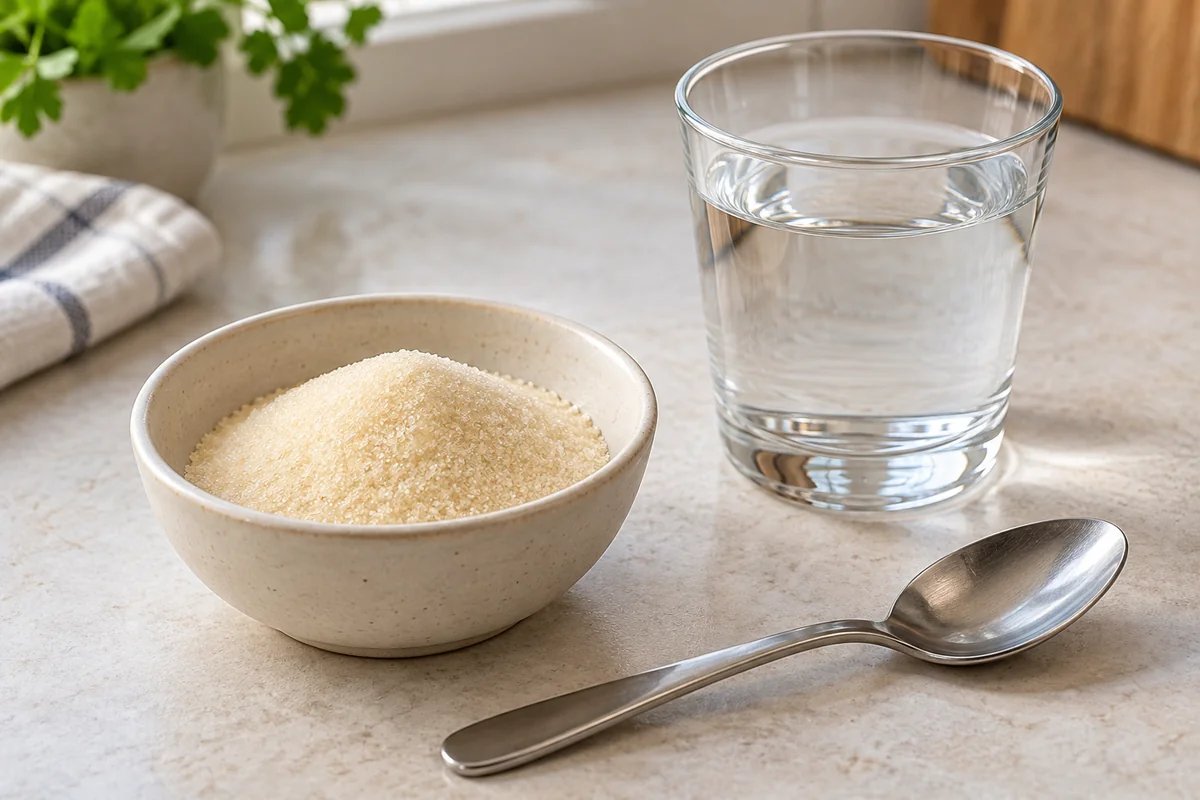
The “horse gelatin trick” is an online label used for gelatin mixtures and products promoted to men. It is not a standardized medical treatment, and credible human clinical evidence establishing that the named trick improves erections, testosterone, or penis size was not identified in the sources reviewed for this article. The word “horse” does not tell you where a product’s gelatin comes from or whether its claims are reliable.
If you searched for a horse gelatin recipe, the useful first step is to identify exactly what the page is offering. A household food ingredient, a homemade mixture, and a commercial sexual-enhancement supplement are different things. A familiar ingredient does not validate a treatment promise attached to it.
This guide explains the name, the recipe questions, and the evidence readers should look for. It does not prescribe a gelatin dose or present a homemade drink as a remedy for erectile dysfunction. For health concerns, use a qualified clinician rather than a recipe video to decide what needs assessment.
What is the horse gelatin trick?
In the online material reviewed, “horse gelatin trick” describes a loosely defined wellness or performance claim rather than a single reproducible formula. Some pages discuss plain gelatin in a drink; others use similar language around products, ingredients, or purchase links. The exact contents need to be checked on each page or package.
The phrases “horse gelatin for men,” “gelatin horse trick,” and “horse gelatin recipe for men” can lead readers to the same basic question: is there an actual ingredient or method behind the name, and does it deliver the advertised result? Changing the phrase does not create a new body of evidence.
Treat the name as a search term, not a specification. Before evaluating a claim, you should be able to identify the product, its complete ingredients, the proposed outcome, and the evidence offered. If a page never provides those details, the mystery itself is not a reason to trust it.
Does the horse gelatin trick work?
There is not a reliable basis in the reviewed sources to recommend this named trick for male sexual performance. A nutritional explanation about collagen or amino acids is not the same as a clinical trial showing a meaningful change in erections, testosterone, or another specific outcome.
The NCCIH guidance on erectile dysfunction and sexual enhancement states that complementary approaches have not been shown to be both safe and effective for sexual enhancement or treating erectile dysfunction. Its discussion is general guidance, not a clinical test of every product using the horse gelatin name.
That distinction matters. The absence of adequate evidence does not mean this article has tested every formulation and found the same result. It means a reader should not accept the treatment claim without credible evidence for the actual intervention being sold or described.
Ask what “work” means in the advertisement. A pleasant taste, a temporary feeling of fullness, and improved erectile function are different outcomes. If a testimonial changes between those meanings, it can make a modest experience appear to support a much larger claim.
Horse gelatin recipe: is there one verified formula?
No standardized, clinically validated recipe for this named trick was identified in the reviewed sources. A mixture circulating online should not be described as the medically correct formula simply because several websites repeat it.
If a recipe page lists ordinary unflavored gelatin, that ingredient should be identified as ordinary gelatin. If it adds honey, baking soda, a powder, or another ingredient, evaluate that version separately. Do not combine ingredients from several pages while assuming they belong to one approved protocol.
The amount used in a food preparation is also not a medical dose for sexual performance. Instructions on a food-grade gelatin package explain its intended culinary use. They do not establish a schedule for boosting testosterone or treating erectile dysfunction.
For that reason, this article does not supply a “take this daily for results” formula. Readers looking for an ordinary beverage can choose a clearly described recipe without attaching an unverified performance claim. Our lemon ginger tea recipe is one example of a drink with a straightforward culinary purpose.
Does the Horse Gelatin Trick Work for Erectile Dysfunction?
No reliable clinical evidence establishes the “horse gelatin trick” as a treatment for erectile dysfunction. Gelatin is a food ingredient made from collagen, but that fact does not show that eating or drinking it improves erections. Evidence for an ED treatment needs to test erectile function directly in people using a defined intervention.
Erectile dysfunction can have cardiovascular, metabolic, medication-related, hormonal, neurologic, or psychological causes. Persistent ED deserves proper medical assessment rather than relying on an online gelatin formula.
Horse Gelatin for Penis Growth: Is There Evidence?
There is no good clinical evidence that gelatin, collagen, or a homemade “horse trick” increases penis size. Claims about collagen supporting connective tissue should not be stretched into a claim of permanent penile enlargement.
What to check before following a recipe page
Identify every ingredient and check whether the preparation is genuinely intended for human consumption. Read the original package rather than relying on a screenshot of a spoon or a scoop. A scoop from an unidentified powder provides no dependable information about its contents.
Separate optional culinary additions from supplement instructions. A flavored drink and a supplement regimen should not become interchangeable because a recipe writer placed them in the same paragraph. If the directions depend on a commercial product, its identity and label should be visible.
Finally, look for a clear explanation of the limits of the recipe. A page that supplies preparation steps but no support for its promised medical outcome has explained how to mix something, not why it should treat that outcome.
Is horse gelatin really made from horses?
The name does not establish the source. Gelatine Manufacturers of Europe explains that commercial gelatin is obtained from animal collagen, with commonly described sources including pigs, cattle, and fish. A product’s label or manufacturer documentation is more informative than a viral nickname.
Do not replace one unsupported assumption with another. It would be misleading to say every item called horse gelatin contains horse-derived material. It would also be misleading to guarantee that no product using the name could ever use that source. Identify the actual item first.
For dietary preferences, ask about the species and any relevant certification. A package labeled simply “gelatin” may not answer every question you have about origin. Descriptive marketing words such as premium or natural do not provide that missing information.
This source question is separate from effectiveness. Confirming that a powder contains food-grade bovine gelatin, for example, does not demonstrate a benefit for erections. It only tells you more about the ingredient.
For a fuller explanation of ingredient origins and culinary choices, read our guide to what gelatin is made of.

Gelatin, collagen, and the performance claim
Gelatin’s relationship to collagen is often used as a starting point for marketing explanations. However, knowing the origin of an ingredient does not establish that consuming it produces an advertised change in sexual function.
When an explanation moves from “contains a protein” to “improves performance,” look for the missing evidence between those statements. A diagram about a body pathway can be interesting while still failing to show that the named recipe changes that pathway in people.
Similarly, research about a different ingredient, a different formulation, or an unrelated outcome does not automatically validate this trick. Before accepting a citation, compare the actual intervention and the measured result with what the advertisement promises.
For a culinary comparison, our protein shake recipes identify their food ingredients and portions. A drink’s nutritional role can be discussed directly without turning it into a testosterone or erectile-function treatment.
What counts as useful evidence?
A meaningful study should identify what participants received, how results were measured, and what comparison was made. A claim about an intervention that is never defined cannot be evaluated in the same way as a clearly described treatment.
Look for the study title, authors, journal, and a link to the actual paper or trial record. The sentence “researchers proved it works” is not enough. You should be able to trace the statement beyond the page selling the product.
Ask whether the participants and outcome match the claim. An experiment in animals is not a demonstration of improved erections in adult men. A report about a food’s laboratory properties is not a human treatment trial.
Also distinguish a study result from a prediction. Even if researchers investigate an ingredient, a recipe page should not assign every reader the same result or guarantee a deadline. The words clinical, doctor-approved, or science-backed need a checkable basis.
The NIH introduction to understanding clinical studies provides background on how research is organized. Use that framework to ask better questions, not to award a scientific label to an advertisement.
Horse gelatin reviews: what testimonials can and cannot show
A review can describe an individual’s experience. It cannot, by itself, isolate the effect of a mixture from other things happening in that person’s life. Changes in expectations, medicines, routines, or health can complicate the story.
Check what product was actually reviewed. “Horse gelatin worked for me” is difficult to interpret if the person never names the product or states the ingredients. A review of a branded supplement should not be presented as a test of plain culinary gelatin.
Look for disclosures about free products, commissions, or other commercial relationships. A financial connection does not automatically make every statement false, but readers deserve to know about it when evaluating the recommendation.
Be especially cautious about identical reviews appearing in several places. Repetition does not create independent confirmation. Count the original sources and ask whether their details can be checked.
This article does not rate a named horse gelatin supplement or claim to have tested one. Without an identified product, a star rating would offer an appearance of precision without a clear object being evaluated.
Why commercial supplements require a separate check
The safety of an ordinary food ingredient does not establish the safety of a product marketed for sexual enhancement. Additional ingredients, labeling, and manufacturing are relevant. A powder sold under an appealing name is not automatically equivalent to gelatin from a familiar food package.
The FDA’s sexual-enhancement product notifications describe products found to contain undisclosed drug ingredients. That is a warning about identified products and this broader market, not proof that ordinary gelatin is contaminated or that every product with this nickname has been tested.
If you are evaluating a commercial item, look up its exact name and manufacturer. Do not use the absence of one name from a warning list as a safety certification. A database is a record of known findings, not a guarantee that every unlisted product has been reviewed.
Do not stop or change prescribed medicine to try an online supplement. The product information and your medicine list should be considered together by an appropriate professional if you have questions about use.
What about baking soda, honey, and other “horse tricks”?
Search results can place several named tricks close together. That does not make them one recipe, and it does not show that combining them improves an outcome. Confirm the ingredient list of the specific material you are reading.
If a page changes from gelatin to baking soda while keeping the same promise, ask what evidence supports the new intervention. Do not assume a shared nickname means the ingredients have the same function.
Our guide to whether baking soda is safe to drink covers that ingredient’s ingestion questions separately. This article focuses on the horse gelatin claim; it does not supply a second baking-soda formula.
Household chemicals should not be added to a drink because they appear in a related search or a wellness video. The FDA has warned about harm from ingesting concentrated hydrogen peroxide. A product described as food grade is not thereby a beverage ingredient or treatment.
Does the trick help with weight loss?
The male-performance claim and a weight-loss claim need separate evidence. A page should not use uncertainty about one to imply success with the other. Nor does adding gelatin to a drink establish that it burns fat.
Consider the whole preparation if you are choosing an ordinary beverage. Sweeteners, juice, powders, and serving size can change what you consume. A drink with a dramatic name still has ingredients that belong in your overall eating pattern.
Our cortisol cocktail recipe and explanation of its claims makes a similar distinction between a culinary drink and a hormone-related promise. That is a useful way to approach this topic without assuming that different viral names validate one another.
Do not use a feeling of fullness or a short-term change on the scale as evidence that a recipe improved testosterone or erectile function. Those are different observations. A convincing story must still answer the exact outcome it claims to support.
If your concern is erectile dysfunction
The NIDDK erectile dysfunction resource describes ED as a health issue with different possible causes and available approaches to diagnosis and treatment. A recipe search cannot identify the cause for an individual reader.
If the problem persists or worries you, discuss it with a qualified clinician. Bring information about medicines and supplements you use rather than trying to solve it through several unnamed powders. A straightforward conversation can be more useful than repeatedly changing internet remedies.
You do not need to diagnose yourself with low testosterone based on an advertisement. A symptom, a hormone test, and a treatment decision are separate steps. A product’s marketing should not collapse them into a promise that one ingredient fixes everything.
The purpose of this article is to help you evaluate the online claim. It is not a personalized diagnosis or a recommendation for a specific ED medicine, supplement, or treatment schedule.
A practical way to evaluate the next claim you see
Start with a clear question: what is being sold or prepared, and what exact result is promised? Write down the ingredients and the original source of the claim. Avoid filling in missing details from unrelated posts.
Next, look for evidence you can trace. Follow the link to the actual research and compare its intervention, participants, and outcome with the advertisement. If the link leads only to another promotional page, the original claim remains unsupported.
Finally, separate enjoyment from treatment. An ordinary food preparation can have a place in cooking without providing the advertised medical effect. A reader can choose a beverage they like while declining the claim that its nickname gives it special powers.
For the horse gelatin trick specifically, the most defensible conclusion is that the reviewed material does not establish a reliable treatment effect for the named method. Product identification, appropriate evidence, and professional advice for health concerns matter more than a recurring online phrase.
FAQS
What is the horse gelatin trick for men?
It is an online label used for gelatin-related mixtures or products promoted to men. It does not identify one standardized recipe or clinically established treatment. Check the exact product and ingredients before evaluating a claim.
Does the horse gelatin trick work for erectile dysfunction?
Credible human clinical evidence establishing an ED treatment effect for the named trick was not identified in the reviewed sources. Do not substitute the recipe or an unidentified supplement for appropriate assessment and treatment.
Is horse gelatin actually made from horses?
The name does not identify the animal source. Commercial gelatin commonly uses pig, cattle, or fish materials. Check the actual product label or manufacturer documentation instead of assuming its source from the nickname.
Is there an official horse gelatin recipe?
No standardized, clinically validated formula was identified in the sources reviewed for this article. A culinary mixing instruction does not establish a dose for sexual performance or testosterone.
Are horse gelatin reviews proof that it works?
No. Testimonials can describe experiences but do not establish a causal treatment effect. Check the identified product, commercial disclosures, and whether any cited clinical evidence matches the claim.
Can the horse gelatin trick increase testosterone or penis size?
The reviewed sources did not establish those effects for the named trick. Nutritional claims about gelatin or collagen do not, by themselves, demonstrate a change in testosterone or penis size.