

Can pregnant women drink hibiscus tea? Because there is not enough reliable human research to establish its safety during pregnancy, regular or medicinal use of hibiscus tea is generally best avoided unless your healthcare professional specifically advises otherwise.
Most concerns come from animal research and the traditional medicinal use of hibiscus rather than clinical trials showing that ordinary hibiscus tea causes miscarriage in pregnant women. This distinction is important: limited safety evidence does not mean that a cup of hibiscus tea has been proven to cause pregnancy complications, but it does mean that researchers cannot establish a safe amount during pregnancy.
The same question applies to drinks made from Hibiscus sabdariffa under other names, including roselle tea, karkade, bissap and agua de jamaica.
Below, we’ll look at what the evidence actually shows, why caution is recommended during pregnancy, what to do if you already drank hibiscus tea, and which beverage alternatives you can discuss with your healthcare professional.
Why Is Hibiscus Tea Usually Avoided During Pregnancy?
The main concern with hibiscus tea during pregnancy is the lack of adequate human safety data.
Hibiscus has a history of traditional medicinal use related to menstruation, and laboratory and animal research has raised questions about possible reproductive effects. However, these findings do not establish that drinking ordinary hibiscus tea causes uterine contractions or miscarriage in pregnant women.
Pregnancy is also a period when researchers generally avoid exposing participants to substances with uncertain reproductive effects. As a result, there are no high-quality clinical trials establishing a safe amount of hibiscus tea during pregnancy.
For this reason, a precautionary approach is reasonable: pregnant women should discuss hibiscus tea and other regularly consumed herbal products with their healthcare professional rather than assuming that a “natural” drink is automatically safe.
What Compounds in Hibiscus Have Been Studied?
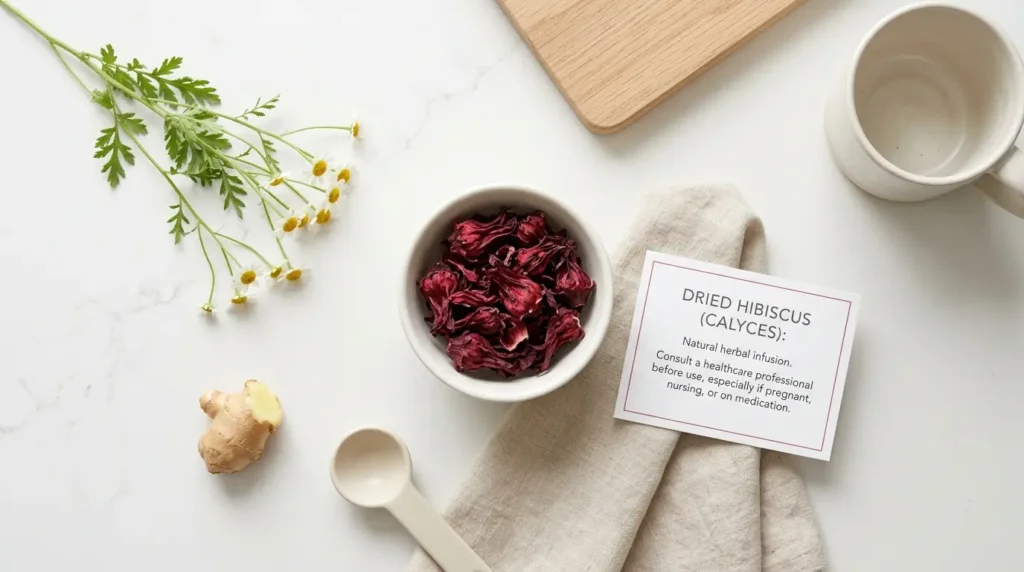
Hibiscus contains a variety of naturally occurring plant compounds, including organic acids, anthocyanins, flavonoids and other polyphenols.
Some laboratory and animal studies have investigated hibiscus extracts for possible effects on reproductive function and hormone-related processes. However, these studies often use concentrated extracts or doses that are not directly comparable to drinking a typical cup of hibiscus tea.
There is currently not enough human evidence to identify a specific compound in brewed hibiscus tea as causing miscarriage, uterine contractions or hormonal disruption during pregnancy.
For that reason, concerns about hibiscus during pregnancy should be described as a precaution based on limited safety data and preclinical research, rather than as proof that a particular hibiscus compound causes pregnancy complications in humans.
What Does the Research Say About Hibiscus Tea During Pregnancy?
Human research specifically evaluating hibiscus tea during pregnancy is very limited. This means researchers do not have enough clinical evidence to determine whether regular hibiscus tea consumption is safe during pregnancy or to establish a safe amount.
Animal research: Some animal studies have investigated hibiscus extracts in relation to reproductive and developmental outcomes. These findings contribute to safety concerns, but animal studies using concentrated extracts or specific doses cannot be directly translated into the effects of drinking brewed hibiscus tea during human pregnancy.
Traditional use: Hibiscus has also been used traditionally in some cultures in connection with menstruation and reproductive health. Traditional use can help identify areas that deserve further research, but it does not by itself prove that hibiscus tea causes miscarriage or other pregnancy complications.
Human evidence: There is not enough high-quality human research to establish a direct causal relationship between ordinary hibiscus tea consumption and miscarriage, premature labor or fetal abnormalities.
Because pregnancy safety has not been adequately established, a precautionary approach is appropriate. Pregnant women should discuss regular use of hibiscus tea, concentrated hibiscus products or herbal supplements with their healthcare professional.
Is Hibiscus Tea Safe in All Trimesters?
There is not enough human research to establish the safety of hibiscus tea during the first, second or third trimester.
Concerns about hibiscus during pregnancy come largely from animal research, traditional use and the absence of adequate pregnancy safety studies. These sources do not allow researchers to determine that one trimester is definitively more dangerous than another for drinking ordinary hibiscus tea.
First trimester: There is no established safe amount of hibiscus tea during early pregnancy. Because this is an important period of fetal development and safety data are limited, a precautionary approach is appropriate.
Second and third trimesters: There is also insufficient evidence to establish that regular hibiscus tea consumption is safe later in pregnancy. Claims that ordinary hibiscus tea directly triggers premature labor in humans have not been adequately demonstrated.
Overall, there is currently no evidence-based pregnancy-specific dose or trimester in which regular hibiscus tea consumption has been proven safe. If you are pregnant and considering hibiscus tea regularly, discuss it with your healthcare professional.
Is Roselle Tea the Same as Hibiscus Tea During Pregnancy?
Roselle is another common name for Hibiscus sabdariffa, the plant most commonly used to make hibiscus tea.
Several traditional drinks are also made from Hibiscus sabdariffa, including:
- Agua de jamaica — a popular hibiscus drink commonly served cold in Mexico and other parts of Latin America.
- Karkade — a hibiscus beverage widely consumed in Egypt and other parts of North Africa and the Middle East.
- Bissap — a hibiscus drink popular in West Africa.
- Sorrel drink — a Caribbean beverage commonly prepared with hibiscus, often with spices and sweeteners.
Therefore, if you are wondering whether you can drink agua de jamaica while pregnant, the underlying ingredient is generally the same Hibiscus sabdariffa used to make hibiscus tea.
Changing the preparation from hot tea to a cold drink does not resolve the main issue: there is still insufficient human research to establish the safety of regular Hibiscus sabdariffa consumption during pregnancy.
Hibiscus supplements and concentrated extracts deserve additional caution because they may provide substantially different amounts of plant compounds than a typical brewed beverage.
If you are pregnant, check the ingredient list of herbal drinks and discuss regular hibiscus use with your healthcare professional.
For more information about the traditional drink itself, see our agua de jamaica guide.
What Do Health Authorities Say About Herbal Products During Pregnancy?
Pregnancy safety information for herbal products is often limited because many herbs have not been adequately studied in pregnant women.
Major health resources generally recommend caution with herbs and supplements during pregnancy. MedlinePlus, a service of the U.S. National Library of Medicine, advises pregnant women to check with their healthcare provider before using medicines, herbs or supplements. MedlinePlus
This general precaution is especially relevant when there is insufficient human research to establish the safety of a particular herbal product.
For hibiscus specifically, the available evidence does not allow us to establish a pregnancy-safe amount or to conclude from human clinical trials that ordinary hibiscus tea causes miscarriage or premature labor.
Rather than relying on claims that a particular institution has classified hibiscus as definitively dangerous, the more accurate approach is to recognize the uncertainty in the evidence and discuss regular hibiscus tea, herbal supplements and concentrated extracts with a healthcare professional during pregnancy.
What If You Drank Hibiscus Tea Before Knowing You Were Pregnant?
If you drank hibiscus tea before realizing you were pregnant, try not to draw conclusions about what the exposure means for your pregnancy.
There is not enough human research to determine that one or two cups of hibiscus tea cause pregnancy complications, and an accidental exposure does not mean that a problem will occur.
At the same time, because the safety of regular hibiscus consumption during pregnancy has not been adequately established, it is reasonable to stop drinking it until you have discussed it with your healthcare professional.
If you already consumed hibiscus tea:
- Stop regular consumption until you receive appropriate medical guidance.
- Tell your midwife, obstetrician or other healthcare professional what you drank, approximately how much and when.
- Seek medical care promptly if you experience concerning pregnancy symptoms such as vaginal bleeding, severe abdominal or pelvic pain, fainting, or other symptoms your healthcare professional has told you require urgent evaluation.
Your healthcare professional can assess your individual situation based on your stage of pregnancy, the amount consumed and your overall health.
Can Breastfeeding Women Drink Hibiscus Tea?
There is limited reliable information about the safety of hibiscus tea during breastfeeding.
It is not well established how the compounds found in hibiscus behave in breast milk or whether regular consumption could affect a nursing infant. This lack of evidence does not necessarily mean that hibiscus tea is harmful, but it makes it difficult to establish a breastfeeding-safe amount.
Breastfeeding women who want to drink hibiscus tea regularly should discuss it with their healthcare professional, particularly when using concentrated hibiscus products, extracts or supplements.
Occasional exposure and concentrated herbal supplementation should also not automatically be treated as equivalent, since the amounts of plant compounds can differ considerably.
For broader information about hibiscus and women’s health, see our hibiscus tea benefits for women guide.
What Herbal Teas Can You Discuss With Your Healthcare Professional During Pregnancy?
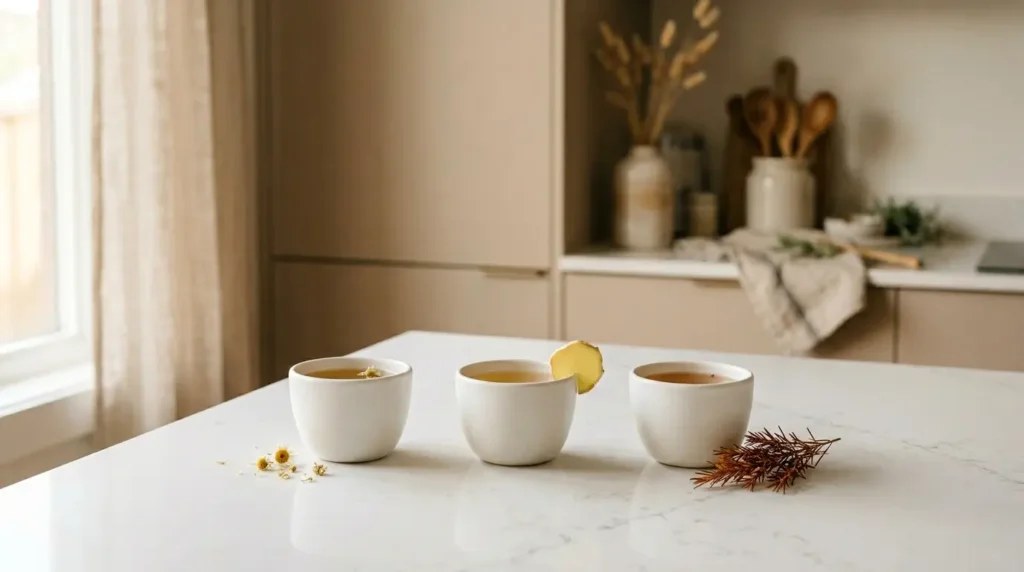
The safety of herbal teas during pregnancy varies by ingredient, preparation and amount consumed. Many herbal products have not been studied extensively in pregnant women, so “natural” should not automatically be interpreted as “safe during pregnancy.”
Some commonly consumed herbal teas include:
Ginger tea: Ginger has been studied more extensively than many other herbs, particularly in relation to pregnancy-related nausea. However, the appropriate amount can depend on the product and individual circumstances.
Rooibos tea: Rooibos is naturally caffeine-free, but pregnancy-specific safety research is still limited. If you drink it regularly, discuss it with your healthcare professional.
Peppermint tea: Peppermint is commonly consumed as an herbal tea and is sometimes used for digestive symptoms. Pregnancy-specific guidance may depend on the amount consumed and individual tolerance.
Chamomile tea: Chamomile is widely used as an herbal beverage, but evidence is not sufficient to label unrestricted consumption as universally safe throughout pregnancy.
Lemon balm tea: Pregnancy-specific safety information is limited, so regular medicinal use should be discussed with a healthcare professional.
The important distinction is between occasional consumption of a brewed beverage and regular use of concentrated extracts or supplements. Products can contain very different amounts of active plant compounds.
If you are pregnant, your obstetrician, midwife, pharmacist or other qualified healthcare professional can help you decide which herbal beverages are appropriate for your individual situation.
Herbal Teas and Ingredients That Need Extra Caution During Pregnancy
Pregnancy safety varies considerably among herbal products. Some herbs have specific safety concerns, while others simply lack enough research to establish how much can be consumed safely during pregnancy.
Rather than assuming that an herbal tea is either completely “safe” or “unsafe,” consider the ingredient, concentration, frequency of consumption and your individual health circumstances.
| Herbal ingredient | What to consider during pregnancy |
|---|---|
| Hibiscus | Human pregnancy safety data are insufficient, so regular or medicinal use is best discussed with a healthcare professional. |
| Licorice root | Regular or concentrated consumption may present pregnancy-related concerns and should be discussed with a healthcare professional. |
| Sage | Culinary use and concentrated medicinal preparations are not equivalent. Avoid assuming that medicinal amounts are safe during pregnancy. |
| Nettle | Pregnancy safety can depend on the preparation and amount; concentrated products require particular caution. |
| Raspberry leaf | Commonly marketed for pregnancy, but recommendations vary according to pregnancy stage and individual circumstances. Discuss regular use with your maternity-care professional. |
| Black and green tea | These contain caffeine, so they contribute to total daily caffeine intake during pregnancy. |
| Chamomile, ginger, rooibos and peppermint | These are commonly consumed as beverages, but regular or concentrated use should still be considered individually rather than assumed to be universally safe. |
Herbal extracts, capsules, tinctures and highly concentrated preparations should not automatically be treated as equivalent to an occasional cup of brewed tea.
When Can You Start Drinking Hibiscus Tea Again After Pregnancy?
Once your baby is delivered and breastfeeding is complete (or if you choose not to breastfeed), most healthy women can return to drinking hibiscus tea without concern.
The postpartum period brings its own health considerations where hibiscus tea may actually be particularly beneficial — including blood pressure management (which can remain elevated for weeks after delivery in some women), antioxidant recovery after the physical demands of pregnancy and childbirth, and supporting a return to hormonal balance.
Our complete guide on hibiscus tea benefits for women covers the specific benefits relevant to women across all life stages, including postpartum.
For safe daily intake once you return to hibiscus tea, our how much hibiscus tea per day guide covers the recommended amounts. And for the full safety picture including all other populations who should limit or avoid hibiscus tea, see our comprehensive hibiscus tea side effects guide.
When Can You Start Drinking Hibiscus Tea Again After Pregnancy?
After pregnancy, whether you choose to drink hibiscus tea may depend on factors such as breastfeeding, medications and your individual health circumstances.
If you are breastfeeding, there is not enough reliable evidence to establish a specific safe amount of hibiscus tea. Discuss regular consumption, particularly concentrated hibiscus products or supplements, with your healthcare professional.
If you are not breastfeeding, hibiscus tea may be consumed as a regular beverage by many adults, but it should not be promoted as a treatment for postpartum hormonal changes, recovery or other postpartum health concerns.
Hibiscus has been studied more generally for outcomes such as blood pressure, but this research does not establish specific postpartum benefits.
For more information, see our hibiscus tea benefits for women guide and our how much hibiscus tea per day guide.
What About Hibiscus in Foods During Pregnancy?
Hibiscus can appear in foods and beverages in amounts that differ considerably from those found in brewed tea, supplements or concentrated extracts.
For example, hibiscus may be used as a flavoring or ingredient in jams, candies, syrups, beverages and other foods. However, there is not enough pregnancy-specific research to establish a precise amount of hibiscus that can be considered safe.
An occasional food containing hibiscus should also not automatically be treated as equivalent to regularly drinking concentrated hibiscus tea or taking a hibiscus supplement, since the amount consumed can be very different.
If you notice hibiscus on an ingredient list and are unsure whether the product is appropriate during pregnancy, ask your healthcare professional, pharmacist or maternity-care provider for guidance based on the specific product and amount.
Frequently Asked Questions
Can pregnant women drink hibiscus tea?
There is not enough reliable human research to establish the safety of regular hibiscus tea consumption during pregnancy. Because pregnancy-specific safety data are limited, a precautionary approach is appropriate. Discuss regular hibiscus tea use with your healthcare professional.
Is hibiscus tea safe during pregnancy?
Hibiscus tea has not been adequately studied in pregnant women, so researchers have not established a pregnancy-safe amount. Concerns come largely from animal research and traditional use rather than clinical evidence showing that ordinary hibiscus tea causes pregnancy complications in humans.
What happens if you drink hibiscus tea while pregnant?
Human research is insufficient to predict what will happen after drinking hibiscus tea during pregnancy. An accidental cup does not mean that a pregnancy complication will occur. If you have already consumed hibiscus tea and are concerned, tell your healthcare professional what you drank, approximately how much and when.
Can I drink hibiscus tea in early pregnancy?
There is no established safe amount of hibiscus tea specifically for early pregnancy. Because human safety evidence is limited, regular consumption is best discussed with your healthcare professional.
Is hibiscus tea safe in the third trimester?
There is not enough human evidence to establish that regular hibiscus tea consumption is safe during the third trimester. Claims that ordinary hibiscus tea directly triggers premature labor in humans have not been adequately demonstrated.
Can I drink agua de jamaica while pregnant?
Agua de jamaica is generally made from Hibiscus sabdariffa, the same plant commonly used for hibiscus tea. Preparing it cold or serving it with sugar or lime does not change the fact that pregnancy-specific safety data for hibiscus are limited. Discuss regular consumption with your healthcare professional.
Is roselle tea safe during pregnancy?
Roselle is another name for Hibiscus sabdariffa. Therefore, the same uncertainty surrounding hibiscus tea during pregnancy applies to roselle tea. There is currently no established pregnancy-specific safe amount.
Does hibiscus tea cause miscarriage?
There is not enough high-quality human evidence to conclude that drinking ordinary hibiscus tea causes miscarriage. Some concerns come from animal research and traditional use, but these findings should not be presented as proof of miscarriage risk in humans.
What if I drank hibiscus tea before knowing I was pregnant?
Accidental exposure does not mean that a problem will occur. Because the available human evidence is limited, avoid drawing conclusions from the exposure alone. Tell your healthcare professional approximately how much you consumed and when if you are concerned.
Can you drink hibiscus tea while breastfeeding?
Reliable breastfeeding safety data for hibiscus are limited. It is therefore difficult to establish a breastfeeding-safe amount, particularly for concentrated extracts or supplements. Discuss regular consumption with your healthcare professional.
Are hibiscus supplements safe during pregnancy?
Hibiscus supplements and extracts may contain substantially different concentrations of plant compounds than brewed tea. Their safety during pregnancy has not been adequately established, so they should not be assumed to be equivalent to an occasional beverage.
Key Takeaways
- Human research on hibiscus tea during pregnancy is limited, so a pregnancy-specific safe amount has not been established.
- Concerns about hibiscus during pregnancy come mainly from animal research, traditional use and the lack of adequate human safety studies.
- There is not enough high-quality human evidence to conclude that drinking ordinary hibiscus tea causes miscarriage or premature labor.
- Roselle tea, agua de jamaica, karkade and bissap are commonly made from Hibiscus sabdariffa, so the same pregnancy-safety uncertainty applies.
- If you drank hibiscus tea before realizing you were pregnant, accidental exposure does not mean that a complication will occur. Discuss the exposure with your healthcare professional if you are concerned.
- Safety data during breastfeeding are also limited, particularly for concentrated hibiscus extracts and supplements.
- Herbal supplements and concentrated extracts should not automatically be treated as equivalent to an occasional cup of brewed tea.
- During pregnancy, discuss regular use of hibiscus and other herbal products with your obstetrician, midwife, pharmacist or other qualified healthcare professional.