

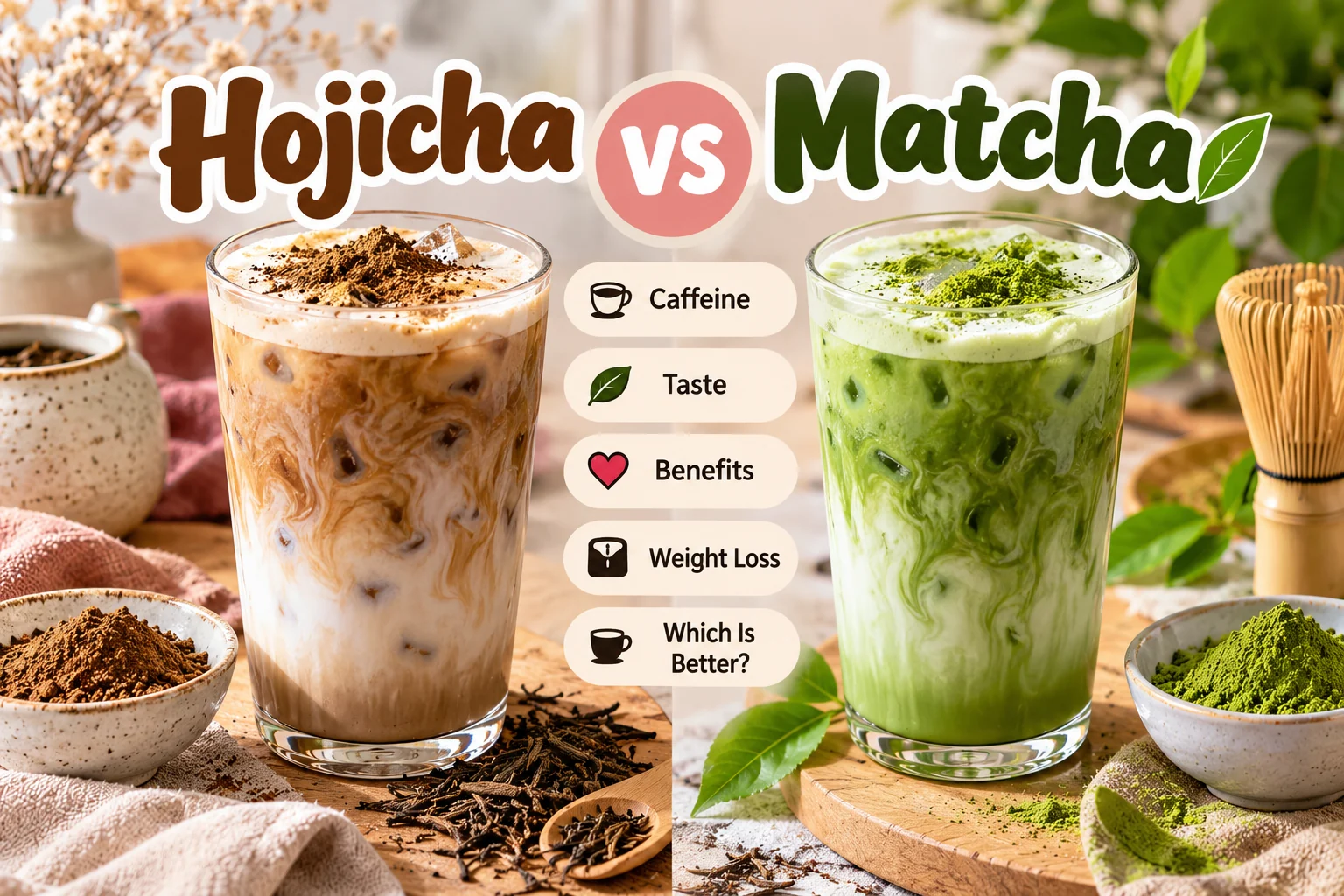
Hojicha and matcha are both Japanese green teas, but they are very different in flavor, caffeine, color, and the way they are prepared. Hojicha is roasted, giving it a warm, toasty taste and usually less caffeine. Matcha is powdered green tea with a fresh, grassy flavor and typically more caffeine. If you are deciding between the two for a latte, evening drink, or lower-caffeine routine, this guide compares the differences clearly.
Interest in hojicha vs matcha has been rising because more people are discovering hojicha lattes, asking how much caffeine hojicha contains, and comparing the two drinks for taste, health goals, and everyday use. The biggest mistake is treating hojicha as simply “brown matcha.” It is not. The roasting process changes the aroma, color, and flavor profile substantially.
Hojicha vs Matcha: Quick Comparison
| Feature | Hojicha | Matcha |
|---|---|---|
| Tea type | Roasted Japanese green tea | Powdered Japanese green tea |
| Color | Brown to reddish-brown | Bright green |
| Taste | Toasty, nutty, caramel-like | Grassy, vegetal, slightly bitter |
| Caffeine | Usually lower | Usually higher |
| Best for | Evening, lower-caffeine drinks, roasted flavor | Morning, stronger tea flavor, more caffeine |
| Common drinks | Hojicha latte, iced hojicha, hojicha milk tea | Matcha latte, iced matcha, matcha smoothie |
What Is Hojicha?
Hojicha is Japanese green tea that has been roasted at a high temperature. The roasting step gives the leaves a brown color and a distinctive aroma that can remind people of toasted nuts, caramel, cocoa, or roasted grain.
Unlike matcha, hojicha is not defined by being powdered. Traditional hojicha is sold as roasted leaves and stems that are steeped in hot water. However, hojicha powder is now widely used for lattes and desserts because it mixes more easily into milk.
The roasting process is the key reason hojicha tastes so different from standard green tea. It softens much of the grassy character and creates deeper roasted notes. That is why people who dislike the vegetal flavor of matcha often find hojicha easier to enjoy.
What Is Matcha?
Matcha is finely ground green tea powder. Instead of steeping leaves and removing them, you whisk the powder into water and consume the suspended tea itself. This gives matcha a concentrated flavor and generally a stronger caffeine effect than a lightly brewed tea.
Good matcha tastes fresh, vegetal, slightly sweet, and pleasantly bitter. Lower-quality or heavily overused matcha can taste harsh or very bitter. The bright green color comes from the tea leaves rather than added coloring.
If you want a simple unsweetened preparation, our matcha recipe for weight loss explains how to prepare it without relying on sugary syrups.
Hojicha Caffeine vs Matcha
Hojicha usually contains less caffeine than matcha. That is one of the main reasons people compare the two.
The exact amount depends on the product, how much tea you use, the serving size, and whether you are using loose hojicha or hojicha powder. Matcha is consumed as the whole powdered leaf, so its caffeine can be more concentrated per serving than a brewed cup of hojicha.
Hojicha is often made from more mature leaves and stems, which can naturally contain less caffeine than younger leaves. Roasting also changes the tea chemically, but it is better to think of hojicha as generally lower caffeine rather than completely caffeine-free.
Does Hojicha Have Caffeine?
Yes. Hojicha contains caffeine because it comes from the tea plant. It is not naturally caffeine-free.
However, many people choose hojicha when they want a gentler tea option. A small hojicha latte can fit better into an afternoon or evening routine for someone who is sensitive to caffeine, but individual sensitivity matters.
If caffeine affects your sleep, do not assume that a brown tea is automatically safe at bedtime. Check the product label, serving size, and your own response.
Hojicha vs Matcha Flavor
Hojicha tastes toasty and nutty, with a mellow aroma that can recall toasted rice or cocoa. Matcha tastes fresher and more vegetal, with a savory umami note and a more noticeable bitter finish. In a plain cup, the easiest difference to pick out is the roasted aroma of hojicha and the grassy taste of matcha. With milk, hojicha keeps its toasted character, while matcha still has a distinct green tea flavor.
What Does Hojicha Taste Like?
Hojicha tastes roasted, nutty, warm, and slightly sweet. Some people notice notes similar to caramel, cocoa, toasted rice, or roasted nuts.
It is much less grassy than matcha. The flavor is also usually less bitter, especially when prepared as a latte with milk.
If you enjoy coffee-like roasted flavors but do not want an espresso drink, hojicha can be a good alternative. It does not taste exactly like coffee, but the roasted aroma makes it feel closer to a café-style drink than many green teas.
What Does Matcha Taste Like?
Matcha tastes green, vegetal, slightly bitter, and sometimes creamy or umami-rich. A well-prepared matcha latte can taste smooth and fresh, while too much powder or overly hot water can make it taste harsh.
The flavor is much brighter and more assertive than hojicha. If you like spinach-like, grassy, or fresh tea notes, matcha is usually the better fit.
Hojicha vs Matcha for Weight Loss
Neither hojicha nor matcha should be treated as a proven fat-burning drink. The biggest difference for weight management usually comes from how the drink is prepared.
A plain tea made with water contributes very few calories. A large café latte made with sweetened milk, syrups, whipped cream, or condensed milk can add much more energy, regardless of whether the base is hojicha or matcha.
For a lighter version, use unsweetened milk, keep the serving moderate, and avoid automatically adding multiple sweeteners. If you are choosing milk specifically for calorie and protein goals, our guide to the best milk to drink for weight loss compares common options.
Matcha contains more caffeine than hojicha in many typical servings, and caffeine can slightly affect alertness and energy expenditure. That does not mean a matcha latte produces meaningful or guaranteed weight loss. The overall diet still matters much more.
Hojicha vs Matcha for Evening Drinking
Hojicha is often the better choice in the evening because it is generally lower in caffeine and has a warm, roasted flavor that suits a relaxed drink.
Matcha is usually better earlier in the day for people who are sensitive to caffeine. A strong matcha latte late at night may interfere with sleep more easily than a small hojicha latte.
Still, personal sensitivity varies. If you know that even small amounts of caffeine affect your sleep, choose a caffeine-free herbal drink instead.
Hojicha Powder vs Matcha Powder
Both powders can be whisked into milk, but they behave differently in flavor and color.
- Hojicha powder: brown, roasted, nutty, smooth, often lower in caffeine.
- Matcha powder: bright green, vegetal, stronger, usually higher in caffeine.
Hojicha powder is especially useful for lattes because it provides the roasted tea flavor without needing to steep and strain loose leaves. Matcha is already traditionally used as a powder, so it is naturally suited to whisked drinks.
How to Make a Hojicha Latte
This simple hojicha latte recipe makes one serving.
Ingredients
- 1 to 2 teaspoons hojicha powder
- 2 tablespoons hot water
- 1 cup milk or unsweetened plant milk
- 1 teaspoon maple syrup or honey, optional
Instructions
- Whisk the hojicha powder with hot water until smooth.
- Heat and froth the milk.
- Pour the milk into the hojicha mixture.
- Sweeten only if needed.
- Serve immediately.

Iced Hojicha Latte Variation
For an iced version, whisk the hojicha powder with a small amount of hot water first. This helps prevent clumps. Fill a glass with ice, add cold milk, then pour the hojicha mixture over the top.
If you like layered drinks, pour the hojicha slowly over the milk and stir just before drinking. Keep sweetener minimal if you want the roasted flavor to remain noticeable.
Hojicha Latte Calories
The calorie count depends mostly on the milk and sweetener. Hojicha powder itself is used in a small amount, so the milk and added sugar usually contribute most of the calories.
A latte made with unsweetened almond milk and no syrup can be much lighter than one made with whole milk, condensed milk, and flavored syrup.
Matcha Latte Calories
The same principle applies to matcha. The green tea powder is not usually the main calorie source. Sweeteners and milk are.
This is why comparing “hojicha vs matcha for weight loss” without looking at the recipe can be misleading. A lightly sweetened hojicha latte may be lower in calories than a sugary matcha latte, and the opposite can also be true.
Hojicha vs Matcha: Which Is Better for Beginners?
Hojicha is often easier for beginners because the roasted flavor is smoother and less grassy. People who normally drink coffee, chai, or roasted grain drinks may find hojicha familiar.
Matcha can take more adjustment because it has a stronger vegetal taste. If your first matcha tastes extremely bitter, the issue may be too much powder, very hot water, or a lower-quality product.
Hojicha vs Matcha: Which Is Better With Milk?
Both work well with milk, but the result is different.
- Hojicha + milk: tastes warm, toasted, creamy, and dessert-like.
- Matcha + milk: tastes fresh, grassy, creamy, and slightly bitter.
Oat milk works especially well with hojicha because its natural sweetness complements roasted notes. Soy milk pairs well with matcha because it gives body without overpowering the tea.
Hojicha vs Matcha for Coffee Drinkers
If you usually drink coffee and want a tea alternative, hojicha is often the easier transition. Its roasted profile can feel more familiar than the vegetal taste of matcha.
If your main reason for switching is caffeine reduction, hojicha is also generally the more practical choice. If you still want a stronger caffeine effect, matcha may suit you better.
Can You Mix Hojicha and Matcha?
You can, but the flavors are quite different. A small amount of matcha can add freshness and color to a hojicha drink, while hojicha can soften the grassy edge of matcha.
For most people, it is easier to learn each tea separately first. Once you know the flavor you prefer, experimenting with blends becomes much easier.
Hojicha vs Ube Latte
Hojicha is tea-based, while ube is a purple yam. That means the flavor and caffeine are completely different. Hojicha is roasted and lightly bitter, while ube is creamy, earthy, and naturally caffeine-free unless coffee or tea is added.
If you enjoy visually distinctive café drinks, our ube latte recipe is a good caffeine-free alternative to compare with hojicha.
Which Is Better: Hojicha or Matcha?
Choose hojicha if you want: a roasted taste, a smoother latte, usually less caffeine, or a drink that works better later in the day.
Choose matcha if you want: a brighter green flavor, more caffeine, a stronger tea taste, or a traditional powdered green tea experience.
Neither is universally better. The best choice depends on your caffeine tolerance, flavor preference, time of day, and how you prepare the drink.
FAQS
What is the main difference between hojicha and matcha?
Hojicha is roasted Japanese green tea with a brown color and toasty flavor. Matcha is powdered green tea with a bright green color, grassy taste, and usually more caffeine.
Does hojicha have caffeine?
Yes. Hojicha comes from the tea plant and contains caffeine, but it is generally lower in caffeine than matcha.
Does hojicha have less caffeine than matcha?
Usually yes. The exact amount depends on the product and serving size, but matcha is generally more concentrated because the powdered leaf is consumed directly.
What does hojicha taste like?
Hojicha tastes roasted, nutty, warm, and slightly sweet, with notes that can resemble caramel, cocoa, or toasted grain.
Is hojicha better than matcha for weight loss?
Neither tea is a proven weight-loss treatment. The calorie content of the finished drink depends mostly on milk, syrup, sugar, and portion size.
Can I drink hojicha at night?
Hojicha is generally lower in caffeine than matcha, so some people prefer it in the evening. It still contains caffeine, so sensitive people should monitor their own response.
1 thought on “Hojicha vs Matcha: Caffeine, Taste, Benefits and Which Is Better?”